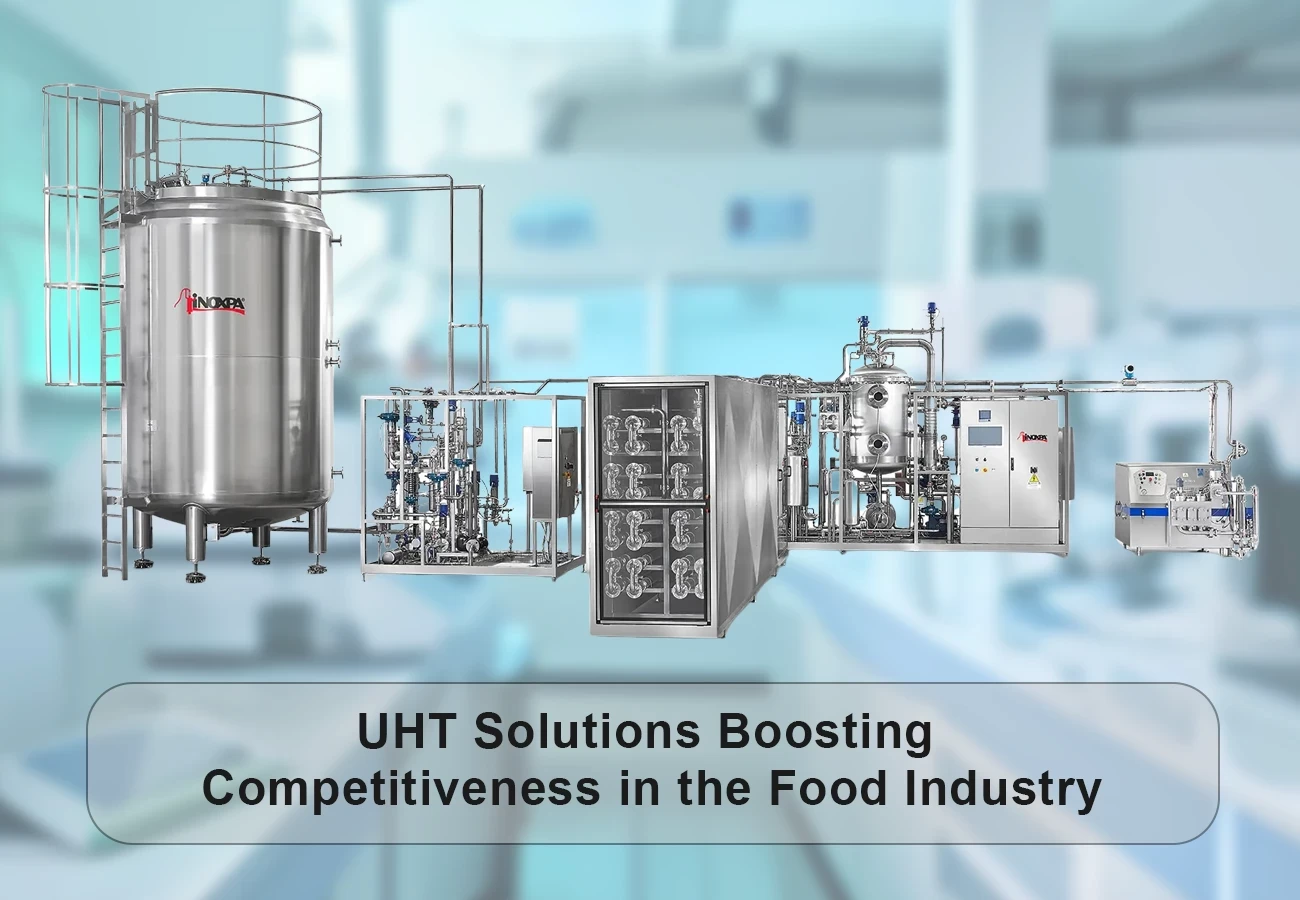

UHT Solutions: Boosting Competitiveness in the Food Industry
The Ultra High Temperature (UHT) machines form the backbone of production lines across many food and beverage firms. Engineered specifically for the thermal treatment and sterilization of a wide range of liquid and low-viscosity products like plant-based and dairy-based drinks, fruit juices, tea, broths, soups, and other beverages, UHT machinery provides a reliable method for product protection, extended shelf life, and consistent quality.
Ultra-high temperature (UHT) processing is a specialized heat treatment method, but it is usually used together with reverse osmosis plant technology and zero liquid discharge water treatment systems. This combination is common in integrated food processing facilities, where maintaining high water quality and effective wastewater management are important for good production.
Understanding the UHT Process
UHT processing is a well-established food treatment technique. The products are heated to temperatures between 135°C and 150°C for just a few seconds. This brief but intense thermal exposure is then followed by immediate cooling which eliminates pathogenic microorganisms and bacterial spores that could cause spoilage or pose health hazards. The result is a shelf-stable product that remains safe and fresh for months without refrigeration, making it ideal for international shipping and long-term storage.
In modern processing plants, operators may also incorporate advanced water treatment solutions like reverse osmosis plant setups to ensure that any water used in product formulation or cleaning meets strict safety and purity requirements. High-quality water enhances final product consistency and helps protect delicate flavors during UHT treatment.
Why One Size Doesn’t Fit All
Not all products react the same way to high temperatures. Variations in chemical composition, viscosity, and sensory attributes like flavor, aroma, and color mean each product demands a different approach to UHT processing. Choosing the right system is very important for getting the balance between food safety, shelf life, and product integrity.
Key factors influencing UHT design include:
- Heating method: Direct or indirect systems
- Heat exchanger configuration
- Temperature-time profile during sterilization
For example, a reverse osmosis plant supplier working with a dairy processor might recommend pre-treatment of incoming water to ensure that milk-based beverages retain their creamy taste and nutritional value during high-temperature processing. Similarly, facilities that use zero liquid discharge water treatment systems can sustainably operate by recycling and reusing water, reducing both costs and environmental impact.
More Than Just Microbial Safety
A well-designed UHT system doesn’t just sterilize; it preserves the product’s original characteristics as much as possible. This means retaining essential nutrients, maintaining appealing textures and flavors, and ensuring an attractive appearance on the shelf.
Whether working with standard dairy milk, oat or almond beverages, fruit drinks, or vegetable soups, modern UHT solutions can be configured to meet specific processing requirements. High productivity, energy efficiency, and gentle handling of sensitive ingredients are built into the design, ensuring minimal thermal stress.
To support these operations, food manufacturers often invest in comprehensive water treatment solutions that complement their thermal processing lines. For example, integrating a reverse osmosis plant ensures that all process water is free from contaminants that could compromise flavor stability or microbial safety.
Heating Modes: Direct vs. Indirect
The product’s nature determines the optimal heating mode:
- Indirect Heating (Tubular Heat Exchanger): Sterilization takes place without direct contact between the product and the heating medium (steam). The product is heated to the target temperature through the walls of the tubular heat exchanger.
- Direct Heating (Steam Injection): The product is pre-heated via heat recovery in a tubular exchanger, then brought to sterilization temperature by injecting steam. Flash cooling follows to remove excess water caused by steam condensation.
Both methods are supported by precise temperature control and efficient thermal exchange to preserve product integrity. Steam condensate recovery can further improve water efficiency in facilities that also use zero liquid discharge water treatment.
Hygiene, Maintenance, and Integration
UHT equipment must be easy to clean, with optimum cleanability designed into every component. Tubular heat exchangers are engineered for high thermal efficiency and reduced downtime, allowing long production runs without compromising hygiene.
In parallel, food plants frequently incorporate reverse osmosis plant supplier expertise to maintain ultra-pure water for cleaning-in-place (CIP) processes, protecting both the equipment and the end product. When combined with zero liquid discharge water treatment, wastewater from CIP systems can be treated and reused, further improving sustainability metrics.
End-to-End Solutions with INOXPA
INOXPA UHT systems can be equipped with aseptic or non-aseptic homogenisers and aseptic tanks, offering customers complete and tailored solutions. These systems are designed to integrate seamlessly into existing SCADA systems for centralized monitoring and control.
Advanced, user-friendly automation makes INOXPA’s UHT plants reliable and efficient, enabling operators to maintain consistent quality with minimal intervention. This capability is particularly valuable in facilities where water treatment solutions like a reverse osmosis plant play a key role in ensuring that only the purest water is used in both processing and cleaning operations.
By also integrating zero liquid discharge water treatment, plants can achieve near-complete water recovery, turning what was once waste into a valuable resource. This combination of cutting-edge UHT processing and advanced water management sets a new standard for sustainable, high-quality food production.
The Competitive Advantage
INOXPA’s UHT systems provide a comprehensive, flexible, and highly efficient approach to thermal processing. The systems are engineered to meet the highest food safety and quality standards with customizable configurations.
These UHT lines provide efficiency, sustainability, and operational reliability when paired with a reverse osmosis plant supplier and supported by zero liquid discharge water treatment. The synergy between thermal processing and advanced water treatment solutions ensures long-term competitiveness in the global food and beverage industry.
Conclusion
From plant-based milk to rich broths, every product processed with INOXPA’s UHT technology benefits from precise control, gentle handling, and consistent results. By combining these capabilities with robust water purification systems like a reverse osmosis plant and advanced zero liquid discharge water treatment strategies, producers can meet rising consumer expectations while protecting the environment. This integration not only safeguards product quality but also positions businesses for long-term success in an increasingly sustainability-driven marketplace.