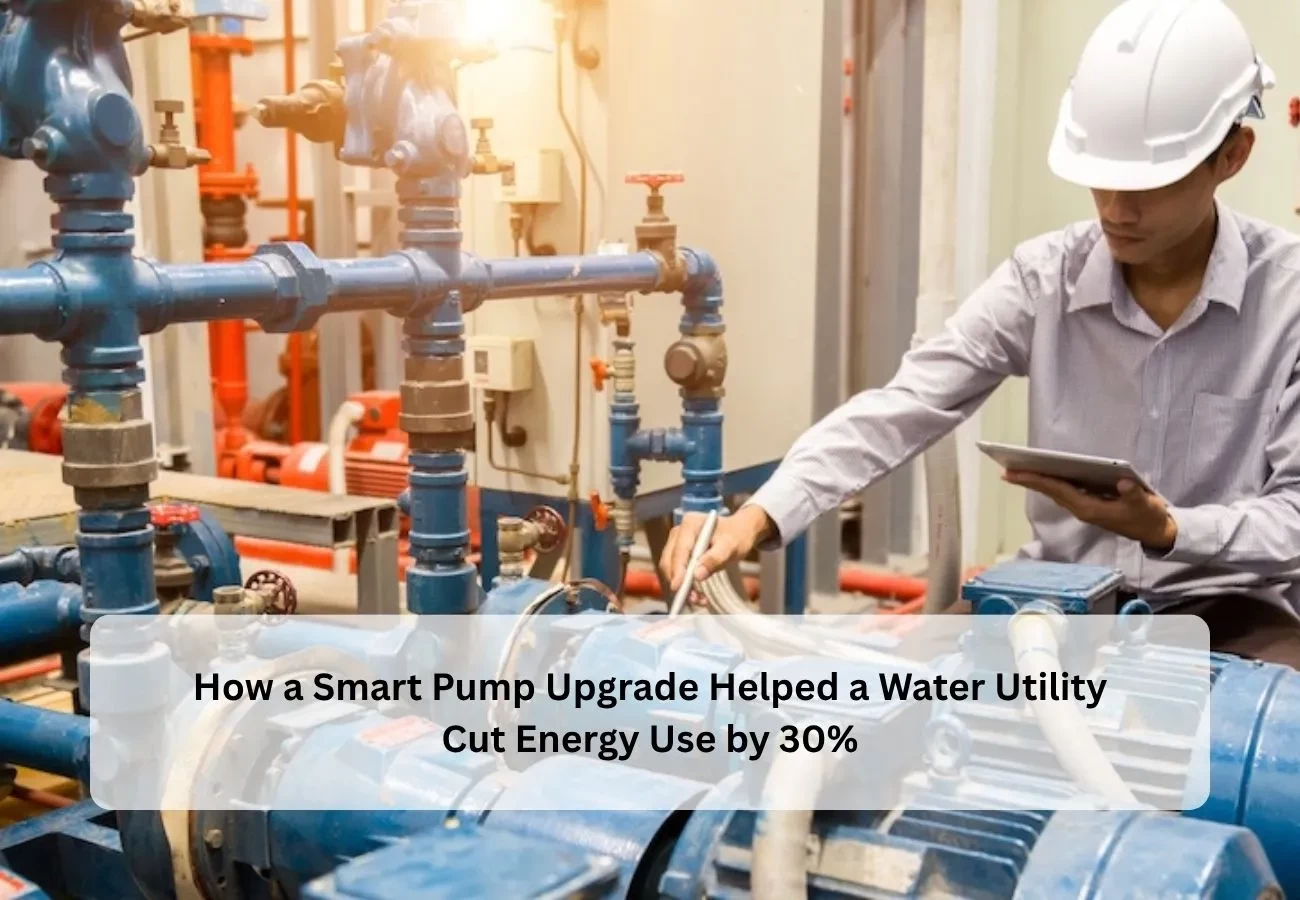

How a Smart Pump Upgrade Helped a Water Utility Cut Energy Use by 30%
Pumping systems often account for the most substantial energy use by water utilities. Yet, as pumps deteriorate and controls stay manual, performance falls, and costs secretly rise. In efforts to become more efficient, implementing a better system can help water utilities save much more.
For instance, one municipality in Gniezno, Poland, was able to demonstrate that reliability and efficiency could be substantially enhanced with proper planning and consultancy by water treatment plant consultants.
The Problem: Manual Operation and Aging Pumps
About 90,000 people are supplied with water by the utility PWiK Gniezno, which operates multiple interconnected pumping stations.
One smaller station, however, was causing operational challenges. This system used five old pumps with fixed speed, which often needed to be adjusted manually. It resulted in excessive energy usage, fluctuations in pressure, and the lack of automatization.
Furthermore, the pump station had to be versatile – able to handle regular flows of 200-250 m3/h but still capable of dealing with emergencies, where the flow could reach 800 m3/h.
The Method: Evaluate First, Upgrade Wisely
Before making any changes, Grundfos carried out a detailed energy audit to identify inefficiencies and improvement opportunities. This step is often overlooked, but it is critical in designing an effective water treatment solution.
It was discovered that by integrating intelligent controls with adequate pump sizes and increased efficiency, significant energy savings and enhanced responsiveness can be achieved.
Based on this analysis, the utility upgraded the station with:
- High-efficiency pumps matched to operational needs
- Variable speed drives for demand-based operation
- Advanced control cabinets
- SCADA systems for remote monitoring and control
The objective was not only replacing parts but creating a system with increased responsiveness.
The Results: Savings, Stability, and Simpler Operations
In the first year, the updated system delivered energy savings of 30%, proving accurate initial calculations. Apart from energy savings, other operational improvements were also noted.
Stable Pressure Across the Network
The upgraded system responds instantly to changes in demand, ensuring consistent pressure throughout the distribution network and improving supply reliability.
Reduced Pipeline Stress
Lower pressure fluctuations have improved the overall condition of pipelines, reducing wear and minimizing the risk of failures.
Remote Monitoring and Control
With SCADA integration, operators can now manage the station from a central control room. Thus, the need to keep monitoring the process manually has been eliminated, making operation much easier.
The Bigger Lesson for Utilities
From this example, there is an important lesson to learn. In order to improve the energy efficiency of a facility, it is not enough to replace the old pumps; proper coordination and management of the whole system, including intelligent control systems and appropriate equipment, is essential.
Utility companies that deal with increased energy expenses, inconsistent operation, or intensive maintenance activities can really profit from consulting with water treatment plant consultants.
Conclusion
Upgrading pumps is perhaps one of the best approaches that utility firms can use when seeking to cut energy consumption costs while increasing efficiency. This may be achieved through the application of energy efficient equipment in combination with effective information handling technologies.
This case clearly demonstrates how a well-planned upgrade, supported by expert analysis and advanced technology from Grundfos, can transform system performance while delivering long-term value.
FAQs
- Why do pumping systems consume so much energy?
Pumping systems operate continuously to maintain water supply, and inefficient or outdated pumps can significantly increase energy usage.
- What is the role of variable speed drives in pump systems?
Variable speed drives control the operation of the pump depending on the need, thereby preventing wastage of power.
- How does automation improve pumping station performance?
Automation ensures consistent operation, reduces manual intervention, and allows real-time adjustments for better system control.
- Why is an energy audit important before upgrading pumps?
An energy audit identifies inefficiencies and helps design the most effective upgrade strategy for maximum savings and performance improvement.