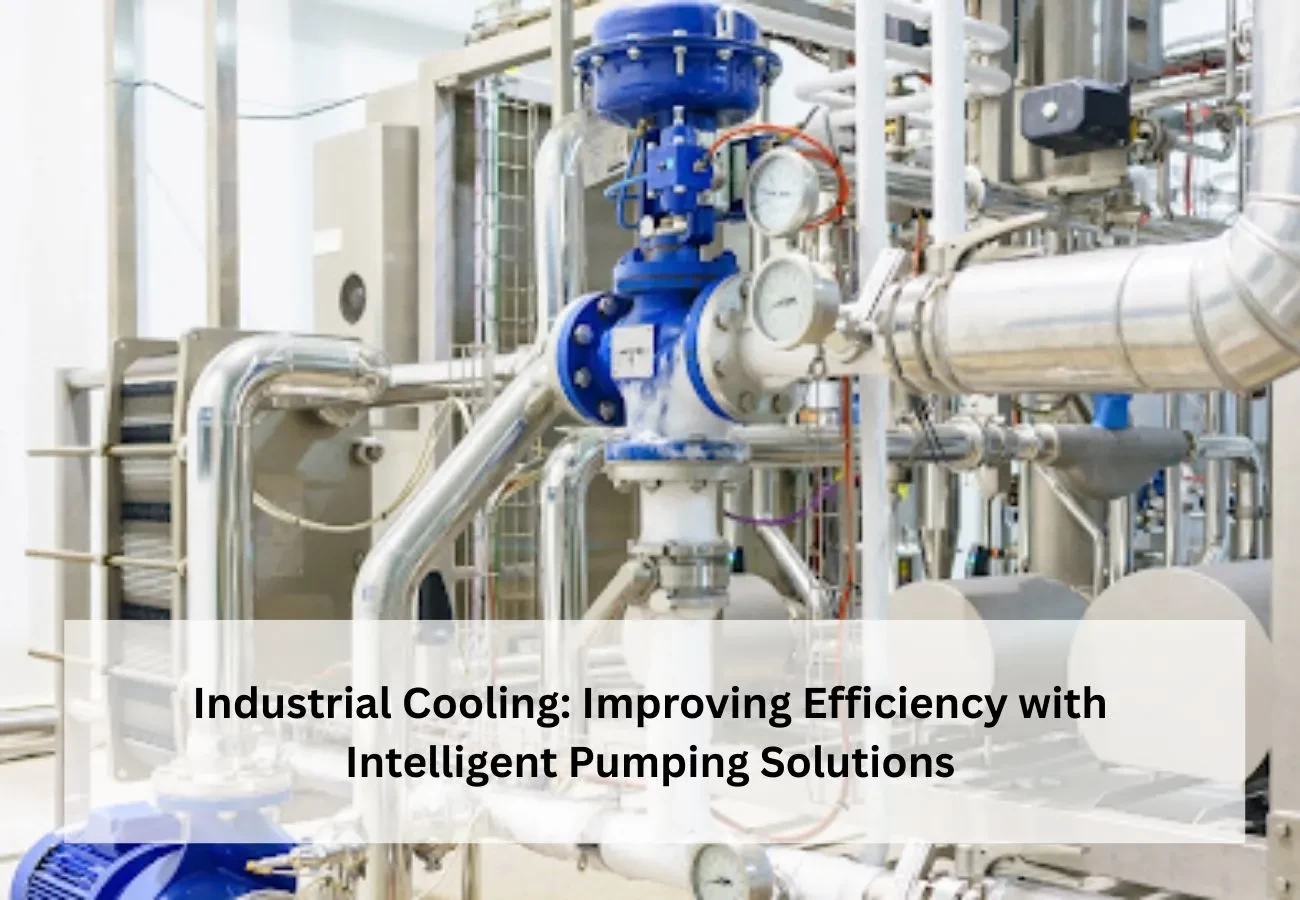

Industrial Cooling: Improving Efficiency with Intelligent Pumping Solutions
The Situation
India’s auto parts industry has grown into one of the strongest pillars of the country’s manufacturing sector. With increasing exports, rising automation, and tighter sustainability goals, plants are now expected to operate faster while using fewer resources. As factories adopt Industry 4.0, the focus turns to smarter operations, lower energy use, and better production support. Cooling systems manage heat from machines and lines, and when managed well, they protect performance, equipment life, and energy costs while supporting responsible industrial wastewater treatment and water use.
Grundfos is well known for its experience in intelligent pump design and application specific solutions. Over the years, the company has delivered several optimisation projects across different industries, focusing on performance, control, and energy savings. One such collaboration involved a leading tyre manufacturer that began noticing reduced efficiency in its cooling tower pumping operations.
The issue was not visible at first glance. The plant was running, output was steady, but energy consumption was slowly rising. Pump systems that once performed well were no longer operating at their best. This affected both cooling performance and water circulation efficiency, which also influenced connected waste water treatment systems inside industrial facilities.
The manufacturer needed a smarter approach that addressed cooling reliability without increasing operational complexity.
The Process
Every industrial operation produces heat as machines work, motors rotate, and materials move. Cooling systems are designed to absorb and remove this heat so that equipment runs within safe temperature limits. Among these systems, cooling towers are essential. They allow hot water from the process to release heat into the air before being reused in the system.
For a cooling tower to work, water must circulate continuously. Pumps move water from the process to the tower and back again, maintaining stable flow and pressure. If pumping performance drops, cooling becomes uneven, and machines begin to operate under stress. This also raises energy consumption since inefficient pumps draw more power for the same output.
In many industrial facilities, water used for cooling also connects with broader plant utilities such as industrial wastewater treatment, recycling lines, and discharge management. That makes pump performance even more important, as it supports both thermal control and water handling across the site.
At the tyre manufacturing plant, Grundfos began by studying the cooling tower circulation in detail. The objective was not just to replace equipment but to understand how the system behaved under real operating conditions.
Grundfos engineers carried out a pump energy audit across the cooling tower network. They analysed 45 usage points and 22 air washers, recording flow rate, pressure, electrical load, and duty points while the plant was running at full capacity. This approach helped map where energy was being lost and how the existing pumps responded to demand changes.
The audit showed that system efficiency had dropped to around 38 percent. Each pump was consuming nearly 10.5 kW per hour, yet the cooling performance did not match that energy input. In simple terms, the plant was spending more power for less cooling effect.
This type of imbalance does not only impact cooling. It also influences how water is circulated, reused, and discharged, which links directly to plant level waste water treatment systems and water reuse planning.
Grundfos now had clear data to guide the next step.
The Solution
Instead of applying small fixes, Grundfos proposed a full system upgrade focused on intelligent control and high efficiency operation. The old pumping arrangement was replaced with three CRE 32 3 pumps equipped with IE5 11 kW motors from the Grundfos I SOLUTIONS portfolio.
These pumps are designed with integrated controls that adjust performance automatically based on real time demand. Unlike traditional setups that rely on external drives and manual settings, intelligent pumps continuously optimise flow and pressure. This reduces unnecessary energy use and stabilises cooling performance even during load changes.
After installation, the improvement was clear. The new system achieved nearly an 8 percent increase in overall Power Drive System efficiency compared to conventional configurations using IE3 motors with external VFDs. In addition, the plant recorded up to 7 percent higher energy savings because the pump, motor, and control logic worked together as a single unit.
Better pumping performance also meant better water circulation. This improves cooling and water reuse across the plant. In modern factories, cooling loops tie into recycling and industrial wastewater treatment plans, making better pumping the base of good water management. Grundfos treated the upgrade as more than just an equipment change. It became part of a larger water treatment solution approach that balances cooling, energy, and water handling in one coordinated system.
By combining smart motors, digital control, and performance monitoring, the plant gained more than energy savings. It gained operational stability, predictable performance, and better insight into how its utilities behaved under production loads.
The Outcome
The results were immediate and measurable. With Grundfos I SOLUTIONS in place, the tyre manufacturer achieved nearly a 30 percent reduction in total energy consumption related to cooling tower pumping. That translated into major operating cost savings across the year.
Beyond cost, the project supported the company’s move toward Industry 4.0 by improving automation and control across utilities. Operators no longer needed to manually adjust systems frequently, and performance remained stable even when production demand changed.
Environmental performance also improved. The upgrade helped cut around 10.8 metric tons of CO₂ emissions annually. For a large industrial facility, these reductions build long term sustainability while supporting compliance and energy responsibility goals. Stable circulation links cooling with waste water treatment systems, improving reuse and discharge control.
The project showed how intelligent pumping forms part of a complete water treatment solution. Cooling, circulation, energy use, and water handling are closely connected, and improving one area strengthens the others.
Today, the tyre manufacturer operates with better thermal control, lower energy use, and improved water management discipline. Equipment life is extended, process reliability is higher, and operating teams have better visibility into system behaviour.
Preparing Industry for Smarter Water and Energy Use
This case shows how smart pumping connects cooling, circulation, and industrial wastewater treatment into one efficient system. With coordinated waste water treatment systems and intelligent control, industries improve performance while building a sustainable water treatment solution for the future.
Frequently Asked Questions (FAQ)
- How do smart pumps improve cooling tower efficiency?
Smart pumps regulate flow and pressure according to real time operating demand. This keeps cooling performance stable and cuts down unnecessary energy consumption. - Why is pump efficiency important in industrial wastewater treatment?
Efficient pumps give proper water circulation across cooling and industrial wastewater treatment systems. This supports energy savings, treatment quality, and compliance. - How are cooling systems connected to water treatment solutions?
Cooling systems circulate water that feeds into recycling and industrial wastewater treatment systems. Consistent flow improves the performance of the overall water treatment solution. - How does upgrading to IE5 motors reduce energy consumption?
IE5 motors operate at higher efficiency and reduce electrical losses. When combined with intelligent controls, they lower overall energy consumption.