
Pharmaceutical CIP and Transfer Automation: Delivering Precision and Compliance
The Customer
This pharmaceutical company brings more than 60 years of experience to producing reliable generic medicinal products. With a diverse portfolio of over 80 products across more than 140 commercial forms, their mission is to meet the health and nutritional needs of Colombian society with reliability and quality. Over the decades, the company has built a reputation for excellence in pharmaceutical production, combining innovation with a strong focus on safety and compliance.
The Project
During a significant facility upgrade, the company began building a new liquids plant. The project involved installing and automating transfer lines to link the preparation area with storage tanks and filling stations. Protecting product quality and maintaining full hygiene throughout the process was very important in pharmaceutical companies.
The project also included a comprehensive cleaning system that ensures all tanks, pipelines, and equipment are sanitized and ready for use without any manual disassembly.
The goal of the upgrade was to integrate modern automation while complying with the highest standards in the pharmaceutical industry. Reducing the chance of contamination or mistakes, along with strengthening line efficiency and reliability, became the project’s main focus. The new setup also incorporated bottle filling machine systems and automatic liquid filling machine technology to make the final stages of production faster. These systems allow precise filling of products into their containers, minimizing wastage and ensuring consistency.
Installation Highlights
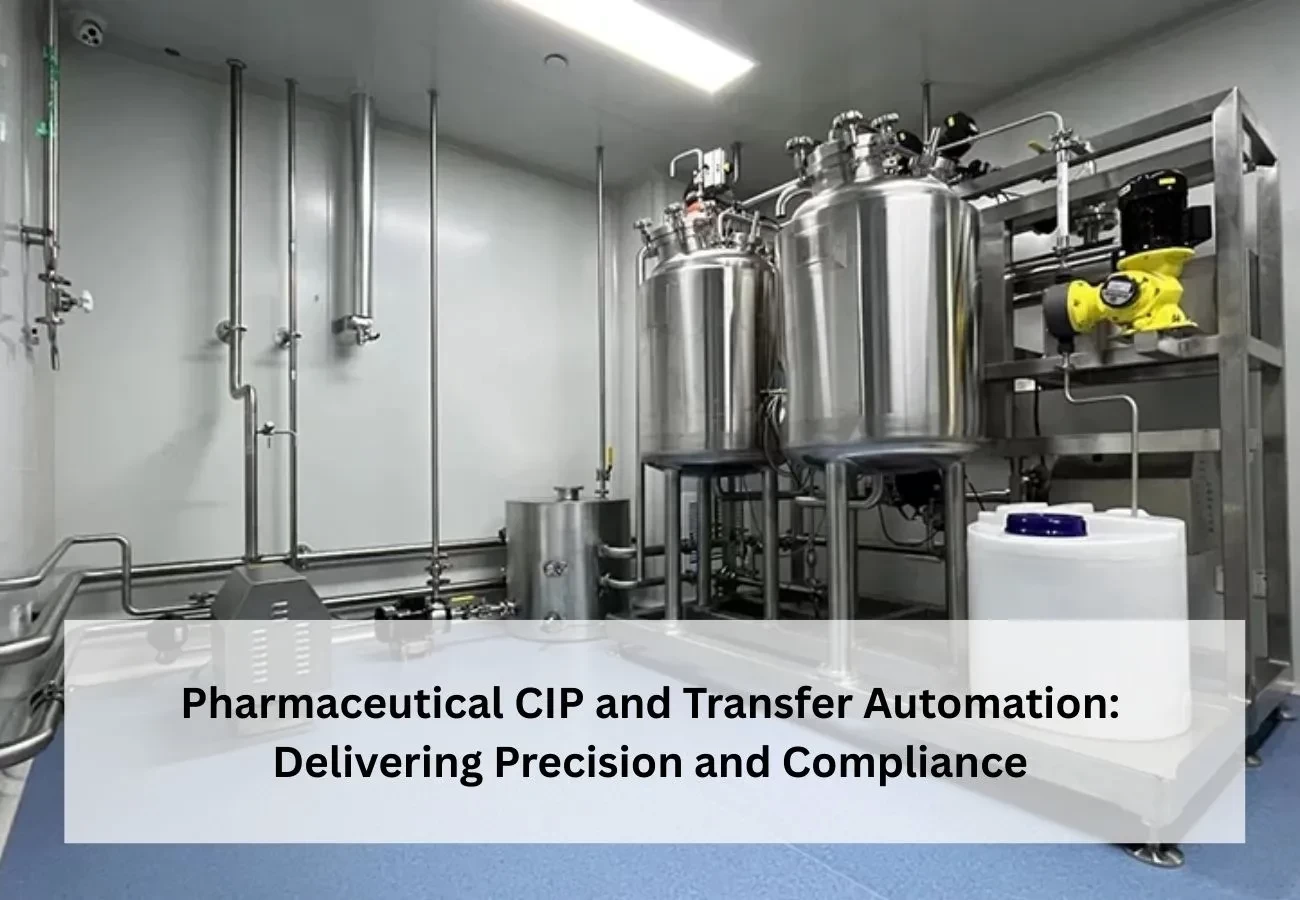
Automated Pharmaceutical CIP System
A fully automated Cleaning-in-Place (CIP) system was made to follow the strict requirements of pharmaceutical manufacturing. Key features of the system include:
- Automated preparation of detergent and sanitizing solutions for consistent cleaning.
- A centralized distribution board capable of sending cleaning solutions to 11 distinct zones within the plant.
- Effective cleaning of preparation tanks, storage tanks, transfer lines, and filling lines.
- Integration with bottle filling machine systems to maintain hygiene throughout the production cycle.
Transfer Line Automation
The project also involved automating the product transfer lines from preparation tanks to storage units and onward to the buffer tanks of the liquid filling machine. This automated system allows fluids to move smoothly through each stage of production, reducing manual handling and improving overall operational efficiency.
The new system enables multiple production lines to run simultaneously, with automated connections that precisely control flow rates, volumes, and timing. This automation reduces human errors and ensures that every batch consistently meets high-quality standards.
Special Features
- Fully automated transfer and cleaning processes that maximize efficiency.
- Comprehensive cleaning coverage for all process stages, including tanks, pipelines, and filling equipment.
- Integration between multiple production lines for seamless operations.
- FDA 21 CFR Part 11 compliant automation system, ensuring data integrity and complete traceability.
- Computerized audit trails that provide full transparency for regulatory inspections.
The system also incorporates key water treatment plant components to ensure the quality of water used in production and cleaning. These components maintain consistent water standards for both the CIP system and formulation processes, making certain that all liquids in production meet the highest safety and quality requirements.
Role of Water Treatment and Industrial Effluent Management
An important part of any pharmaceutical liquids plant is water management. The project used an industrial effluent treatment plant to treat wastewater generated during manufacturing and cleaning processes. This system ensures that effluent is treated to meet environmental standards before being discharged or recycled.
Proper management of industrial effluent not only protects the environment but also supports compliance with local and international regulations.
Incorporating water treatment plant components into the system ensures that water quality remains optimal for both production and cleaning. This allows the CIP system and liquid filling machine to function under ideal conditions. Clean, high-quality water is very important for thorough cleaning, precise formulation, and minimizing contamination risks.
Also Read: What Is an Effluent Treatment Plant?
Outcome
INOXPA delivered a solution engineered to the client’s process requirements, combining automation, hygiene, and regulatory compliance. The integration of the bottle filling machine and automatic liquid filling machine into the new lines has improved production efficiency, reduced downtime, and minimized human errors.
The fully automated CIP system, supported by robust water treatment plant components, ensures thorough cleaning of tanks, pipelines, and filling equipment, maintaining a sterile production environment. Installing an industrial effluent treatment plant improves wastewater handling and shows the company’s focus on environmental care. This project shows how automation, used with precise engineering and regulatory compliance, can modernize and transform pharmaceutical manufacturing.
Today, the plant operates very efficiently, with every stage from preparation to filling closely supervised. INOXPA’s solution was chosen by the client for its fit with production needs and the company’s extensive experience in promising reliable, high-standard automation.
With this improvement, the company continues to lead in generic medicine manufacturing, ensuring consistent product quality, regulatory compliance, and eco-friendly practices at every step. Combining efficient cleaning, automated transfer lines, and integrated bottle filling machine and automatic liquid filling machine systems ensures the plant meets growing production needs while preserving excellence.