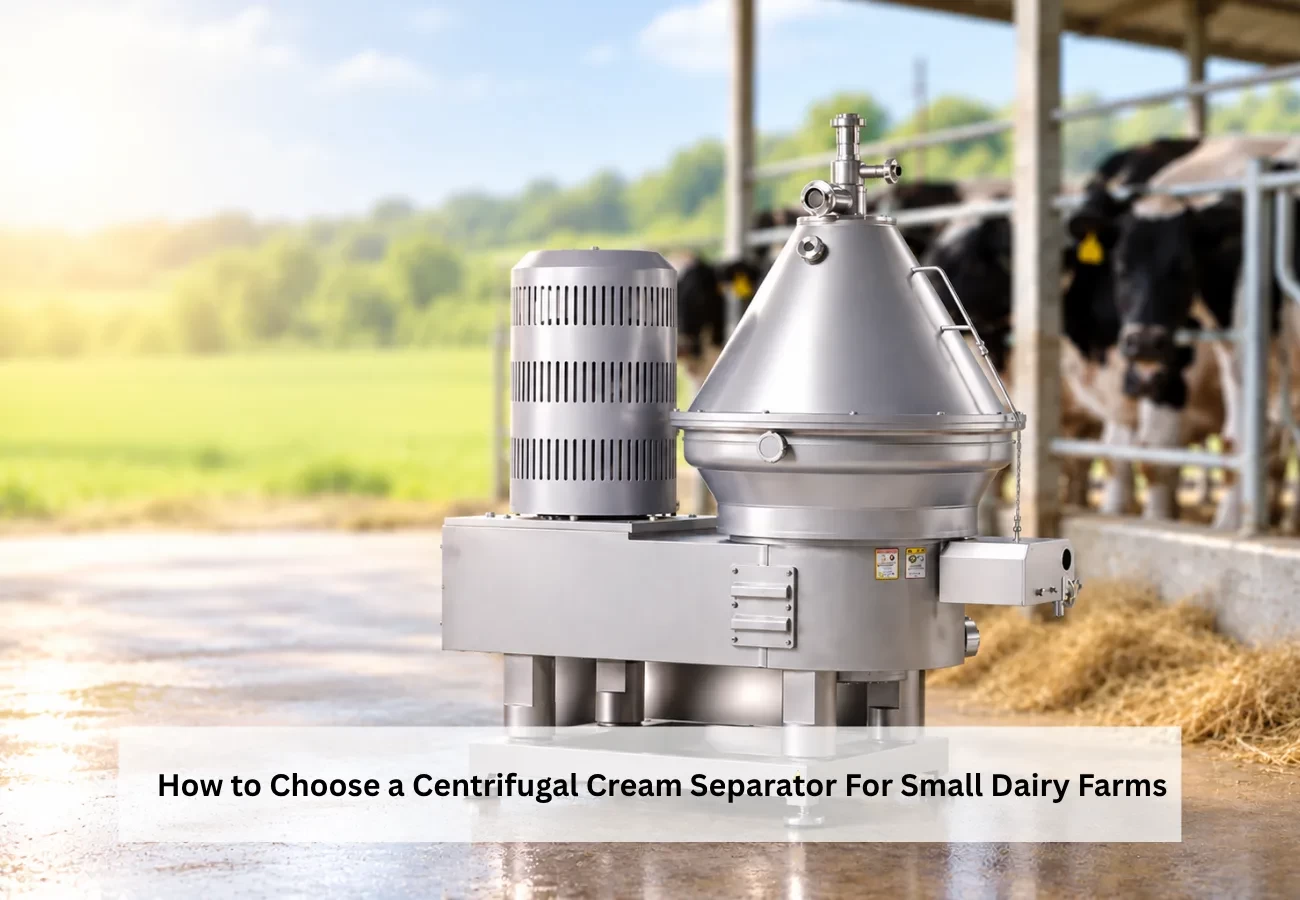

How to Choose a Centrifugal Cream Separator For Small Dairy Farms
You choose a centrifugal cream separator for a small dairy farm by matching its litres-per-hour capacity to your daily milking volume, checking the disc bowl design for ease of cleaning, and confirming the motor suits your power supply. For small dairy farms, the right capacity depends on daily milk volume, the time available for processing and the manufacturer's recommended operating range.
Key Takeaways
- Match capacity to your herd size, not to future ambitions you haven't reached yet.
- A disc bowl cream separator with more separation discs generally gives cleaner fat separation.
- Manual separators suit farms with unreliable electricity; electric ones save time and labour.
- Cleaning routine matters as much as raw capacity when you're milking every single day.
- The budget should account for spare parts and servicing, not just the purchase price.
Why This Centrifugal Cream Separator Matters
A cream separator isn't a machine you swap out every season, so getting it right the first time saves a fair bit of hassle later. Small dairy farms often run on tight margins, and the wrong equipment either wastes money on capacity you will never use or leaves you struggling during peak milking. If you are also looking at other farm equipment upgrades, our guide on dosing systems for dairy hygiene covers a related decision many small farms face around the same time.
The global market for this centrifugal cream separator has grown steadily. According to a report by Market.us, the cream separator market was valued at roughly USD 536.8 million in 2024 and is projected to reach USD 943.3 million by 2034, with the 100 to 300 litres-per-hour category holding the largest share at 35.8 percent, largely because it balances capacity with day-to-day flexibility. That figure tells you that most buyers, including small operators, land in that mid-capacity band rather than at the extremes.
Work Out Your Daily Milk Volume First
Before anything else, sit down and work out how many litres you are actually milking each day, and add a bit of headroom for busier months. A farm milking three or four cows might only need to process 30 to 50 litres a day, while a slightly larger holding could easily reach 150 litres. Buying a machine sized for volumes you don't have wastes money and, oddly enough, can also reduce cream separation efficiency, since some separators perform best only within their designed flow range.
Understand the Disc Bowl and Separation Discs
Inside every centrifugal cream separator sits a separator bowl fitted with a stack of separation discs. As the bowl spins at high speed, centrifugal force in milk separation pushes the heavier skim milk outward while the lighter cream collects nearer the centre. This is the basic mechanism behind centrifugal milk separation, and it hasn't changed much in over a century, even though the machines themselves have gotten easier to use.
More discs generally mean finer milk fat separation, because the milk passes through more thin layers before it separates. That said, more discs also mean more parts to clean, so there's a genuine trade-off between separation quality and how long you'll spend washing up after milking.
What to Check on the Bowl
- Whether the bowl and discs are made from food-grade stainless steel
- How easily the bowl assembly comes apart for cleaning
- Whether replacement discs are available locally, not just from overseas suppliers
Capacity Comparison for Small Farms
| Separator Type | Typical Capacity | Best Suited For | Cleaning Effort |
| Manual (hand-crank) | Up to 85 litres/hour | Farms with 2 to 5 cows, unreliable power | Low to moderate |
| Small electric | 100 to 150 litres/hour | Farms with 5 to 10 cows | Moderate |
| Mid-size electric | 150 to 300 litres/hour | Growing operations, small cooperatives | Moderate to high |
| Industrial | Above 300 litres/hour | Not usually needed on small farms | High |
Manual models such as smaller hand-crank units can process up to around 85 litres an hour, which suits very small herds well. Electric versions in the 100 to 150 litre range handle a bit more without asking much extra from the operator, which is why they are such a common choice among smallholders upgrading from manual equipment.
Power Source: Manual or Electric
If your farm has patchy electricity, a manual separator gives you independence from the grid, and it's usually cheaper to repair. Electric separators, on the other hand, cut down the physical effort considerably and process milk faster, which matters if you're milking before heading off to other work. Neither option is universally better; it genuinely depends on your circumstances, your budget, and how much time you have each morning.
Cleaning and Maintenance Habits
Cream separation efficiency drops fast if a machine isn't cleaned properly after every single use, and milk residue left in the bowl can affect both hygiene and taste in the next batch. Rinse with lukewarm water immediately after use, then follow with a proper wash of all disc surfaces. Skipping this even once or twice a week tends to shorten the lifespan of the discs and bowl seals.
A simple weekly habit worth building:
- Disassemble the bowl straight after the last use of the day.
- Rinse all separation discs individually under running water.
- Wash with a dairy-safe detergent, then air dry before reassembly.
- Check rubber seals and gaskets monthly for wear.
Budget and Long-Term Value
Cheaper machines can be tempting, but spare parts availability often ends up costing more over a few years than a slightly pricier model with local support. Ask your supplier directly whether discs, seals and motors are stocked nearby before you commit. A centrifugal cream separator is a long-term purchase for most small farms, often lasting a decade or more with reasonable care, so the upfront saving on a bargain model rarely holds up once you factor in downtime and repairs.
Conclusion
Choosing a centrifugal cream separator for a small dairy farm really comes down to a handful of practical decisions: how much milk you produce daily, whether you have reliable power, how much cleaning effort you're prepared to put in, and whether spare parts are available nearby. Get those four things right and the machine will serve you well for years.
Get in touch with Alantech to understand what fits your farm best.
Frequently Asked Questions (FAQs)
Q1: How much milk can a small dairy farm typically process with one separator?
A1: Most small farms manage comfortably with a separator rated between 50 and 150 litres an hour, depending on herd size.
Q2: Is a manual or electric cream separator better for a small farm?
A2: Manual separators suit farms with unreliable electricity and small herds, while electric ones save time and handle larger daily volumes with less physical effort.
Q3: How often should the separator bowl and discs be cleaned?
A3: Clean them after every use, since leftover milk residue affects hygiene and shortens the life of the seals and discs.
Q4: Does a higher number of separation discs improve cream quality?
A4: Generally yes, more discs improve milk fat separation, but they also add cleaning time, so it's a balance rather than a straightforward rule.