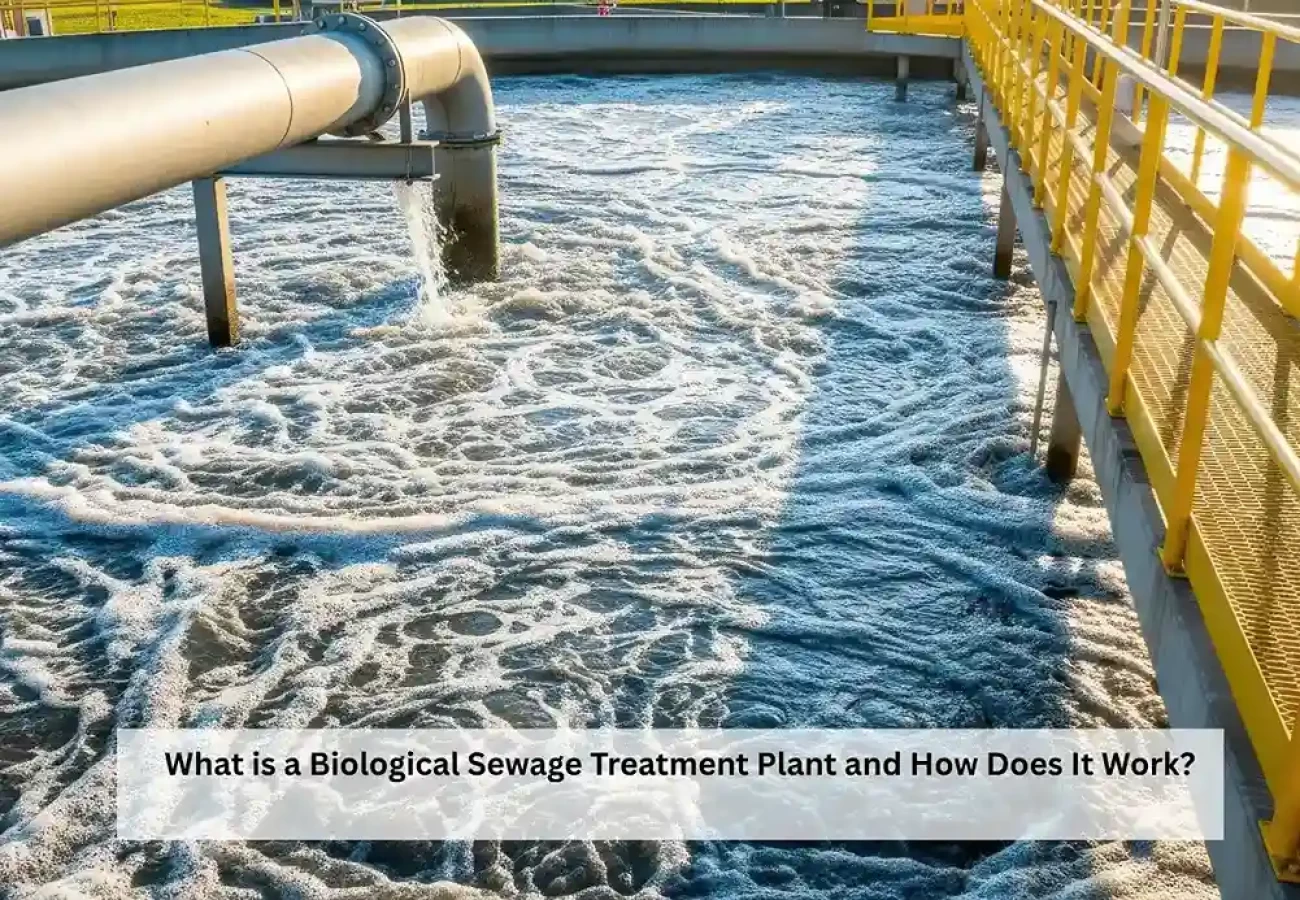

What is a Biological Sewage Treatment Plant and How Does It Work?
A biological sewage treatment plant is a system that uses naturally occurring microorganisms to break down organic waste present in sewage before the water is released back into the environment. These microbes consume biodegradable pollutants as food, converting harmful organic matter into simpler, safer substances through aerobic or anaerobic processes, reducing organic pollutants and preparing the treated water for further treatment, permitted reuse, or discharge.
Key Takeaways
- A biological sewage treatment plant relies on microorganisms rather than heavy chemical dosing to clean wastewater
- The biological sewage treatment plant process typically involves screening, primary settling, biological treatment, and final clarification
- Aerobic treatment uses oxygen-loving bacteria, while anaerobic treatment works without oxygen and suits different waste loads
- Dissolved oxygen levels directly affect how well microorganisms can break down waste
- A well-run sewage treatment plant can remove a large share of organic pollutants before water is discharged
- Biological wastewater treatment is generally more sustainable and cost-effective than purely chemical methods over time
Introduction
A biological sewage treatment plant is essentially a facility where living microorganisms do most of the hard work of cleaning wastewater. If you have ever wondered how sewage turns from something unusable into water that can be safely released, this is largely the answer. This blog explains exactly how a biological sewage treatment plant works, from the first screening stage to the final clarified output.
What Happens Inside the Sewage Treatment Plant?
Before biology even enters the picture, raw sewage passes through some basic physical steps. Large debris gets screened out, grit settles, and heavier solids are removed in a primary tank. Once that's done, the water still carries a considerable amount of dissolved and suspended organic matter, and this is where biological treatment takes over.
The purpose of a sewage treatment plant built around biological processes is fairly straightforward. It gives microorganisms the right environment, enough food, enough oxygen where needed, and enough time to break down pollutants naturally rather than through synthetic chemical reactions.
Also Read: Sewage Treatment Plant Systems
The Role of Microorganisms
Microorganisms are the actual workforce inside any biological treatment system. Bacteria, protozoa and occasionally fungi consume the organic matter present in sewage as their food source. As they feed, they multiply, and this growing population continues consuming pollutants until the water quality improves significantly.
This isn't a new or experimental idea either. Nature has been doing this in rivers and wetlands for a very long time. A treatment plant simply speeds up and concentrates the same natural process within tanks and controlled chambers, so it happens in hours rather than weeks.
Why Biodegradable Pollutants Matter?
The entire system depends on the waste being biodegradable. Organic material such as food waste, human waste, and other carbon-based pollutants can be broken down by microbes fairly easily. Non-biodegradable substances like certain plastics or heavy metals don't respond the same way, which is why industrial effluent sometimes needs additional treatment stages alongside biological ones.
Aerobic Treatment
Aerobic treatment is the more commonly used method in municipal and residential biological sewage treatment plants, and it relies on bacteria that need oxygen to survive and function. Air or oxygen is deliberately introduced into the treatment tank, usually through diffusers or mechanical aeration, keeping the microorganisms active and productive.
Under these oxygen-rich conditions, bacteria break down organic matter into carbon dioxide, water and additional biomass. The process tends to be faster than anaerobic methods and produces water with lower odour, which is part of why it's favoured for plants located near residential areas.
Anaerobic Treatment
Anaerobic treatment takes the opposite approach, using microorganisms that work without oxygen. This method suits situations with a heavier organic load, such as industrial wastewater or sludge with high concentrations of pollutants.
By breaking down waste in stages, anaerobic bacteria produce methane, instead of directly generating carbon dioxide and water. Some facilities actually capture this gas and use it as an energy source, which adds a practical benefit beyond simple waste treatment.
Also Read: Aerobic and Anaerobic Treatment of Wastewater
Step-by-Step Biological Sewage Treatment Plant Process
- Screening: Large solids and debris are physically removed
- Primary settling: Heavier particles sink and get separated from the water
- Biological treatment: Microorganisms consume organic matter, either aerobically or anaerobically
- Secondary clarification: Treated water settles again, separating cleaned water from remaining biomass
- Disinfection: Water is treated further, often with chlorine or UV, before final discharge
- Sludge handling: Leftover biomass is processed separately, sometimes reused as fertiliser or fuel
This biological sewage treatment plant process can vary slightly depending on scale and the specific pollutants involved, but the underlying logic stays consistent across most systems.
Aerobic vs Anaerobic Treatment
| Factor | Aerobic Treatment | Anaerobic Treatment |
| Oxygen requirement | Needs continuous oxygen supply | Works without oxygen |
| Speed | Generally faster | Slower, more gradual |
| Odour | Lower | Can be stronger |
| By-products | Carbon dioxide and water | Methane gas and sludge |
| Best suited for | Municipal and lighter sewage loads | Industrial or heavily loaded waste |
| Energy use | Higher, due to aeration equipment | Lower, sometimes energy-generating |
Dissolved Oxygen & Aerobic Biological Treatment
Benefits of Biological Wastewater Treatment
- Lower dependence on chemicals compared to purely chemical treatment methods
- Cost savings over the long term, particularly for larger facilities
- Better suited to handling the natural organic content typical of domestic sewage
- Produces treated water that can often be reused for irrigation or non-drinking purposes
- Generates fewer harmful by-products than aggressive chemical processes
Conclusion
Frequently Asked Questions (FAQs)
Need a Reliable Sewage Treatment Solution?