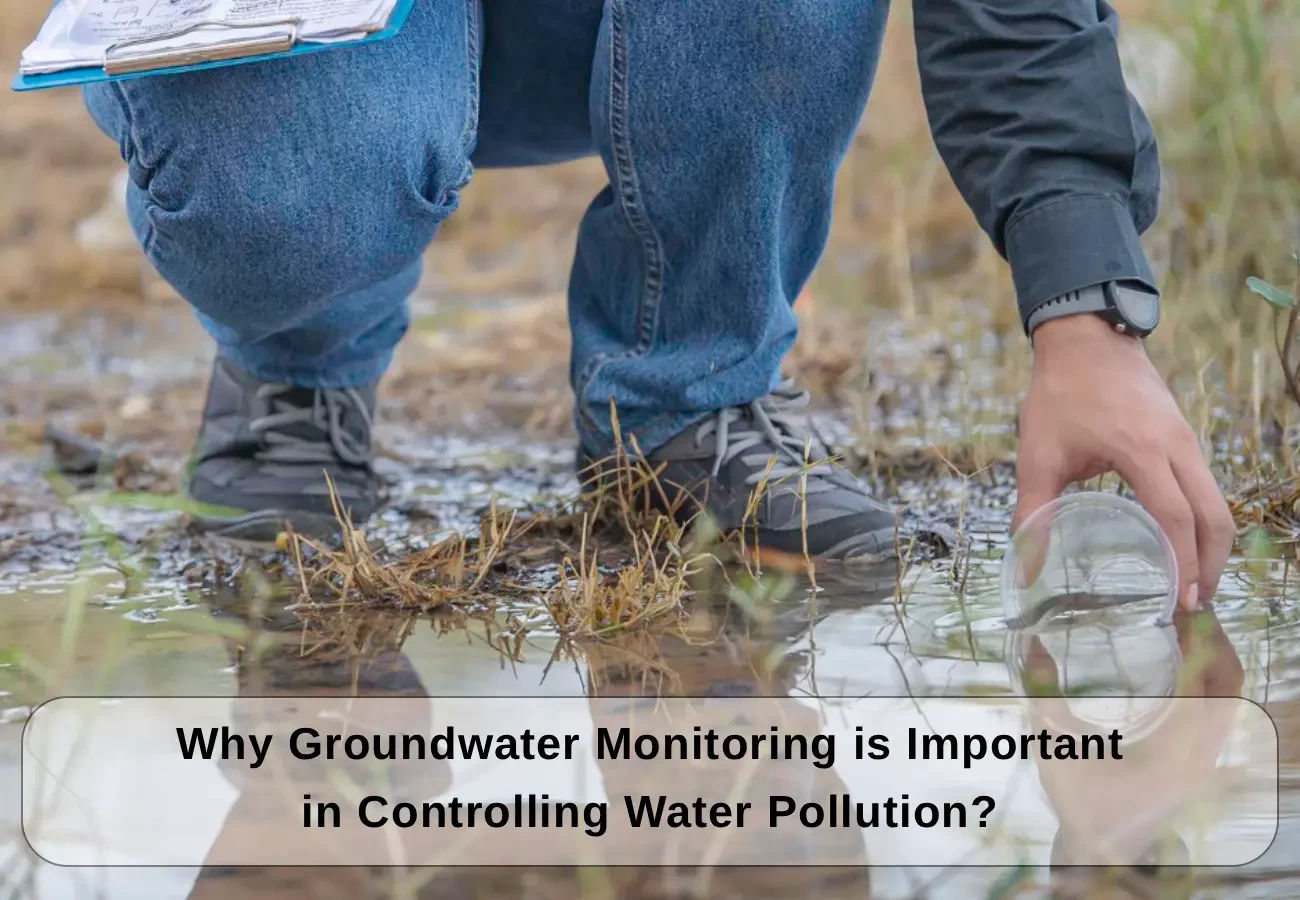

Why Groundwater Monitoring is Important in Controlling Water Pollution?
Groundwater monitoring shows when water quality or water level starts to change, so the source of pollution can be traced and addressed early. Regular readings from wells and sensors help teams protect drinking water, plan cleanup work and confirm that treatment is working. This is why groundwater monitoring is important in control of water pollution for towns, farms and industries.
Key Takeaways
- Early readings help teams find a pollution source while the affected area is still small
- Groundwater levels and water quality are best tracked together, since each helps explain the other
- Simple manual measurements and automatic sensors both have a place in a good programme
- A well-planned monitoring network gives government agencies and site owners data they can act on
- Clear records support sustainable groundwater management and long-term environmental protection
Water below ground stays out of sight, so regular measurement is the practical way to know what is happening to it. Wells, boreholes and sensors give a steady record of how much water is present and how clean it is. In this blog, we will explain what gets measured, how the work is done and how the readings help communities and industries keep local supply clean. If you manage a site or water supply scheme, Alantech can help you select and install groundwater monitoring equipment suited to your requirements.
Why Groundwater Needs Close Attention
The UN World Water Development Report 2022 states that groundwater already provides half of the volume of water withdrawn for domestic use worldwide, and around 25% of water withdrawn for irrigation. Many households and farms therefore depend on it every day.
Pollutants travel slowly underground. A spill or leak at the surface may take months or years to reach a well, and by then the affected area can be wide. Understanding the delay helps explain why groundwater monitoring plays an important role in controlling water pollution. Regular readings pick up small shifts early, which gives people time to act while the area involved is still small.
What Monitoring Teams Measure
- Groundwater Levels and the Water Table
When the water level in a well rises or falls, it tells us how much is being drawn out and how much is being refilled by rain. Changes in groundwater levels also affect the direction in which water, and anything dissolved in it, moves. A shift in direction can bring a polluted area closer to a supply well, so level readings help predict where a pollutant may go next.
- Water Quality Readings
Quality is checked through a short list of measurements:
- Water temperature, which influences how fast chemical and biological changes occur.
- Conductivity sensors measure electrical conductivity, which can increase when salts or other dissolved substances enter the water.
- Oxygen content, which helps show whether natural breakdown of organic matter is taking place.
- Water hardness, which indicates the amount of dissolved minerals.
- Other chemical parameters, such as nitrates, metals and fuel-related compounds, usually checked through laboratory samples.
Also Read: Total Dissolved Solids
Common Sources of Pollution
Most cases trace back to a handful of activities. Leaks from storage tanks, poorly managed industrial waste, fertiliser runoff from farmland, and seepage from septic systems all add substances to the ground. Landfills and old dump sites can release pollutants slowly over many years. Monitoring helps identify which of these is responsible, because each leaves a recognisable pattern in the readings. Nitrates point towards farming or sewage, for example, while a sudden rise in conductivity near a factory suggests a different source.
Also Read: Nitrogen Compounds
How Monitoring is Carried Out
- Manual Measurements
A technician lowers a water level meter into a well and records the depth at which water is found. Samples are collected at the same visit and sent to a laboratory. This approach is low cost, easy to repeat and useful for checking the accuracy of automatic equipment. The limitation is frequency, as visits usually happen monthly or quarterly.
- Automatic sensors
Sensors placed in a well record level, temperature and conductivity at set intervals, often every few minutes, and send the data to a central system. In rural areas, smart hand-pump sensors record how much a community pump is used and can add basic quality readings, so a village supply can be tracked without a full-time operator.
- Comparing the Options
|
Method |
Best suited to |
What it records |
Typical frequency |
|
Manual
measurements |
Small
sites, spot checks |
Water
level, samples for laboratory work |
Monthly
or quarterly |
|
Automatic
data loggers |
Industrial
sites, wellfields |
Level,
temperature, conductivity |
Every
few minutes |
|
Smart
hand-pump sensors |
Village
supplies |
Pump
use, basic quality readings |
Continuous |
|
Laboratory
sampling |
Detailed
quality checks |
Chemical
parameters, metals, nitrates |
Seasonal
or as planned |
Most programmes combine two or three of these so that each covers what the others do not.
Building a Useful Monitoring Network
A monitoring network is a set of wells and instruments arranged to give a fair picture of an area. Placement matters more than quantity. Good measuring sites are chosen on three principles: one upstream of a possible pollution source, one or more downstream of it, and a few close to places where people draw water.
Spacing, depth and construction details of each monitoring station should suit the local rock and soil. Seals around the casing keep surface water from entering the well, so the sample reflects the true condition of the aquifer. Records of each well, including its depth, date of installation and survey position, should be kept in one place so that readings can be compared across years.
Large-scale monitoring programmes may track multiple groundwater bodies within the same river basin, including distinct aquifers. In those cases, a shared data format makes it simpler for teams from different locations to compare results.
Turning Readings Into Decisions
Data has value once it guides action. A few examples show how.
- Spotting trends. A slow upward trend in conductivity over two seasons may point to a leak well before it reaches a supply well.
- Adjusting pumping rates. When levels fall during dry months, operators can lower pumping rates so the aquifer has time to refill. Slower draw also reduces the chance of pulling polluted water towards a well.
- Checking cleanup work. After a remediation project, continued readings confirm whether the area is returning to normal.
- Supporting regulation. Government agencies use monitoring records to set permit conditions and to follow up on reports from the public.
When the readings feed into a water management system, operators can view levels, quality and alerts on one screen. This supports water management decisions at a site, village or district level, and it forms part of wider sustainable practices such as careful waste storage and planned irrigation. Over time, these steps support sustainable groundwater management and contribute to environmental protection for the whole area.
Conclusion
Regular measurement gives communities, farms and industries a dependable view of the water below their land. It identifies changes while they are small, shows where they are coming from and confirms when corrective steps have worked. That combination explains why groundwater monitoring is important in control of water pollution, and it supports safer supply for the people who depend on wells and boreholes. A balanced set of manual checks, automatic sensors and well-placed stations keeps the record accurate and usable over many years.
Plan Your Monitoring Programme with Alantech
We design, supply and install groundwater monitoring systems, including water level meters, conductivity sensors, data loggers and smart hand-pump sensors. Our team can review your site, suggest a layout for measuring sites and set up a data platform that fits your reporting needs. Visit alantech.in to explore our products or to speak with us about your project.
Frequently Asked Questions (FAQs)
Q1: How often should groundwater be monitored?
A1: It depends on the site. Water level can be checked monthly by hand, while sensors record it every few minutes. Quality sampling in a laboratory is usually done each season or twice a year. Sites near industrial activity or a supply well benefit from more frequent checks.
Q2: Which readings give the earliest sign of pollution in groundwater?
A2: Changes in conductivity, water temperature and oxygen content often appear first, since these shift quickly when new substances enter the water. A laboratory test can then confirm which chemical parameters are involved. Reviewing these readings together with the water level shows where the pollutant may be coming from and where it is heading.
Q3: Can small communities set up groundwater monitoring?
A3: Yes. A community can start with a water level meter and a regular sampling schedule, then add smart hand-pump sensors as needs grow. Guidance from local authorities on where to place measuring sites makes the data more useful, and it can be shared with government agencies for wider planning.