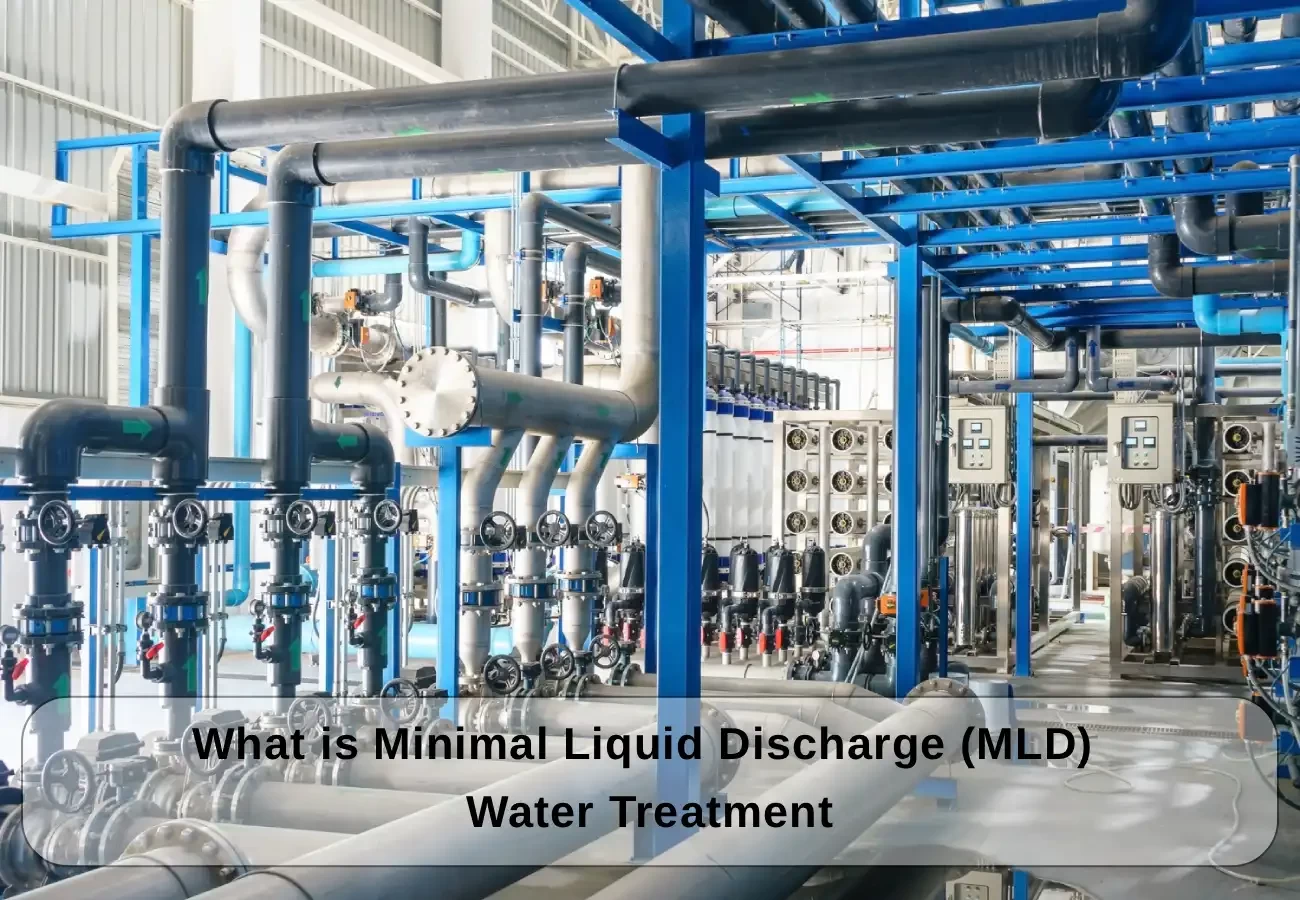

What is Minimal Liquid Discharge (MLD) Water Treatment
MLD water treatment, short for minimal liquid discharge water treatment, is an industrial wastewater approach where the majority of processed water is treated and recovered for reuse, leaving only a small volume for controlled discharge or further processing. It combines multiple treatment stages to reduce liquid waste as far as practically possible, helping industries meet environmental standards while cutting down on fresh water use.
Key Takeaways
- Minimal liquid discharge (MLD) aims to recover most of the wastewater generated by a facility, rather than releasing it untreated
- An MLD water treatment system typically recovers a large share of process water, usually somewhere between 85 and 95%, depending on the setup
- Regulatory pressure from bodies like the Central Pollution Control Board has pushed many industries toward stricter water recovery practices.
- An industrial MLD system is commonly used in sectors such as textiles, pharmaceuticals, distilleries and chemical processing
- A properly designed MLD treatment plant reduces dependence on fresh water and lowers the environmental impact of industrial discharge
Industries that use large volumes of water in their processes face a growing challenge: treating that water is no longer enough on its own, since regulators and local communities expect much less of it to leave the plant altogether. MLD water treatment has become one of the more practical answers to this problem, sitting between conventional effluent treatment and a fully closed system with no discharge at all. This article explains how a minimal liquid discharge water treatment system actually works, what stages it involves, and why more industries are choosing this route over standard treatment alone.
How MLD Water Treatment Works?
A minimal liquid discharge system does not treat water once and release it. Instead, it passes water through several stages, each designed to remove specific contaminants and recover as much clean water as possible for reuse within the facility.
- Pre-treatment
This stage removes suspended solids, oils and larger particles before the water moves on to more sensitive treatment steps, and it protects downstream equipment and improves the efficiency of later stages.
- Biological Treatment
Organic contaminants are broken down using biological processes, reducing the load on the system before water reaches the more advanced recovery stages.
- Membrane Filtration
Technologies such as reverse osmosis and ultrafiltration separate dissolved salts and remaining impurities from the water, producing a large volume of clean water that can be reused in the plant.
- Evaporation and Concentration
The remaining concentrated waste stream, now much smaller in volume, is further reduced through evaporation. This step is where most of the water recovery in an MLD wastewater treatment setup actually happens.
- Residual Management
What's left after concentration is a small amount of waste, usually solid or semi-solid, that needs proper disposal. Because the volume is small compared to the original wastewater, handling and disposal become far more manageable.
MLD vs Other Treatment Approaches
|
Approach |
Discharge
Level |
Typical
Use Case |
|
Conventional
treatment |
Treated
water discharged after basic processing |
Industries
with lower pollution load |
|
Minimal
liquid discharge (MLD) |
Small
volume of discharge after high water recovery |
Industries
needing a large cut in fresh water use |
|
Zero
liquid discharge (ZLD) |
No
liquid discharge at all |
Highly
regulated or water-scarce industrial zones |
This comparison shows where an MLD treatment plant sits between standard treatment and a fully closed-loop system, offering a middle ground for facilities that need strong water recovery without the higher cost of a complete zero-discharge setup.
Why Are Industries Adopting MLD Systems?
Water scarcity and tightening regulations are the two biggest reasons industries are moving toward minimal liquid discharge approaches. Many regions in India face groundwater stress, and regulators have responded with stricter discharge norms for specific sectors, including textiles, tanneries, distilleries and pharmaceutical manufacturing.
Practical Benefits of an MLD Water Treatment System
- Reduced dependence on fresh water, lowering long-term operating costs
- Lower risk of regulatory penalties tied to discharge violations
- Smaller volume of waste to manage and dispose of
- Improved environmental standing with regulators and local communities
- Better resilience in regions facing water shortages or usage restrictions
Challenges to Consider
An industrial MLD system is not without its costs. The technology involved, particularly membrane filtration and evaporation equipment, requires a higher upfront investment compared to conventional treatment. Energy consumption is another factor, since evaporation stages use a fair amount of power. That said, many industries find the long-term savings on fresh water and reduced compliance risk make up for these costs over time.
Is MLD the Right Choice for Your Facility?
Not every facility needs a full MLD treatment plant. The decision usually depends on factors such as the volume of wastewater generated, local water availability, regulatory requirements specific to the industry, and the cost of fresh water in the region. A proper assessment of these factors is the starting point before committing to any particular treatment approach.
Conclusion
Minimal liquid discharge water treatment offers a practical middle path for industries that need a substantial cut in fresh water use and discharge volume, without the full cost and complexity of a zero discharge system. Understanding the stages involved, from pre-treatment through to evaporation and residual management, helps facilities plan a system suited to their actual needs rather than a generic setup.
As one of the top water treatment plant companies in India, Alantech design treatment systems that help industries recover as much water as possible from their processes while staying within discharge norms. If you are exploring an MLD water treatment system for your facility, get in touch with Alantech, or visit our website to learn more about how we support industries with tailored water recovery solutions.
Frequently Asked Questions (FAQs)
Q1: What does MLD stand for in water treatment?
A1: MLD stands for minimal liquid discharge, a wastewater treatment approach that recovers most of the water used in industrial processes, leaving only a small amount for controlled discharge.
Q2: How is MLD different from zero liquid discharge?
A2: The main difference lies in the discharge volume. Zero liquid discharge systems aim to release no liquid waste at all, while an MLD water treatment system reduces discharge to a small, manageable amount rather than eliminating it completely, which usually makes it a more cost-effective option for facilities that don't require a fully closed system.
Q3: Which industries commonly use MLD systems?
A3: Textiles, pharmaceuticals, distilleries, chemical manufacturing and other water-intensive industries commonly adopt minimal liquid discharge systems, particularly where local regulations or water scarcity make high water recovery a priority.
Q4: Is an MLD system expensive to install?
A4: The upfront cost is generally higher than conventional treatment due to the equipment involved, but the long-term savings on fresh water and reduced compliance risk usually offset this over a few years of operation.