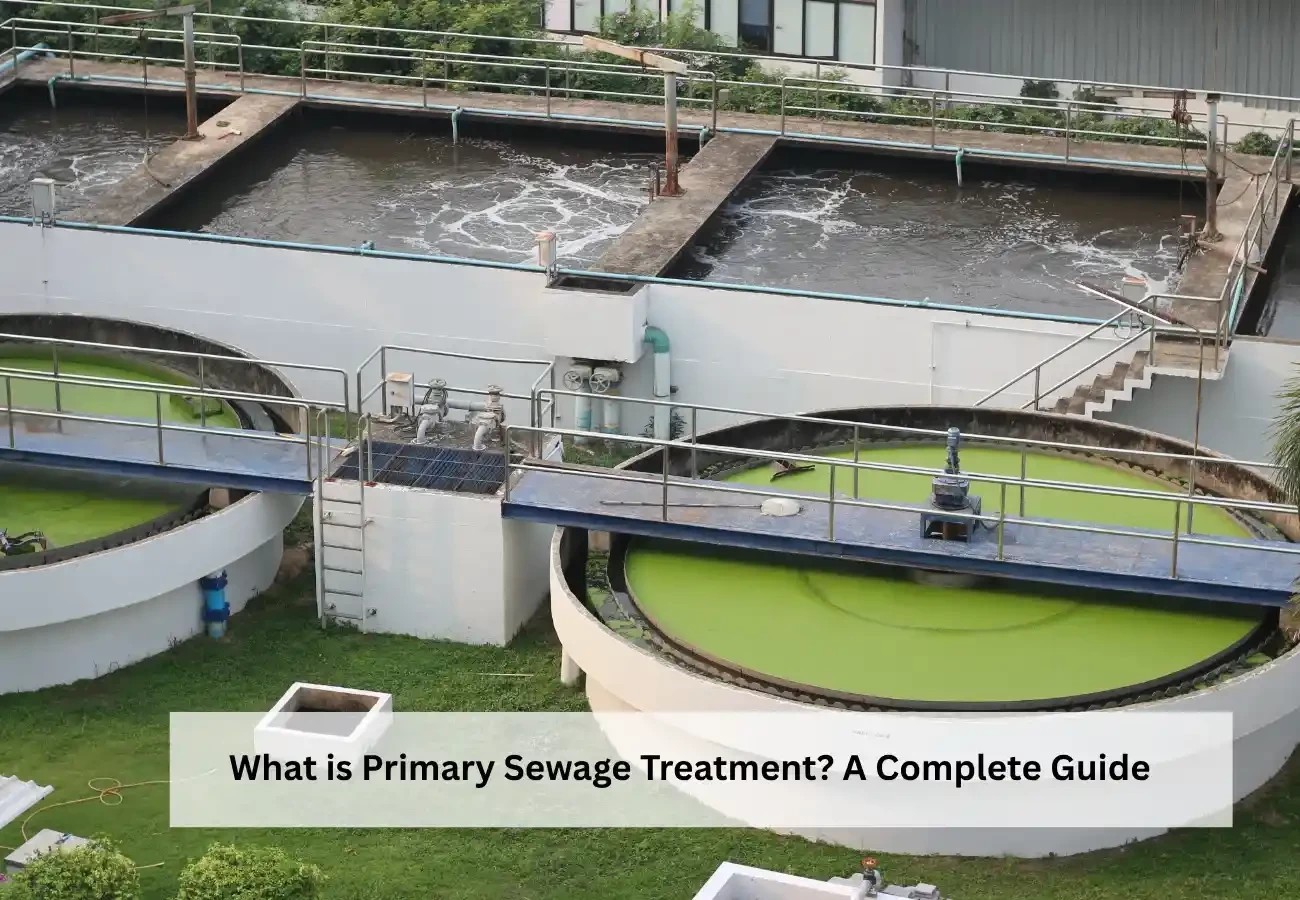

What is Primary Sewage Treatment? A Complete Guide
Primary sewage treatment is the first physical stage of wastewater treatment, where large debris, grit and heavy solids are removed from sewage before it moves on for biological treatment. It relies on screens, grit chambers and settling tanks to reduce solid content by physical separation alone, without chemicals or bacteria, preparing the wastewater for the next stage of cleaning.
Key Takeaways
- Primary sewage treatment physically separates solids from wastewater using screens, grit chambers and sedimentation tanks.
- It typically removes 50 to 65% of suspended solids and around 25 to 40% of biochemical oxygen demand (BOD).
- The process does not involve chemical or biological breakdown, it relies on gravity and mechanical filtration.
- A well-run primary sewage treatment process protects downstream equipment and improves the efficiency of secondary treatment.
- Globally, wastewater treatment still lags behind demand, which makes each stage of the process worth understanding.
Introduction
Sewage doesn't arrive at a treatment plant ready to be cleaned. It carries rags, grit, sand, oil and a mix of organic matter that would damage pumps and clog pipes if left untreated. That is where primary sewage treatment comes in. It's the opening stage of a longer process, designed to strip out the heavier and larger materials before the water moves on to biological treatment. If you are researching how sewage plants function, or you are involved in planning one, understanding this stage first makes the rest of the process easier to follow. For a closer look at how treatment systems are designed and maintained, Alantech can offer more detail suited to your specific project.
This blog explains each part of the primary sewage treatment process, from screening to sedimentation, and explains why it sits at the centre of any functioning treatment plant.
How the Primary Sewage Treatment Process Works
Before wastewater reaches a settling tank, it passes through a series of screening steps., and these steps exist purely to catch anything that shouldn't be there in the first place.
- Bar Screens and Coarse Screening
The first barrier sewage meets is usually a bar screen, and this is a row of metal bars, spaced a few centimetres apart, that catches large objects like plastic bags, wipes, sticks, and whatever else has been flushed or washed down a drain. This step is known as coarse screening, and it protects pumps further along the line from jamming or wearing out too quickly.
- Fine Screening
Once the big items are out, the water passes through finer mesh screens. Fine screening catches smaller debris that coarse screens miss, such as small plastic fragments or fibres. This step reduces the load on later stages and keeps smaller particles from settling where they shouldn't.
- Grit Chamber
After screening, wastewater flows into a grit chamber, and here, the flow slows down just enough for sand, gravel and small stones to sink to the bottom, while lighter organic material stays suspended and continues downstream. Grit removal matters because sand and stones can wear down mechanical equipment surprisingly fast if they are allowed to pass through.
Sedimentation: Where Most of the Work Happens
Once grit and large debris are gone, the water reaches the part of the process that does the heaviest lifting.
- Primary Sedimentation Tank/Primary Settling Tank
The wastewater enters a primary sedimentation tank, sometimes called a primary settling tank. Flow is deliberately slowed here, giving heavier suspended solids time to sink to the bottom as sludge, while lighter materials such as grease and oil rise to the top as scum. Mechanical scrapers usually collect both, moving sludge to a hopper and skimming scum from the surface.
- Sedimentation Basin and Primary Clarifier
This tank is also referred to as a sedimentation basin, and the unit responsible for the actual separation is called a primary clarifier. Design varies between circular and rectangular tanks, but the underlying principle stays the same and reduces flow speed enough for gravity to do its work. A properly sized primary clarifier can remove a substantial share of suspended solids before the water ever reaches biological treatment.
Why Primary Wastewater Treatment Matters?
Skipping or under-designing this stage causes problems downstream. Solids that aren't removed early end up overloading biological treatment tanks, and this can reduce their efficiency and shorten equipment life. Primary wastewater treatment isn't there to fully clean the water, it exists to prepare it, cutting down the workload for every stage that follows. A treatment plant that handles this stage well tends to run more smoothly overall, with fewer breakdowns and lower maintenance costs.
Primary Treatment vs Secondary Treatment
| Feature | Primary Treatment | Secondary Treatment |
| Method | Physical (screening, settling) | Biological (bacteria break down organic matter |
| Suspended solids removed | 50 to 65% | Additional 85 to 95% of remaining solids |
| BOD removed | 25 to 40% | Up to 90% cumulative |
| Equipment used | Bar screens, grit chambers, clarifiers | Aeration tanks, biological reactors |
| Chemicals or organisms involved | None | Bacteria and, at times, added oxygen |
| Purpose | Prepare wastewater for further treatment | Break down dissolved and remaining organic material |
Wastewater Treatment Today
Wastewater treatment still has a long way to go worldwide. According to the United Nations' 2025 progress report on Sustainable Development Goal 6, only 56% of domestic wastewater generated globally in 2024 was safely treated, a figure that has barely moved since 2020 UN Statistics Division, 2025. That gap is exactly why each stage of treatment, including the initial physical steps, deserves proper attention rather than being treated as a formality.
Conclusion
Primary sewage treatment may be the first step in a longer process, but it carries more weight than its position suggests. Bar screens, grit chambers and sedimentation tanks work together to strip out what shouldn't be there, and this can protect equipment and set up every later stage for better results. Whether you are managing a plant, studying the process, or planning one from scratch, getting this stage right pays off further down the line.
If you are working on a wastewater project and want guidance that is best for your site and requirements, get in touch with Alantech for support with design, installation or maintenance of treatment systems.
Frequently Asked Questions (FAQs)
Q1: What is removed during primary sewage treatment?
A1: Large debris, grit, sand and heavy suspended solids are removed, along with floating oil and grease, using screens and settling tanks.
Q2: How long does wastewater usually stay in a primary sedimentation tank?
A2: It usually stays for one and a half to two and a half hours, though this can vary depending on flow rate and tank design.
Q3: Is primary treatment enough to make sewage safe to release?
A3: No. Primary treatment only removes solids by physical means. Water still needs secondary and sometimes tertiary treatment before it meets discharge standards.
Q4: What happens to the sludge collected in a primary clarifier?
A4: It's pumped out for further processing, which usually includes thickening, digestion and dewatering before disposal or reuse.
Q5: Can a sewage treatment plant skip the grit chamber stage?
A5: It's not advisable. Without grit removal, sand and stones can damage pumps and other mechanical parts much sooner than expected.