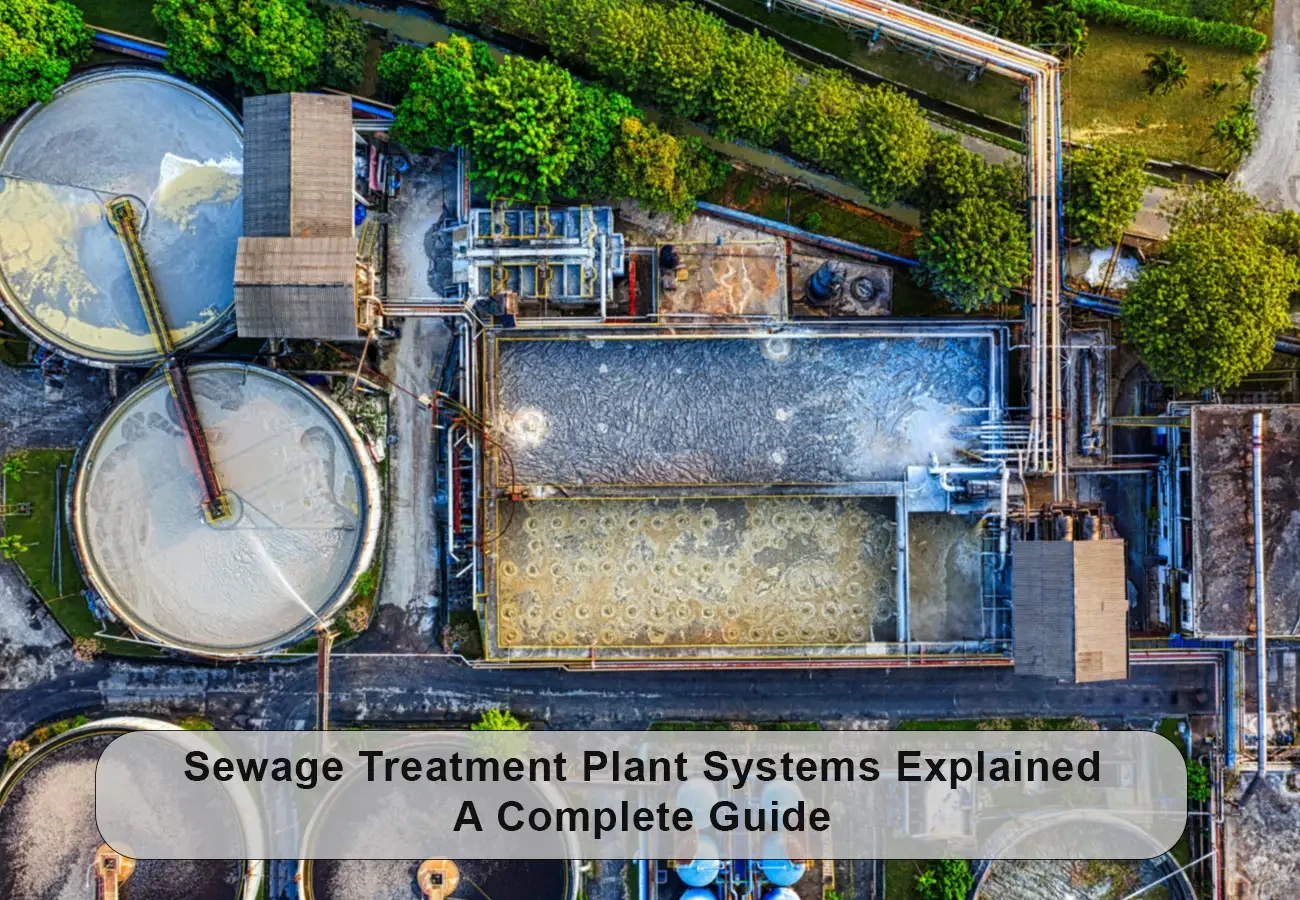

Sewage Treatment Plant Systems Explained: A Complete Guide
Have you ever thought about how much water you use in a day for different things like cooking, cleaning, bathing, and washing clothes? Most of that water turns into wastewater. Now think about how much water your neighbours, your office, nearby factories, and everyone else are using every single day. All of that turns into a surprisingly large volume of wastewater. What happens to it all? That is why we need efficient sewage treatment plant systems. These systems are built to handle all the used water and make it clean enough to be reused or safely released back into nature.
What Is a Sewage Treatment Plant System?
A sewage treatment plant system is a very effective setup that collects, treats, and manages wastewater. It clears out solids, organic waste, and harmful bacteria from used water. This allows the water to be reused for purposes like irrigation or flushing, or safely discharged into the environment. These treatment systems clean up used water so it can be safely reused or released. They play a key role in keeping communities healthy and protecting the surroundings.
Main Stages of Treatment
- Primary Treatment
This is the first step of the process where big, solid particles are taken out of the wastewater. The water passes through screens and grit chambers that trap things like plastic pieces, sand, or food waste. After that, the water moves into a sedimentation tank where heavy particles sink to the bottom as sludge, and the lighter ones rise to the top and are taken out.
- Secondary Treatment
Once the primary treatment is done, the water moves on to the biological stage. It is with the introduction or activation of microorganisms that the organic material in the water is broken down. They break down pollutants and help lower the biochemical oxygen demand in the wastewater. Systems like activated sludge or MBBR (Moving Bed Biofilm Reactor) are commonly used here. After treatment, the water is passed through another tank to allow the biomass to settle.
- Tertiary Treatment
This stage can be skipped, but it is important when high-quality water is ensured. There are many steps in the tertiary treatment process, including filtration, UV disinfection, and chemical removal of nutrients. The water is made to go through all these steps to improve quality after this process. This process produces water that is very clean enough to be reused or safely returned to water bodies.
- Sludge Treatment
A huge amount of sludge is generated during both the primary and secondary stages of the treatment process. This sludge needs to be treated too. Sludge is usually treated through processes like thickening, anaerobic digestion, as well as dewatering to make it safer and easier to manage. When handled the right way, this sludge can either be disposed safely or even put to good use as fertilizer or a source of biogas.
Why Sewage Treatment Plant Systems Are Important
A well-designed sewage treatment plant system benefits everyone. The below mentioned are few of the reasons:
- Keeps rivers, lakes, and soil clean
- Reduces the spread of diseases caused by untreated sewage
- Helps recycle water for secondary purposes
- Makes cities and industries compliant with environmental laws
- Protects aquatic life from toxic waste
- Saves freshwater by reusing treated water
As wastewater treatment plants become more advanced and are built to meet strict water quality standards, they are able to ensure that water is safe for whatever purpose it is. There are a number of systems designed to remove harmful contaminants from water, such as heavy metals, bacteria, and organic wastes. In this way, the treated water becomes safe for reuse in non-drinking applications such as gardening, toilet flushing, or industrial cooling, in which the water is not intended for drinking. This not only eases the demand on our limited freshwater supply but also supports long-term environmental protection.
Modern setups like the Moving Bed Bioreactor (MBBR) and MBR plants (Membrane Bioreactor) are gaining popularity, especially in cities where space is tight. They offer high efficiency and better results compared to older methods. At the same time, they simplify the handling of sewage sludge.
As soon as the sludge has been treated, it goes through sludge digestion, and then sludge handler units are used to ensure that the sludge is handled in a safe and proper manner. By doing this, the whole process is made safer, cleaner, and more reliable.
Without proper treatment systems, our water sources would get polluted fast, and water scarcity would become worse.
Common Types of STP Systems
A few important factors need to be considered while choosing the right type of STP, including wastewater volume, type of pollutants, space available, and water quality.
- Activated Sludge Process (ASP)
This is one of the most widely used systems, especially in urban municipalities and large residential complexes. ASP relies on aerobic bacteria that are suspended in the water to break down organic waste.
- Sequential Batch Reactors (SBR)
SBR is ideal for batch-wise treatment in small towns or institutions.
- Membrane Bioreactor (MBR)
This method uses a mix of biological treatment and membrane filtration to produce high-quality, purified water. Although MBR systems require more energy and have higher upfront costs, the water quality they deliver is unmatched.
- Moving Bed Biofilm Reactor (MBBR)
Uses carriers for microbes to grow, suitable for varying loads.
- Constructed Wetlands
A nature-based solution is often used in rural areas or for ecological landscaping.
There is an increasing number of advanced systems, including Moving Bed Bioreactors (MBBRs) as well as Membrane Bioreactors (MBRs), which are becoming popular in urban areas. Additionally, with the help of these systems, it is easier to manage sewage sludge, which is then processed by employing techniques such as sludge digestion, and is handled in a safe manner by modern sludge handlers. Different systems work better for various situations, depending on your water flow needs, budget limits, and how you plan to use the treated water.
Alantech’s Trusted STP Solutions
Being one of India’s leading water treatment solution providers, Alantech offers advanced sewage treatment plant systems for residential, commercial, and industrial applications. Based in Kerala, we focus on combining technology, design, and sustainability. Alantech offers:
- STP systems that are compact and efficient. Ideal even for space-limited locations.
- Specifically designed to ensure the treated water meets quality standards for reuse or safe release into the environment.
- These plants are energy conscious as well as low on maintenance
- High-quality components that ensure long system life and performance.
- Complete support from consultation to installation and maintenance.
What to Consider When Choosing an STP
Before installing an STP, here are some important things to consider:
- Type of wastewater
- Whether you need domestic, industrial, or mixed type of wastewater.
- Do you have the space for a large tank system or prefer a compact one?
- Will the treated water be reused or released?
- Choose a system that is cost-effective and power-efficient.
- Make sure the system meets pollution control board standards.
Conclusion
To manage water responsibly, you need to treat sewage and it is a smart and sustainable solution.
If you are looking for energy-efficient and easy-to-operate STPs, Alantech can help you. Our team works with you right from the initial survey to installation and after-service, making sure you get exactly what you need.
Visit alantech.in to know more about our sewage treatment plant systems.