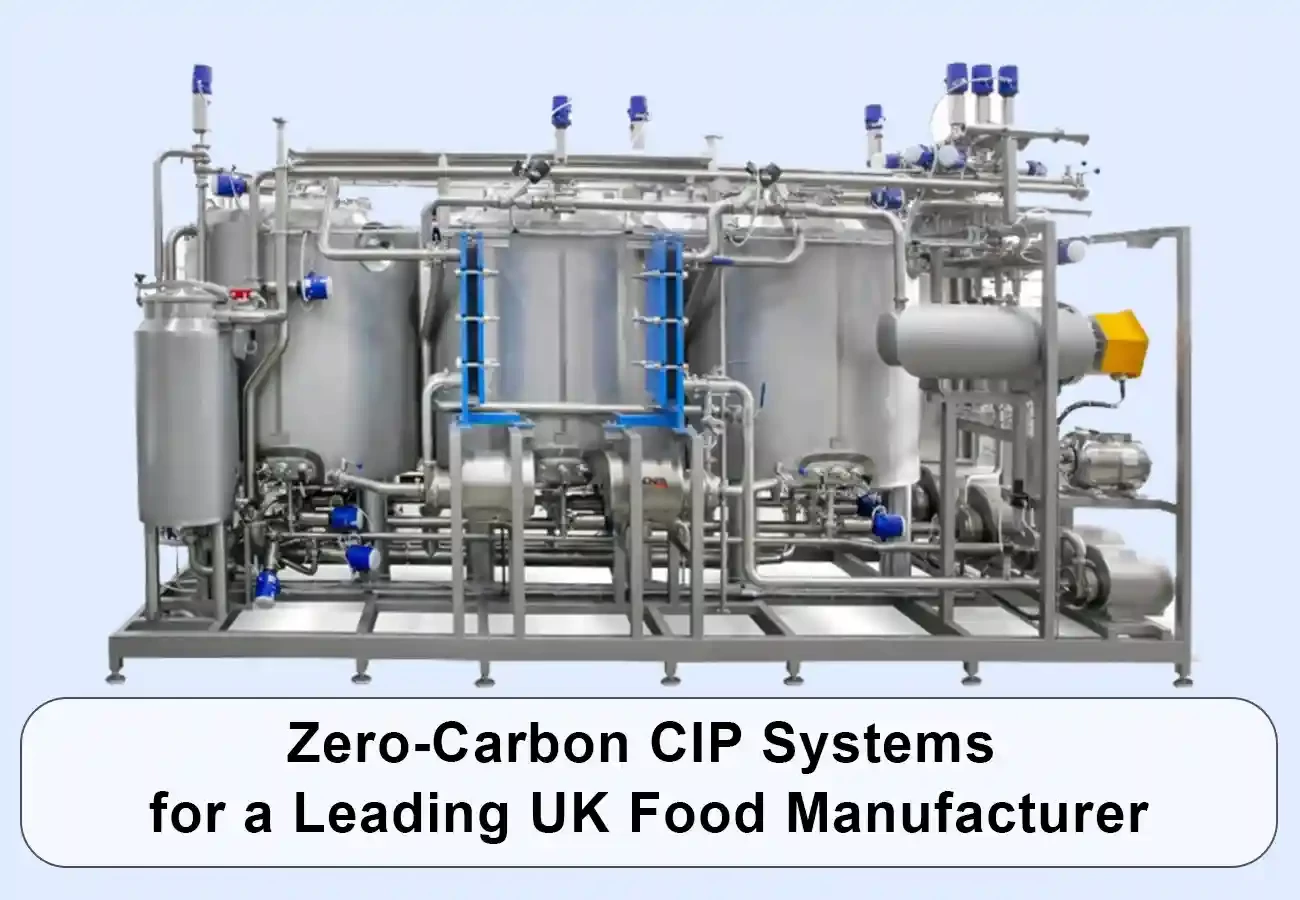

Zero-Carbon CIP Systems for a Leading UK Food Manufacturer
Introduction
Sustainability has moved far beyond being a choice in modern food production. It now sits at the heart of how the industry operates. With environmental regulations increasing and consumers expecting responsible manufacturing, producers are steadily shifting toward cleaner, more efficient, and low-impact processing technologies. For one of the UK’s largest dry-ingredient food manufacturers, this shift became impossible to ignore. The company operates three agglomerator vessels around the clock, producing an extensive recipe portfolio that demands both precision and uncompromised hygiene. However, their existing Clean-in-Place (CIP) system could not keep pace with the production load or the sustainability roadmap the company had committed to.
The manufacturer needed a smarter and energy-efficient cleaning system. Their decision to redesign the CIP setup marked the beginning of a project that blended advanced engineering with long-term environmental responsibility. Throughout the project, the integration of supporting technologies such as a high purity water system, and reliable water treatment components, played a key role in ensuring both hygiene compliance and operational sustainability.
Project Overview
The customer required a CIP upgrade that could efficiently serve large-scale mixing and production skids, each handling vessels carrying more than two tonnes of product. The cleaning cycle had to cover five distinct process sections, including the air-evacuation ducting, one of the most contamination-sensitive zones in dry-ingredient manufacturing. The complexity of the system demanded not only a redesign but a complete, future-ready cleaning solution.
INOXPA was selected to manage the entire turnkey project, design, construction, installation, and start-up, based on its long-standing success in delivering CIP solutions for the food and beverage sector. Beyond technical competence, the customer sought alignment with sustainability ambitions, including their intended transition to renewable-powered operations. The facility also required seamless integration with existing water treatment plant components, ensuring consistent water quality and volume across all CIP cycles.
Why INOXPA?
The decision to partner with INOXPA was about much more than selecting a CIP system. The manufacturer needed a team capable of designing a solution that could meet their current production load while also moving them steadily toward their long-term sustainability targets. INOXPA had already implemented numerous solutions integrating CIP systems with high purity water system setups, enabling consistent hygienic performance in demanding processing environments.
Instead of traditional steam heat exchangers, INOXPA introduced fully electric heaters capable of raising water temperatures from 65°C to 80°C using the facility’s existing hot-water supply. This shift helped the customer cut down their reliance on steam and achieve a noticeable boost in energy efficiency. Just as importantly, it prepared the facility for a future powered entirely by renewable electricity, including solar and heat-pump systems.
This close integration with the facility’s water treatment components helped maintain stable thermal performance and consistent hygiene standards, even when production was at its highest. The coordinated design also supported the manufacturer’s broader industrial waste water treatment goals by lowering thermal stress on the system and contributing to cleaner, more controlled discharge over time.
Installation Characteristics
The project was executed in two major phases to ensure smooth integration with ongoing production:
Phase 1: Single-Line CIP System
The first stage involved installing a dedicated CIP system responsible for cleaning one complete mixing line. This setup provided immediate operational relief and created a testing ground for system validation before scaling up to the second phase.
Phase 2: Triple-Line CIP System
The second phase delivered a larger CIP setup designed to clean two mixing systems and one vessel-cleaning station. This system was engineered with full compatibility for solar power and heat-pump integration, which will ultimately allow the plant to achieve a zero-carbon footprint in cleaning operations.
Both phases were designed to work in tandem with the site's water treatment plant components, ensuring uninterrupted supply, efficient recycling, and reliable filtration. As production scales, the upgraded CIP system also contributes to lowering the load on industrial waste water treatment operations, thanks to optimized usage and reduced chemical demand.
The second stage of the project will eventually replace the steam-based hot-water system entirely. Once connected to renewable power sources, the fully electric CIP system will operate with zero carbon emissions, representing a complete transformation in the customer’s approach to sustainability.
Special Features of the Solution
INOXPA’s engineering team delivered a fully customized solution equipped with advanced features designed to meet the customer’s hygiene, efficiency, and long-term sustainability goals.
- Fully electric heating system, engineered for compatibility with solar and heat-pump technologies
- Zero-carbon operation potential once integrated with on-site renewable sources
- Custom CIP cycle design to accommodate five complex cleaning zones
- Smooth integration with the facility’s high purity water system to maintain cleaning quality
- Optimization of water treatment components for stable supply and efficient rinsing cycles
- CIP design that lowers the operational load on industrial waste water treatment, reducing discharge pollutants and improving sustainability metrics
Outcome
The advanced CIP design, complete electrification, and readiness for renewable energy placed the customer among the leaders in sustainable food production in the UK. The upgraded system delivers excellent hygiene across all mixing vessels, including the delicate air-evacuation ducts. With its compatibility with the existing high purity water system, the facility now experiences improved consistency in cleaning cycles and overall product quality.
The collaborative approach taken between INOXPA and the manufacturer helped optimize water treatment components, ensuring efficient use of process water with minimal wastage. This directly contributed to lowering the volume and pollutant concentration entering the industrial waste water treatment system, creating a more environmentally friendly operational footprint.
Once the solar and heat-pump systems become fully operational, the entire CIP process will run exclusively on renewable energy. This transition not only paves the way for zero-carbon operations but also lowers the costs tied to traditional steam-based systems. At the same time, the closer coordination between CIP cycles and water treatment plant components strengthens long-term reliability and ensures consistent process performance.
Conclusion
This project shows that modern engineering can drive sustainable manufacturing without compromising hygiene, reliability, or productivity. INOXPA’s fully electric, renewable-ready CIP systems represent the future of food production, cleaner and environmentally responsible. Supported by a high-performance high purity water system, optimized water treatment components, and reduced pressure on industrial waste water treatment, the manufacturer has taken a significant step toward establishing a carbon-neutral production environment.
By adopting water treatment plant components and zero-carbon CIP technology, the customer is establishing a strong new benchmark for the global food industry, showing that sustainability and operational excellence can truly go hand in hand.