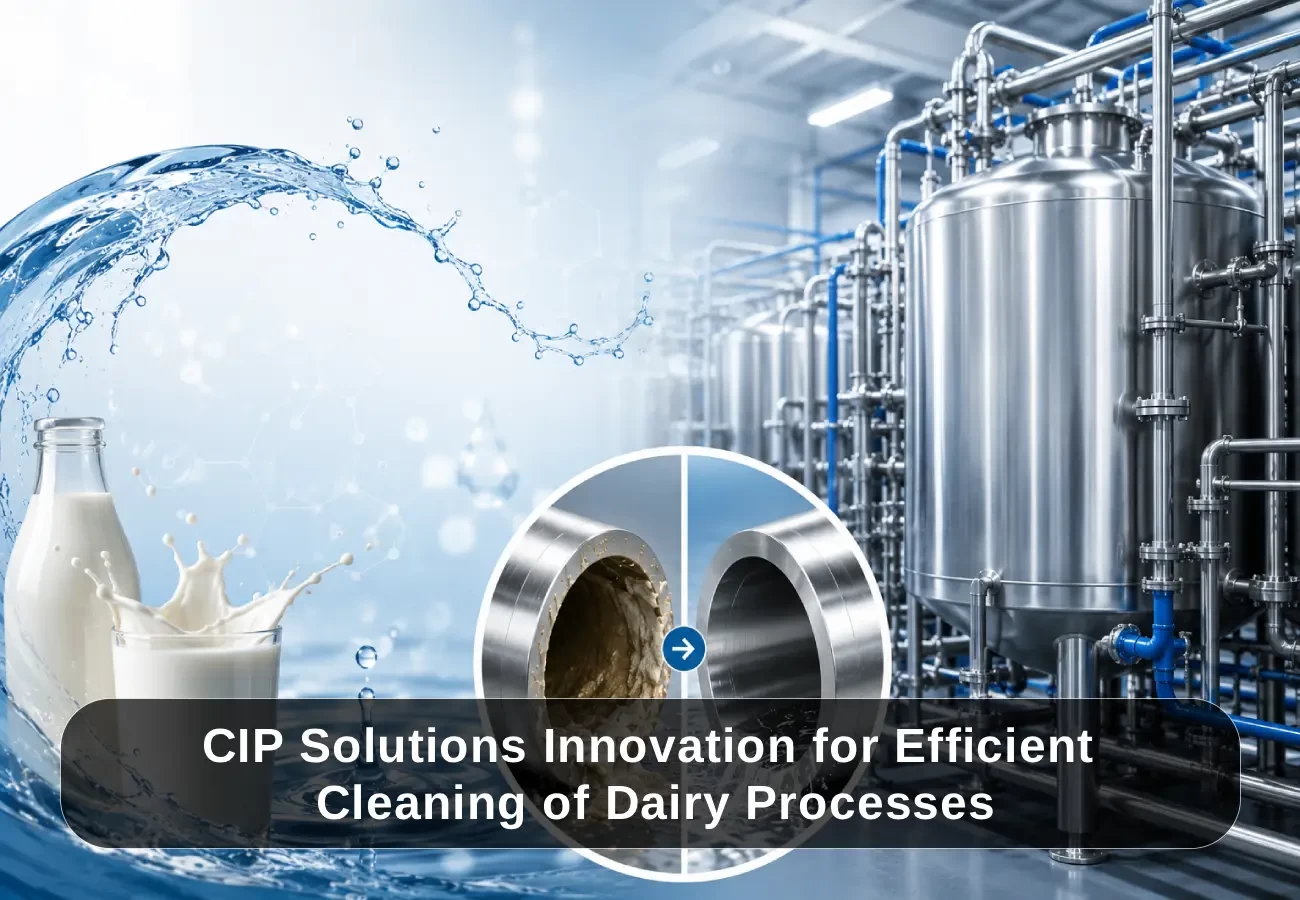

CIP Solutions Innovation for Efficient Cleaning of Dairy Processes
The processing of dairy products faces the continuous problem of maintaining hygiene standards and reducing operating costs. High water consumption, wastage of chemicals, increased downtime and dependency on manual labour are the results of traditional cleaning methods. A major dairy
processing company in Bogota experienced similar issues with their current Cleaning-in-Place (CIP) system.
The company was operating a slow single line CIP that was manually controlled, affecting the overall production efficiency. Cleaning cycles consumed significant amounts of chemicals and water; manual operations made it a challenge to maintain accurate chemical dosing and consistent cleaning quality.
To meet these challenges the company introduced a fully automatic dual line CIP system to improve efficiency, better utilize resources and improve operational safety. The same hygiene principles are widely applied in water treatment plant India projects and food processing facilities where consistent cleaning is essential for product quality and regulatory compliance.
The Challenge
- The old cleaning system caused a number of operational bottlenecks:
- Slow cleaning cycles which cause production delays
- Overuse of water and cleaning chemicals
- Inconsistent chemical dosing through manual operation
- More work and complexity of operations
- Limited cleaning capacity with just one CIP line
These problems increased the operating costs and reduced the overall efficiency of the dairy production process.
The Solution
The improved CIP installation consisted of:
- 4 x 2000L tanks
- Cleaning lines 2 x 28 m3/h
- fully automated operation
- Heat exchangers for individual lines Tubular
- Flow meters and conductivity meters for accurate monitoring
- Self-priming pumps for dependable circulation
- Special manhole cover with spray balls for cleaning of tanker
The dairy plant could clean several production lines in parallel with its two independent cleaning lines, resulting in less downtime and higher plant productivity. High-quality systems and hygienic process equipment are commonly used in CIP systems to ensure reliable fluid transfer while maintaining strict hygiene standards.
Smart Automation for Peak Efficiency
One of the main advantages of the automated CIP system was accurate chemical dosing. Different dairy products require different concentrations of cleaning and manual chemical addition is often an error prone procedure.
If the concentration is too low cleaning is ineffective and cleaning times are increased. If it is too high, chemicals are lost needlessly. To solve the problem an automated system was implemented, consisting of conductivity meters and dosing pumps that constantly monitor and correct the
chemical concentrations, depending on the process requirements.
The result was:
- Less chemicals
- Less water usage
- Quicker cleaning cycles
- Reliable cleaning performance
- Improved efficiency of operations
A recovered water tank was also integrated in the system to recycle and reuse water whenever possible, leading to significant water savings and a more sustainable plant operation.
Water recycling through CIP systems also supports facilities implementing industrial waste water treatment and waste water treatment systems to reduce freshwater consumption and wastewater discharge.
Better Safety and Sanitation
Specially designed and installed tanker truck cleaning covers to further improve operational safety. This eliminated the need for operators to manually enter the tanks, reducing safety risks and ensuring hygienic cleaning standards.
The Result
The fully automated CIP system revolutionized the dairy plant’s cleaning process, reducing operational costs, resource consumption and improving overall productivity.
At Alantech we help industries to implement smart and efficient process solutions that improve performance, hygiene and sustainability. Designed for reliable cleaning, resource efficiency and long-term savings, our state-of-the-art CIP systems are built for the dairy and food processing industries.
Frequently Asked Questions
Q1: Why is a fully automated CIP system better than a manual cleaning system?
A1: A fully automated CIP system improves cleaning consistency, reduces water and chemical consumption, shortens downtime, and minimises manual intervention, resulting in safer and more efficient operations.
Q2: What industries benefit the most from automated CIP systems?
A2: Automated CIP systems are widely used in dairy, food and beverage, pharmaceutical, and beverage manufacturing facilities where hygiene and product quality are top priorities.
Q3: How does a CIP system support sustainable manufacturing?
A3: By reducing water usage, optimising chemical dosing, and enabling water reuse, CIP systems support industrial waste water treatment practices and improve the overall efficiency of a water treatment solution for industrial facilities.