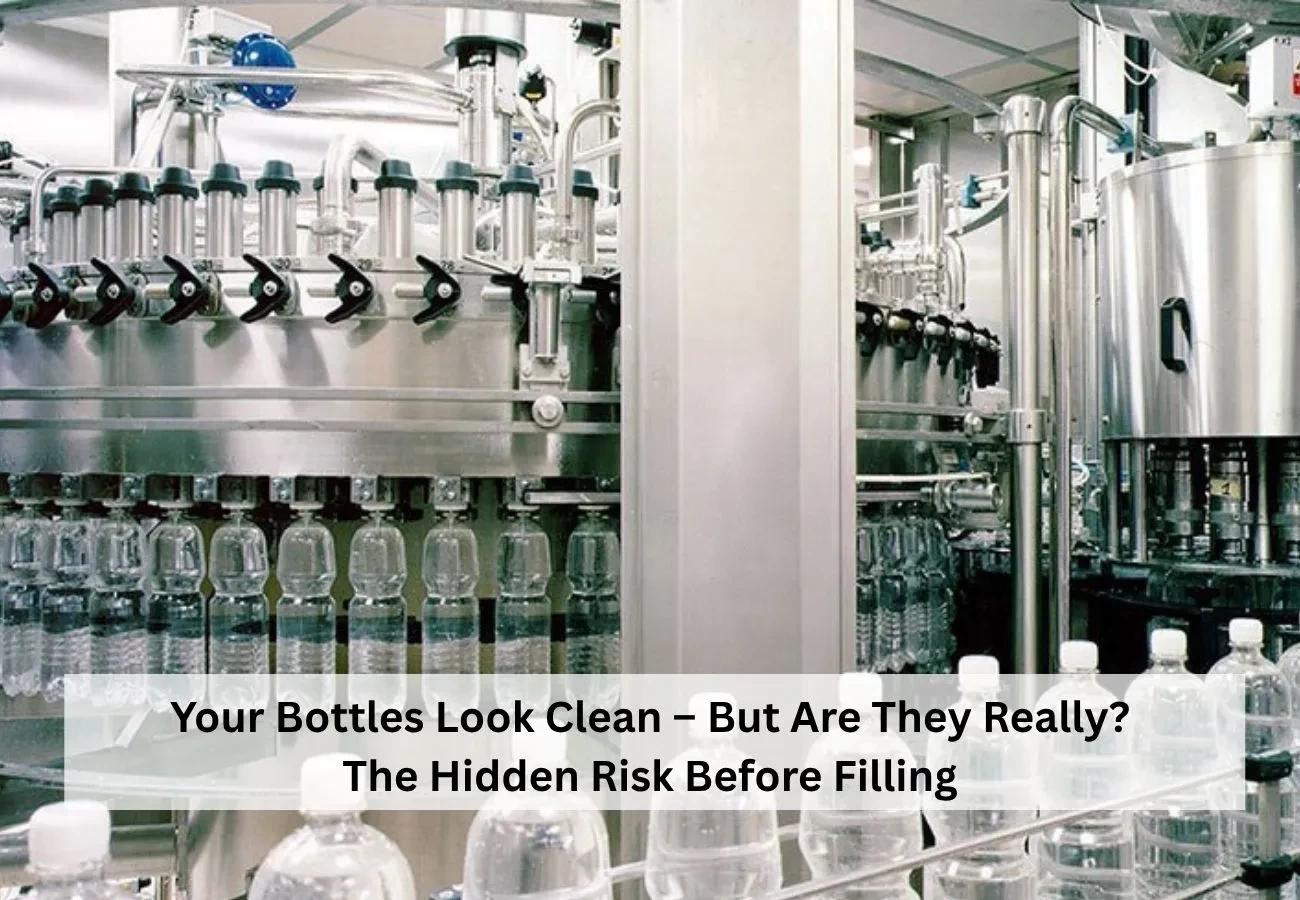

Your Bottles Look Clean – But Are They Really? The Hidden Risk Before Filling
Hygiene in modern-day bottling plants begins when the bottle enters production, not only at the filling stage. Most manufacturers overwork the cleaning process from the inside while neglecting the outside. However, the outside of the bottle plays an equally important role in maintaining product safety and plant cleanliness.
Even bottles that appear clean can carry microscopic contaminants. If these impurities enter the filling zone, they may affect the surrounding equipment and compromise the overall hygiene of the production environment. This becomes especially important in facilities that operate a bottle filling machine, where large numbers of bottles move through the line every minute, and consistency in cleanliness is critical for maintaining quality standards.
The Risk of Invisible Contamination
In industrial bottling, visual cleanliness does not always mean hygienic safety. Dust particles, handling residue, and exposure during transportation or storage can easily settle on the outer surface of bottles. These contaminants may not be visible, but they can still pose risks to both the production line and the final product.
When bottles carrying such impurities enter a water bottle filling machine, contamination can spread to conveyors, operators, and nearby equipment. Over time, this can affect hygiene audits, regulatory compliance, and the overall reputation of the brand. Preventing this risk requires manufacturers to look beyond surface appearance and adopt proper external cleaning processes before filling begins.
The Importance of External Bottle Washing
External bottle washing is no longer an optional step for responsible manufacturers. This process clears dust, small particles, and microbial contaminants that collect on the outside of bottles before they enter the filling section. When external cleaning is properly included in the workflow, it strengthens hygiene across the production line. It also reduces the risk of contaminants spreading to equipment, bottles, and nearby surfaces during operation.
This step is especially valuable in industries dealing with food, beverages, pharmaceuticals, and drinking water. In such sectors, bottles that are fed into a bottle filling machine must meet strict cleanliness standards to maintain product safety and consumer confidence.
Consistent Hygiene Through Linear Bottle Washing Technology
Modern linear bottle washing systems are built to provide steady and controlled cleaning performance. The process uses balanced water pressure, well-placed spray nozzles, and sufficient contact time so that each bottle receives even external washing.
This setup allows bottles to pass through the washing stage smoothly while the production line continues to run at its normal speed. As a result, facilities can maintain hygiene standards while supporting the operational speed required for large-scale production, including high-capacity mineral water bottling machine operations.
Effective 5-Gallon Bottle Cleaning
Large reusable containers such as 5-gallon water jars require special attention. The process these bottles go through is a repetitive process of handling, transporting, and storing them. This makes them very likely to be contaminated on their surfaces.
The automated external washing machine is a possible solution for ensuring that these bottles are well cleaned on all surfaces. This goes a long way in ensuring that hygiene is maintained in places that use containers that can be cleaned and reused, such as water bottle filling machine lines.
Designed to Comply with GMP Standards
External bottle washing also plays an important role in meeting Good Manufacturing Practice (GMP) requirements. By creating a hygienic barrier before the filling stage, manufacturers strengthen their quality control processes and improve documentation related to sanitation and process validation.
It is particularly useful in a highly regulated industry like bottled drinking water production, where a facility may have a mineral water bottling machine and must prove compliance regularly.
Smooth Integration With Bottling Lines
External washing machines are designed for smooth integration into existing production processes. They can be integrated inline with existing conveyor systems, capping equipment, fillers, inspection systems, etc., without interrupting production processes.
This ensures that manufacturers are able to enhance hygiene standards without compromising efficiency or increasing the cost of labor. The process ensures that the water bottles entering the water bottle filling machine are clean.
Conclusion
Allowing bottles to enter the filling zone without proper external cleaning creates unnecessary risk. A clean one may harbour hidden impurities that can affect hygiene, compliance, and brand image.
Investing in a trustworthy bottle washing system can ensure consistency in production processes while maintaining the integrity of the entire bottling process. For facilities using automated systems such as a bottle filling machine, maintaining external bottle hygiene is a simple but critical step in ensuring safe and dependable production.
Contact Alantech to upgrade your bottling hygiene with a dependable bottle washing solution designed to support modern bottling operations.
FAQs
- Why is external bottle washing important before filling?
External bottle washing helps to remove dust, particles, and contaminants on the external surfaces of the bottles prior to the filling stage. This ensures the maintenance of hygienic production conditions.
- Can bottles that look clean still carry contamination?
Yes. Even if bottles appear visually clean, they can carry microscopic dust, residue, or microbial contaminants from handling, storage, or transportation.
- Do mineral water bottling plants require external bottle washing systems?
Yes. Facilities that operate a mineral water bottling machine must maintain strict hygiene standards, and external washing helps ensure bottles entering the filling stage meet those requirements.
- Can external washing systems work with existing bottling lines?
Most modern systems are designed for inline operation, allowing them to integrate smoothly with conveyors, capping units, and filling equipment without interrupting production.