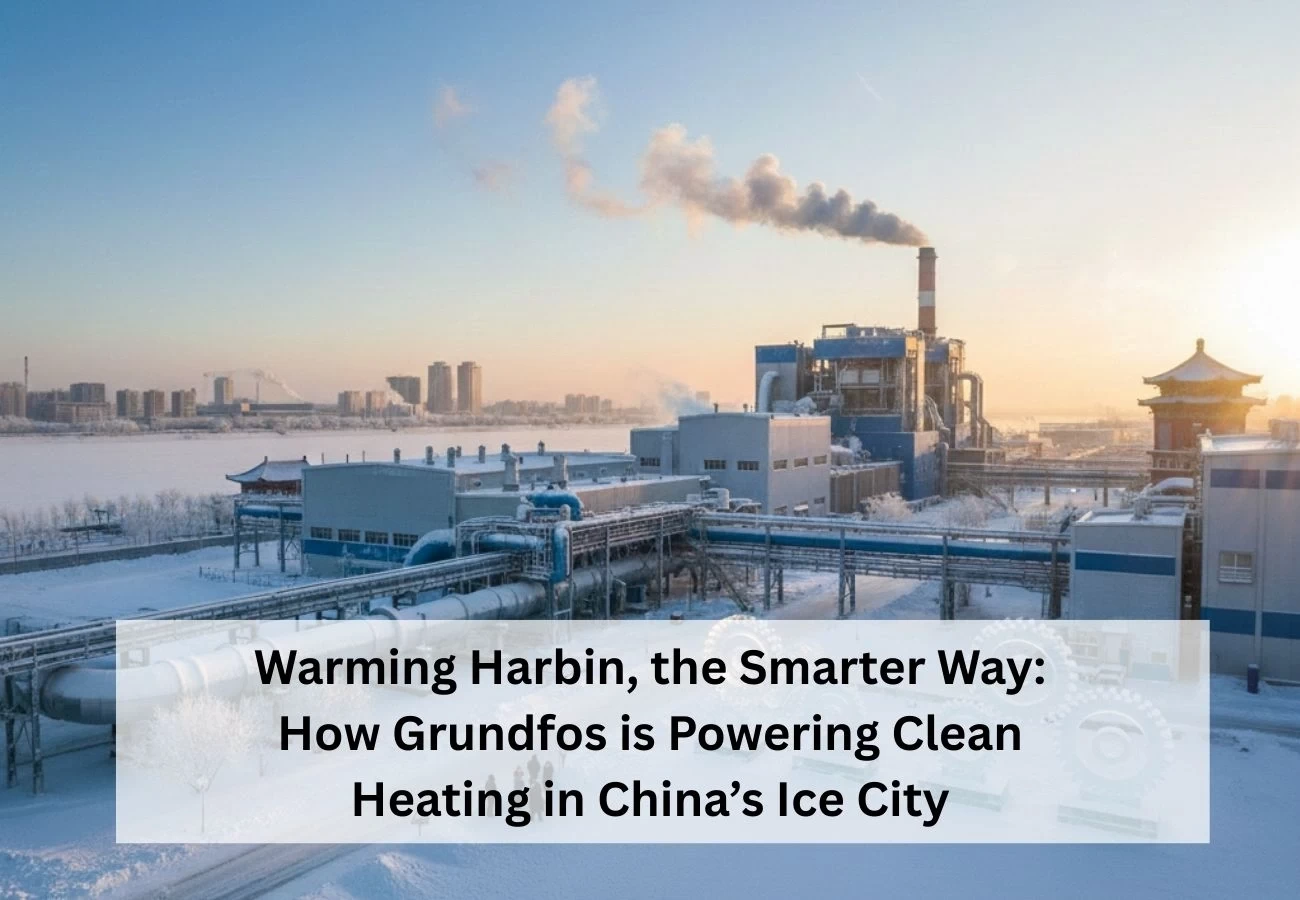

Warming Harbin, the Smarter Way: How Grundfos is Powering Clean Heating in China's Ice City
Harbin, widely known as the Ice City of China, experiences some of the harshest winters in the country. With temperatures remaining well below freezing for more than half the year, heating is not optional. It is a daily necessity for nearly 10.8 million residents. For decades, staying warm depended largely on small, coal-fired boilers spread across neighbourhoods. While these systems provided basic heat, they also brought inefficiency, pollution, and discomfort into everyday life.
Today, Harbin is moving in a different direction. With the introduction of smart heating systems supported by Grundfos technology, the city is steadily changing toward cleaner, reliable, and more energy-efficient heating.
The Longstanding Challenge of Coal-Fired Heating
Before the transition, Harbin relied heavily on distributed heating through small coal-fired boilers. These systems created several operational and social challenges that became more visible over time.
Energy use stayed high, but heating performance remained uneven. Residents felt temperature drops at night when systems struggled to stay stable. Many boilers lacked proper emission controls. This released smoke and pollutants into the air and further worsened winter air quality.
Another issue was indoor comfort. Inconsistent heating left families exposed to cold indoor conditions, especially households with elderly residents or young children. Maintenance needs were frequent, and system breakdowns occurred during peak winter periods.
These issues highlighted the urgent need for clean heating solutions that could deliver stable performance while reducing dependence on coal.
Government Push Toward Cleaner Heating
Recognising the scale of the problem, the Chinese government introduced the Clean Heating Plan from 2017 to 2021. The initiative led northern cities to replace small coal boilers with more modern and sustainable heating methods. As a result, centralised heating solutions gained focus, allowing large areas to be served more efficiently with improved control over energy use, emissions, and system performance. It also opened the door for advanced monitoring and automation, which were difficult to implement in scattered, standalone boiler setups.
Harbin became one of the cities actively working toward this transition, with Xinfa town in the Daoli district serving as a key example.
Transitioning to Smart Heating in Xinfa
In 2019, Xinfa town moved away from coal-fired boilers and adopted a centralised heating network built to deliver better efficiency and comfort. Spanning nearly one million square metres, the project now serves over 42,000 end users and represents a significant upgrade to Harbin’s heating infrastructure.
The system introduced 18 new heat exchange stations, all powered by Grundfos pumps and related technology. At the core of the project were 23 prefabricated, smart heat exchanger systems, representing the largest deployment of this kind by Grundfos in China at the time.
These systems were designed not just to supply heat, but to manage it intelligently. The goal was to provide consistent indoor comfort while reducing unnecessary energy use and operational effort.
Also Read: Grundfos Pumps: Leading the Way in Sustainable Building Solutions
How Smart Systems Improve Heating Performance
What sets this project apart is the use of heating system automation to respond dynamically to real conditions. Instead of running at fixed output levels, the system adjusts pump operation based on outdoor temperature changes.
Real-time monitoring allows operators to track flow rates, pressure, power usage, and overall energy consumption. By operating strictly within defined performance curves, the system maintains safe and stable operation while avoiding excess energy draw.
Another advantage is unattended operation. With intelligent controls in place, the heat exchange stations require significantly less manual intervention. This reduces labour demands and minimises the risk of human error during peak winter months.
Together, these features form a practical example of how smart heating systems improve reliability without adding complexity for end users.
Measurable Results from Smarter Heating
The impact of the new heating network in Xinfa has been clear and measurable. After implementation, the system achieved a 38 percent reduction in heat consumption. Water consumption dropped by 71 percent, highlighting the efficiency gains across the entire network. Power usage was reduced by more than 50 percent compared to earlier setups.
Despite these reductions, indoor comfort improved. Average winter indoor temperatures stabilised around 23 degrees Celsius, offering residents consistent warmth throughout the season.
Air quality also improved significantly. The removal of small coal boilers eliminated a major source of smoke and particulate emissions within the neighbourhood. This also helped advance environmental goals by promoting energy-efficient heating and improving urban air quality.
Why Centralised Systems Make a Difference
Centralised networks give advantages that individual boilers cannot match. With unified control, system performance becomes predictable and easier to optimise. Maintenance planning improves, and energy losses caused by inefficient operation are reduced.
In Harbin’s case, centralised heating solutions allowed better coordination between heat generation, distribution, and consumption. Combined with advanced automation, this structure supported stable performance even during extreme cold.
By integrating modern heat exchanger systems and efficient pumping technology, the network got results that would not have been possible through incremental upgrades to older boilers.
The Role of Grundfos Technology
At the heart of this transformation lies the performance and reliability of Grundfos pumps. These Grundfos pumps are built to operate efficiently under different load conditions. They play a vital role in keeping flow and pressure steady across the system. By working seamlessly with automated controls, they ensure energy is used precisely when needed. This helps reduce costs and supports environmental objectives.
Grundfos technology also supported long-term system stability, reducing wear on components and lowering maintenance demands over time.
A Model for Sustainable Heating in Cold Cities
Harbin’s shift from coal-based heating to intelligent, centralised networks represents an important milestone in northern China’s energy transition. The project shows how to achieve sustainable heating without compromising comfort, even in regions with extreme winter conditions.
This initiative is not just a local improvement. It serves as a reference point for other cold-climate cities seeking clean heating solutions that balance efficiency, reliability, and environmental responsibility.
Conclusion
As urban centres continue to face pressure to reduce emissions and energy use, projects like Harbin’s provide valuable insight into what is possible. Smart design, supported by reliable technology, can change essential services like heating into systems that work quietly, efficiently, and responsibly.
With Grundfos continuing to support intelligent heating networks worldwide, communities across different climates can move closer to a future defined by comfort, efficiency, and cleaner air, even in the coldest places on earth.