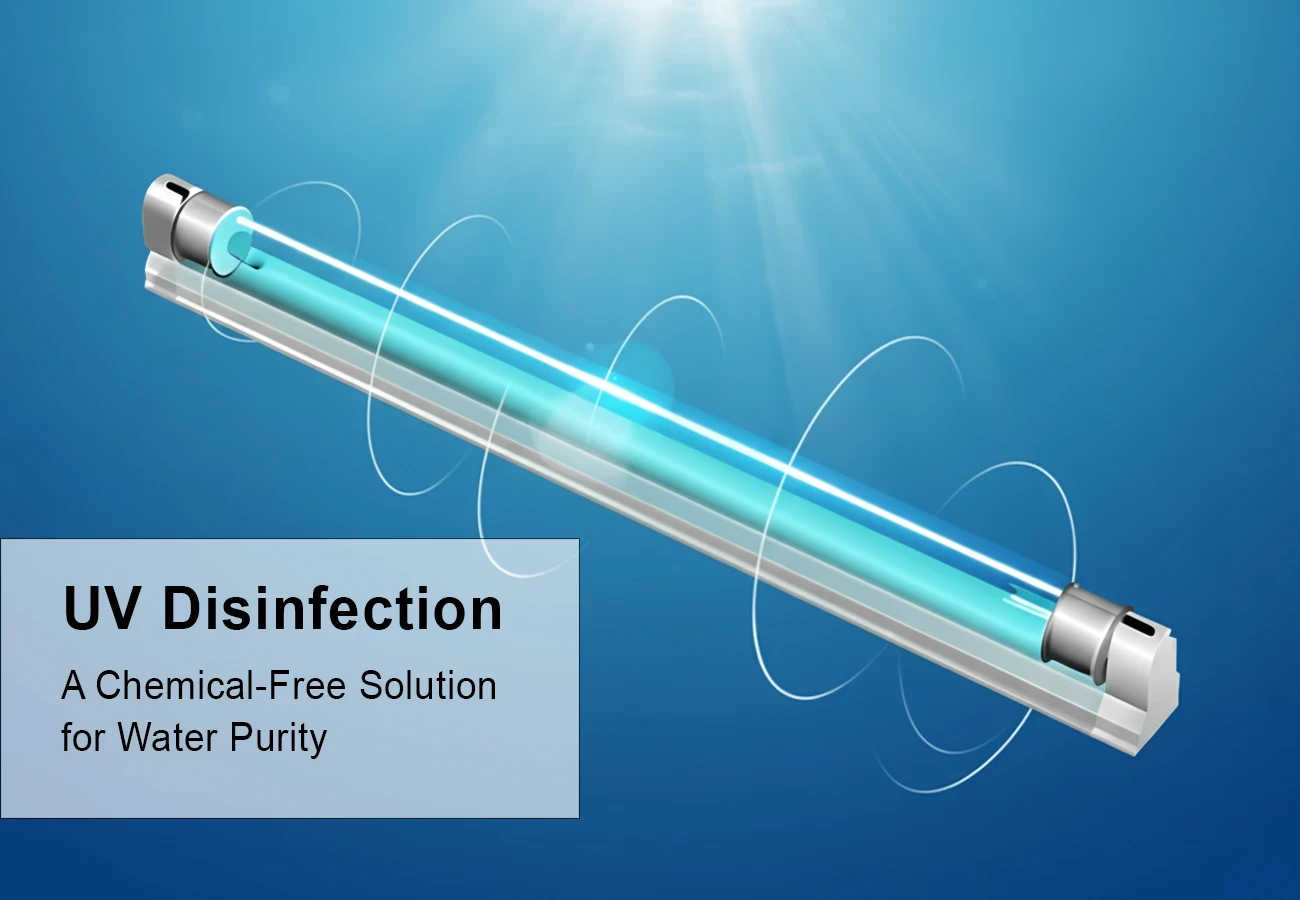

UV Disinfection: A Chemical-Free Solution for Water Purity
Clean and safe drinking water is vital for everyone’s health. Today, with rising cases of waterborne diseases, harmful chemicals in water, and the push for eco-friendly practices, the demand for reliable water treatment solutions is higher than ever. Among the modern technologies available today, one that stands out for its effectiveness and eco-friendly design is ultraviolet (UV) disinfection.
UV disinfection offers a chemical-free approach to eliminate harmful microorganisms from water, making it one of the most reliable methods in both domestic and industrial water treatment solutions. By combining UV technology with other systems such as a RO water treatment plant, sewage treatment plant, or industrial wastewater treatment, water can be purified to meet the highest safety and environmental standards.
What is UV Disinfection?
UV disinfection is a physical process that uses ultraviolet light, specifically at a wavelength of 254 nanometers (nm), to inactivate microorganisms. When water is exposed to UV light, the radiation penetrates the cells of bacteria, viruses, and protozoa, damaging their DNA or RNA. This damage prevents them from reproducing or causing infections.
Unlike chemical disinfectants such as chlorine or ozone, UV light doesn’t add anything to the water. There are no residues, no harmful by-products, and no changes in taste, odor, or pH levels. This makes UV an ideal complement to technologies like RO water treatment plants or pre-filtration in sewage treatment plants, where maintaining the natural quality of water is crucial.
How Does UV Disinfection Work?
The process of UV disinfection is simple yet highly effective:
- Water Flow: Water passes through a UV reactor, which houses a specially designed UV lamp enclosed in a protective quartz sleeve.
- UV Exposure: As the water flows through, it is exposed to UV-C light.
- DNA Disruption: Microorganisms absorb the UV energy, which disrupts their genetic material.
- Inactivation: Once inactivated, these microbes cannot multiply or infect, neutralizing their threat to human health.
When integrated with a RO water treatment plant or advanced industrial wastewater treatment systems, UV disinfection acts as an additional protective layer, ensuring water leaving these facilities is safe, reliable, and ready for use in municipal, industrial, or household applications.
Pathogens UV Disinfection Can Remove
UV disinfection is particularly powerful because it works against a broad spectrum of harmful pathogens, including:
- Bacteria: E. coli, Salmonella, Shigella
- Viruses: Hepatitis, Norovirus, Rotavirus
- Protozoa: Giardia, Cryptosporidium (notoriously resistant to chlorine disinfection)
This makes UV indispensable in sectors where water quality must be strictly monitored, such as sewage treatment plants for municipal water reuse, or industrial wastewater treatment facilities where pathogens need to be neutralized before water is discharged back into the environment.
Advantages of UV Disinfection
There are several reasons UV technology is considered one of the most effective water treatment solutions today:
- Chemical-Free: No chlorine, no ozone—only pure light.
- Eco-Friendly: No toxic by-products or harmful residuals are released.
- Immediate Action: Pathogen inactivation occurs within seconds of exposure.
- Low Maintenance: Simple design with minimal operating costs.
- Preserves Quality: No change in taste, pH, or odor of water.
For example, when combined with a RO water treatment plant, UV ensures that any microorganisms passing through the reverse osmosis membrane are inactivated instantly. Similarly, in industrial wastewater treatment, UV provides an additional safeguard, ensuring treated water meets discharge regulations without chemical contamination.
Limitations to Consider
UV disinfection is highly effective, but it also has some limitations that need to be considered in real use.
- No Residual Effect: Once water leaves the UV reactor, no residual disinfectant remains, unlike chlorine. This means UV is best used alongside other water treatment solutions.
- Turbidity Issues: Cloudy or turbid water can shield microorganisms from UV rays, reducing effectiveness. Pre-filtration, such as ultrafiltration or a RO water treatment plant, is usually necessary.
- Chemical Pollutants: UV light does not remove heavy metals, pesticides, or chemical contaminants. In facilities like industrial wastewater treatment plants, additional treatment steps are required to address these.
By understanding these limitations, operators of sewage treatment plants and industrial wastewater treatment facilities can design hybrid systems that combine UV with other technologies for optimal performance.
Applications of UV Disinfection
UV disinfection is highly effective, but it also has some limitations that need to be considered in real use.
- Municipal Water Supply Systems – Ensuring large-scale delivery of safe drinking water.
- Household Water Purifiers – Acting as an extra layer of safety alongside RO water treatment plants.
- Hospitals and Laboratories – Where sterile water is essential.
- Aquaculture and Food Processing – Preventing contamination in production environments.
- Beverage and Bottled Water Industry – Maintaining the highest quality standards in production.
Also, UV systems are widely used in sewage treatment plants to disinfect treated wastewater before it is released or reused. Similarly, industrial wastewater treatment facilities often use UV to ensure that pathogens are neutralized without adding harmful chemicals into the environment.
UV Disinfection in Combination with Other Systems
UV disinfection rarely functions in isolation. Instead, it works best when integrated with other water treatment solutions. For example:
- A RO water treatment plant can remove dissolved salts, chemicals, and particles, while UV ensures any remaining microorganisms are destroyed.
- In a sewage treatment plant, biological and chemical processes may first remove organic matter and pollutants, after which UV ensures the final effluent is microbiologically safe.
- In industrial wastewater treatment, UV is usually combined with filtration and chemical methods to handle tough contaminants and ensure the water meets environmental discharge standards.
This complementary approach makes UV an essential tool in building comprehensive and reliable water purification systems.
Conclusion
UV disinfection is a safe, eco-friendly, and effective way to ensure clean and germ-free water. Since it works only with light, it avoids the side effects of chemical disinfectants and gives instant results. When combined with other water treatment solutions like RO water treatment plants, sewage treatment plants, and industrial wastewater treatment systems, it becomes a key part of modern water purification.
With growing concerns about water safety, UV disinfection offers a smart and eco-friendly way to protect public health while keeping water quality intact. Thanks to its reliability and wide use, UV technology remains an important part of the future of global water treatment.