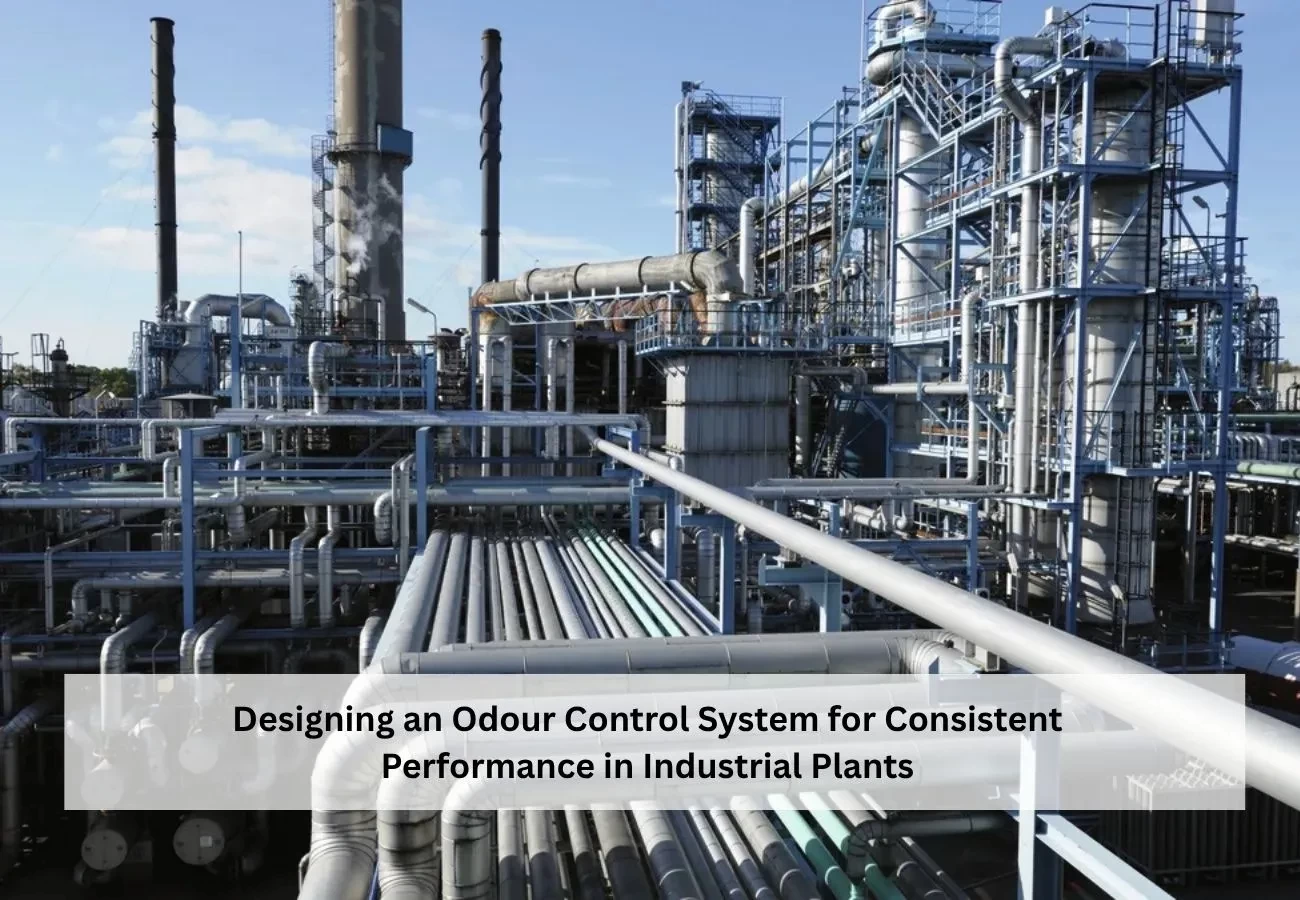

Designing an Odour Control System for Consistent Performance in Industrial Plants
Why Is Odour Control a Growing Concern?
Bad smells in factories are more than just a pain; they can cause people to complain, put pressure on your business, and even hurt your brand image. Industries like food processing, industrial wastewater treatment, and chemicals often have trouble keeping smells under control because the conditions of their processes change.
Odour issues are a challenging issue in facilities, and very common in waste water treatment plants, effluent treatment plants, and sewage treatment plants because treatment processes can release odorous gases that need to be properly managed.
So, the real question is: How do you make sure that you can always control odours?
What Makes Performance Unreliable?
Most failures in odour control happen because of:
- Odour loads that change during operations
- Presence of many gases, such as ammonia and H₂S
- Bad air collection or ducting
- No regular maintenance and monitoring
Choosing the Right Solution
Different problems need different solutions:
- A lot of smell? → Chemical scrubbers are a strong and reliable way to clean
- Want to run in an eco-friendly way? → Biofilters get rid of smells using natural methods
- Problems with leftover smells? → Activated carbon filters make sure the final polish is perfect
In many cases, the best results come from using these technologies together.
Many odour control systems are integrated with waste water treatment systems and advanced biological treatment processes such as MBBR water treatment and Membrane Bio Reactor technologies to improve overall plant performance.
How to Get the Same Results Every Time?
For a system to work well, it needs:
- Design that is based on real gas analysis
- Making the system big enough for the highest load, not the average
- Collecting air efficiently to catch all emissions
- Smart monitoring for control in real time
Facilities operated by experienced water treatment plant consultants often get better odour control performance because the system is designed around actual process requirements rather than standard assumptions.
In large treatment facilities, odour control systems may also work alongside zero liquid discharge water treatment processes to support environmental compliance as well as improve site conditions.
Conclusion
It's not enough to just put in an odour control system; you also have to make sure it's well-designed and well-maintained. Alantech offers custom odour control solutions that are dependable, effective, and last a long time. Contact Alantech today to get a personalize odour control solution that fits your process. Get in touch with us now to set up a meeting or ask for a quote.
Frequently Asked Questions
Q1: Which industries benefit the most from odour control systems?
Industries such as food processing, chemical manufacturing, industrial wastewater treatment, as well as waste water treatment plant operations, benefit greatly from odour control systems because they generate gases that can affect both workers and also nearby communities.
Q2: Can odour control systems be integrated with wastewater treatment facilities?
Yes. Odour control systems are commonly installed alongside waste water treatment systems, ETP treatment plant, and sewage treatment plant facilities to manage gases such as hydrogen sulphide and ammonia.
Q3: Why is proper system design important for odour control?
A properly designed system accounts for airflow, gas concentration, and peak operating loads, and this helps maintain consistent performance and is especially important in facilities using MBBR water treatment, Membrane Bio Reactor, or zero liquid discharge water treatment technologies.