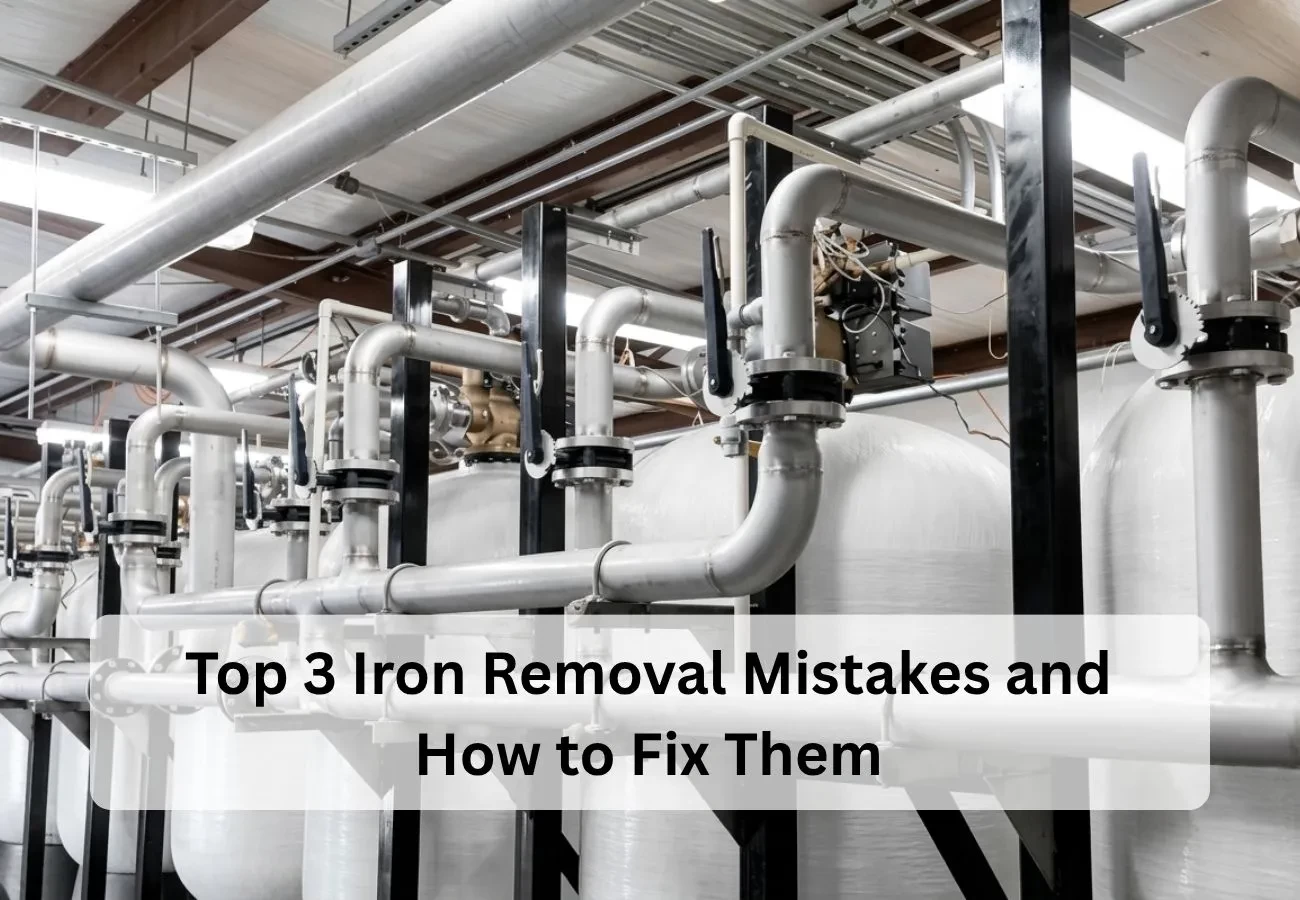

Top 3 Iron Removal Mistakes and How to Fix Them
Iron pollution is one of the most common water quality issues faced by various industries and facilities. Although iron is present in natural water, too much iron can cause many operational issues for businesses. These issues may range from staining and taste to blocked pipes and equipment damage.
Often, businesses resort to quick fixes or ineffective solutions that do not solve the problem completely. This can have a negative impact on business operations and may increase overall costs.
A proper water treatment plant is necessary for effective water treatment. This blog will discuss the top three mistakes made while treating iron pollution and how these mistakes can be corrected.
Relying on a Water Softener Alone
One of the most common misconceptions in water treatment is that water softeners can actually remove iron from water. Although water softeners are excellent at removing water hardness minerals such as calcium and magnesium, they are ineffective in removing iron.
The Problem
If iron enters the system, then:
- Iron deposits build up on the resin beads
- The resin loses its ion exchange capacity
- Frequent cleaning becomes necessary
- Resin fouling increases over time
- Overall system efficiency drops significantly
This is because, over time, it will damage the resin bed.
The Solution
Rather than relying on softeners alone, a separate iron removal system should be provided prior to the softener. This will ensure proper iron removal before reaching critical areas.
Advanced iron removal filters have filters containing catalytic oxidation media such as greensand to oxidize dissolved iron into solid particles, which can then be easily removed.
For those looking for effective solutions to develop a proper industrial waste water treatment plant, incorporating pre-filtration systems is a primary requirement.
Failing to Oxidize Ferrous Iron
The iron in groundwater is usually in the ferrous state, which is dissolved and thus invisible. Most systems try to filter the iron directly without converting it to a form where it can be easily removed.
The Problem
Without proper oxidation:
- Dissolved iron passes through filters untreated
- Oxidation occurs later in pipelines or storage tanks
- Water turns brown and develops a metallic taste
- Staining becomes visible on surfaces and equipment
- Customer complaints and operational disruptions increase
This process is more of a hindrance than a solution, particularly for industrial use.
The Solution
In order to remove iron in water, the iron present in the water in the ferrous state needs to be converted into the ferric state. The ferric iron particles can then be removed by filtration. The conversion of iron in the water into the ferric state can be done in the following ways:
- Aeration
- Chlorine dosing
- Ozone injection
- Catalytic oxidation media
In the present iron removal systems, the process of iron conversion is accelerated with the help of catalytic media beds. The iron conversion process is done prior to filtration in the present iron removal systems.
In an ideal water treatment solution, the process of iron oxidation is included.
Inadequate Backwash Design
Not even the best filtration media can work effectively without backwashing. Backwashing is therefore important in the removal of iron particles that have accumulated in the filter bed.
The Problem
When backwash design is inadequate:
- Filter media becomes clogged
- Filtration efficiency decreases
- Channeling occurs within the filter bed
- Pressure drop increases
- System performance deteriorates over time
This will eventually lead to frequent breakdowns and will reduce the life of the entire system.
The Solution
It is important to ensure that an effective iron removal system is provided with an adequately designed backwash system. This includes the following aspects:
- Correct backwash flow rates
- Adequate bed expansion
- Automatic control valves
- Sufficient drainage capacity
The backwashing system is important to ensure that the filters are clean and effective. This is important to ensure consistent performance from the filters. Backwashing is important to ensure the smooth operation of industrial waste water treatment plants.
The Outcome: Dependable Iron Removal
When the design of iron removal systems is done correctly, it is possible to maintain iron concentration at very low levels. The best systems can maintain iron levels below 0.3 ppm after the treatment process.
Clear, stain-free water
Protection of pipelines and equipment
Reduced maintenance costs
Improved operational efficiency
Consistent water quality for industrial processes
By eliminating the causes of iron contamination and avoiding mistakes in the process, industries can improve the efficiency of water treatment.
Conclusion
It is not just about installing an iron removal system; it is about the right chemistry, system design, and filtration. It is about avoiding the wrong approach, such as not using a water softener, not including an oxidation stage, and not properly designing the backwashing system.
All these factors contribute to a better system performance. Therefore, with the right approach, businesses can achieve their goal of consistent and efficient water quality. Alantech provides superior and reliable products to satisfy the requirements of modern industrial water treatment.
FAQs
- Why can’t water softeners remove iron effectively?
Water softeners are intended to remove minerals such as calcium and magnesium. Iron, on the other hand, interferes with the process by clogging the resin.
- What is the importance of oxidation in iron removal?
Oxidation turns dissolved iron (ferrous) into a solid form (ferric) which can be easily removed by filtration.
- How often should backwashing be done in iron removal systems?
Backwashing in iron removal depends on the concentration of iron in the water. However, it is essential to carry out the process frequently to maintain the efficiency of the filter.
- What happens if iron is not properly removed from water?
If iron is not removed correctly, it will cause discoloration, unpleasant taste, and clogging.