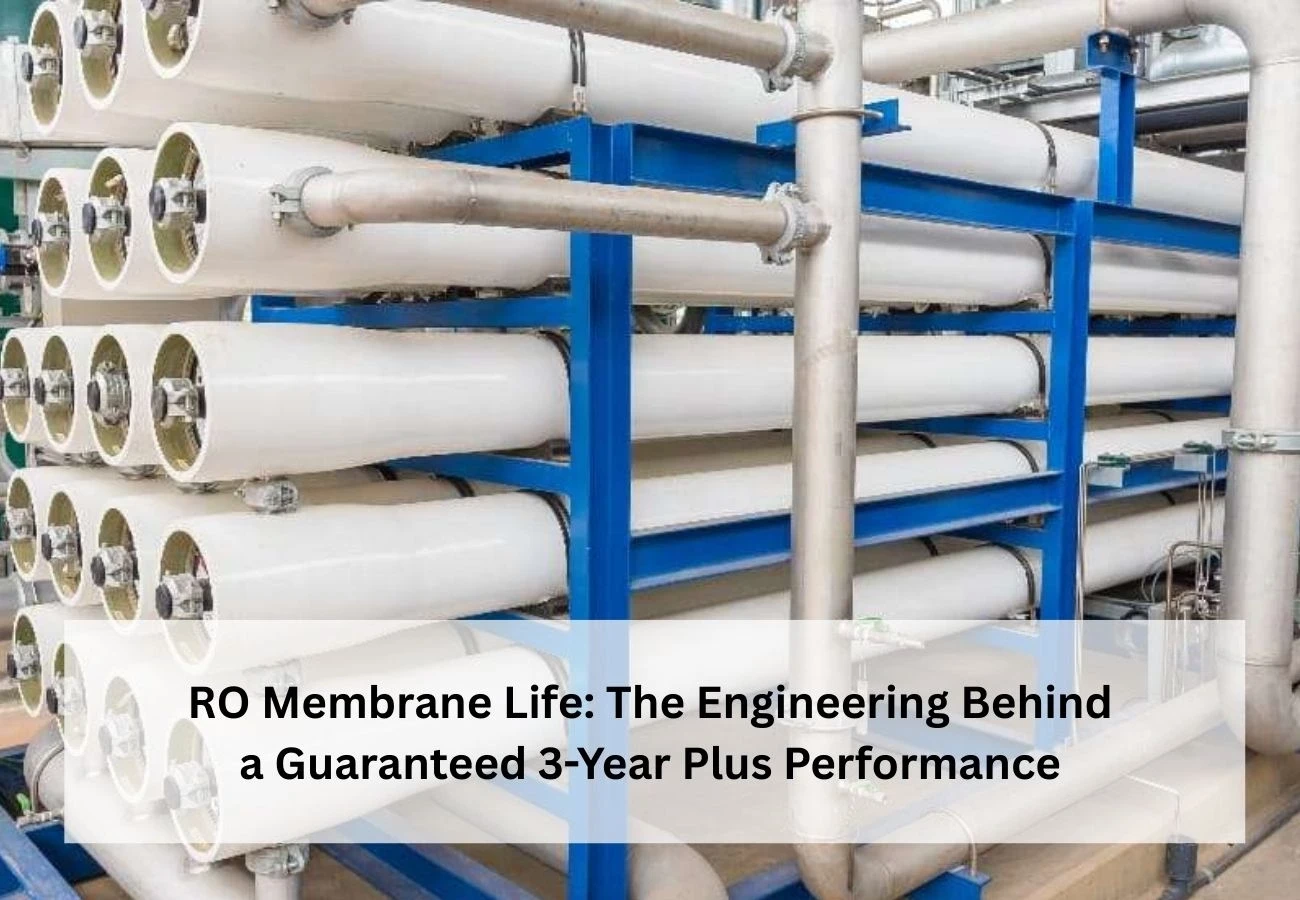

RO Membrane Life: The Engineering Behind a Guaranteed 3-Year Plus Performance
RO membrane life remains unpredictable in many industrial plants, even when premium-quality membranes are used. Most of the time, operators expect long service life, yet experience sudden drops in performance within months. The real reason is rarely the membrane itself. It is the way the system is engineered, protected, and operated that determines how long membranes truly last.
At Alantech, the focus is not on guessing membrane performance but on designing for it. Every reverse osmosis plant is engineered with membrane stability as a core objective. This approach delivers consistent output, controlled operating conditions, and dependable membrane performance for three years and beyond. Instead of reacting to failures, Alantech builds systems that prevent them.
A modern RO installation must do more than produce water. It must protect the membranes from mechanical stress, chemical imbalance, and hydraulic instability.
Why RO Membrane Life Becomes Unpredictable
Even well-installed RO systems face operating stress that slowly reduces membrane performance before turning costly. Common symptoms are:
- Sudden permeate flow loss
- Rising pressure and energy demand
- Unexpected shutdowns
- Frequent membrane changes
- Fluctuations in feed water quality that destabilize performance
Each of these problems adds uncertainty to operations. Costs rise, downtime increases, and operators lose confidence in the system. In many cases, the RO water treatment plant is technically functional, yet its design does not protect the membrane from daily operational stress.
Feed water variability, pressure surges, and inconsistent recovery ratios slowly damage membranes. Poor hydraulic control and automation limit the performance of high-grade membranes.
Industry Reality vs Smart Design
Across the industry, the typical membrane life in a reverse osmosis plant is often limited to just 12 to 24 months. This short lifespan is rarely caused by manufacturing defects. Instead, it results from design and operational gaps such as:
- Overloaded flux and aggressive recovery rates
- Poor or unstable pre-treatment
- Pressure shocks during startup and shutdown
- Inconsistent operating practices
When recovery and flux are pressurized, membranes experience permanent stress. Many plants concentrate on short-term output over long-term stability. A high recovery RO system, when poorly designed, may deliver output initially but destroy membrane integrity over time.
Smart engineering focuses on balance. Instead of maximizing numbers on paper, Alantech designs systems that protect membranes while maintaining production efficiency.
Membrane Compaction – The Silent Efficiency Killer
Membrane compaction is one of the most underestimated causes of declining RO performance. It develops slowly and permanently alters the membrane structure.
- High pressure gradually compresses the membrane layers.
- Water permeability decreases over time.
- Pumps must operate at higher pressure to maintain flow.
- Energy consumption increases steadily.
- Overall system life shortens if compaction is not controlled.
Once compaction occurs, performance cannot be restored and cleaning cannot fix the damage. Controlling compaction starts at the design stage. A well-engineered reverse osmosis plant balances pressure, regulates flux, and prevents sudden hydraulic stress. By preventing membrane compression from day one, long-term performance becomes stable and predictable.
Build Features That Truly Protect RO Membranes
Long membrane life is never accidental. It must be engineered into the RO water treatment plant. Protective design elements include:
- Optimized hydraulic design with balanced flux distribution
- Robust pre-treatment to maintain stable SDI and turbidity
- VFD-based high-pressure pumps for smooth pressure ramping
- Automated chemical dosing and CIP control
- Online monitoring of pressure, flow, and conductivity
These features keep membranes safe and stable while giving operators full system visibility.
In a high recovery RO system, protection becomes even more critical. Recovery rises safely with automation keeping all parameters within limits.
How Alantech Engineers Longer RO Life
Alantech designs every plant around real operating conditions instead of laboratory assumptions. Each system is built to perform consistently in the field, not just during commissioning.
Key engineering practices include:
- System design based on actual feed water analysis
- Conservative recovery and flux to avoid membrane stress
- Soft-start pump operation to prevent pressure shocks
- Pre-treatment designed for real water variability
- Automation that minimizes manual operating errors
Rather than chasing maximum recovery numbers, Alantech builds stability into the system. A properly engineered ro system delivers output without sacrificing membrane health.
Automation plays a major role. Manual adjustments cause inconsistency, while Alantech’s automation ensures smooth operation.
Feed Water Variability – Designed into the System
Raw water quality changes seasonally, stressing membranes and reducing their lifespan if ignored.
Alantech integrates feed water variability directly into the RO water treatment plant design through:
- Safety recovery margins
- Automatic flushing logic
- Stable and controlled chemical dosing
The system adjusts for water quality changes, keeping hydraulic stability and allowing the plant to run efficiently without harming membranes.
By designing for variability, Alantech ensures membranes experience controlled conditions every day of operation, not just during ideal water quality periods.
Operational Stability in High Recovery Systems
Many industries seek higher water recovery, but without proper engineering fouling and compaction occur. A high recovery RO system protects membranes while maintaining output. Alantech’s engineering philosophy ensures that higher recovery does not translate into higher membrane risk.
This minimizes reject water, reduces consumption, and protects membranes, with Alantech treating recovery as a controlled process rather than just a number.
What a 3-Year Plus Membrane Life Delivers
- Lower operating and replacement costs
- Fewer shutdowns and emergency interventions
- Stable permeate quality
- Faster return on investment
- Higher plant reliability and confidence
Operators get predictable performance instead of reactive maintenance. Stable membranes keep energy use steady, reduce cleaning, and make production easier.
Conclusion
RO membrane life is not decided at the membrane factory. It is established at the engineering desk. The way hydraulics are balanced, pressure is controlled, recovery is managed, and automation is applied determines how long membranes will truly perform.
Through smart hydraulic engineering, feed water-based design, controlled automation, and protection-focused architecture, Alantech delivers reverse osmosis plant solutions with predictable, three-year-plus membrane life. Each RO water treatment plant is built to protect membranes under real operating conditions, while every high recovery RO system is engineered to maximize output without sacrificing stability.
Instead of guessing membrane performance, Alantech designs it into the system from the very beginning.