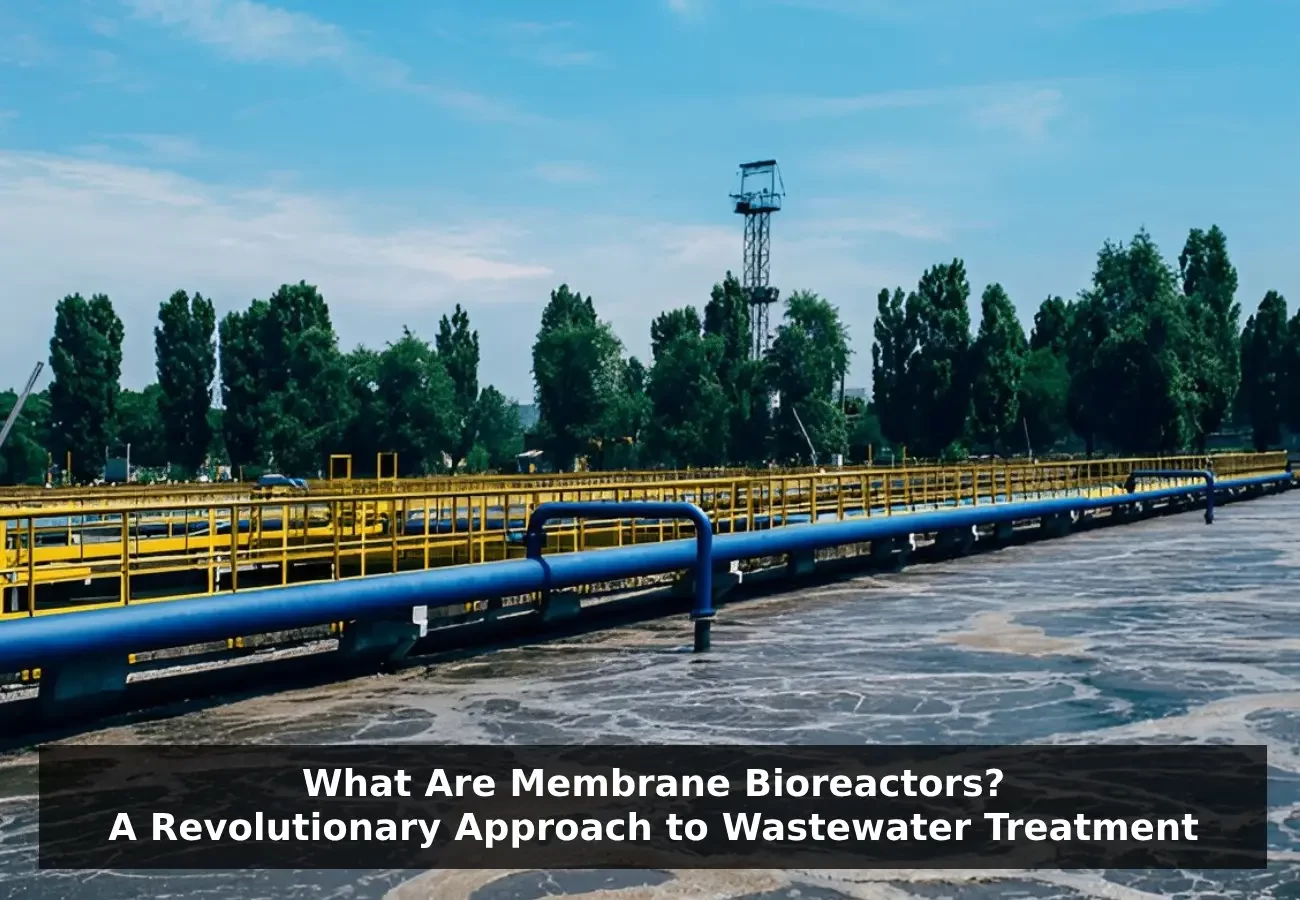

What Are Membrane Bioreactors? A Revolutionary Approach to Wastewater Treatment
Wastewater treatment plays a vital role in ensuring a clean water supply and protecting the environment. Nowadays, cities are constantly growing and developing. This leads to a shortage of clean water resources. The need for more efficient, space-saving, and high-performance treatment systems has become urgent. Even though the traditional methods are used widely, they have so many limitations related to space, water quality consistency, and long-term sustainability.
This is where Membrane Bioreactors (MBRs) come in. MBR wastewater treatment provides a more advanced and effective solution for purifying wastewater. They fuse the biological power of the activated sludge process with membrane-based filtration.
Understanding Membrane Bioreactors (MBRs)
An MBR system is a wastewater treatment solution that merges conventional biological treatment with membrane filtration. Being a physical barrier that keeps clean water apart from dangerous impurities, the membrane eliminates the need for secondary settling tanks. This helps in improved water quality and more consistent performance under varying operating conditions.
An MBR wastewater treatment typically includes two main components:
- Biological Treatment Unit (Activated Sludge Process)
This unit uses microorganisms to break down organic pollutants. Nitrogen and phosphorus are some of the nutrients that the bacteria in the tank consume and transform into non-toxic forms.
- Membrane Filtration Unit
After biological treatment, the water passes through membranes with very fine pores (typically 0.1 to 0.4 microns). These membranes trap suspended solids, bacteria, and even viruses, allowing only pure water to flow.
Conventional treatment systems need a large sedimentation tank, while MBR wastewater treatment systems don't need such infrastructure and save a great deal of space, and improve treatment performance.
How MBR Wastewater Treatment Works
Step 1: Biological Treatment
When the wastewater enters the aeration tank, the activated sludge process begins. Nutrients and organic matter are broken down into simpler and safer byproducts by microorganisms.
Step 2: Membrane Filtration
Once biologically treated, the water flows into the membrane chamber. The membranes act as a fine filter, allowing only clean water to pass while retaining all solids and pathogens.
Step 3: Discharge or Reuse
Because of its exceptional quality, the filtered effluent can be further processed for drinking purposes or utilized again for irrigation, cooling systems, and industrial activities.
Types of Membranes Used in MBR Systems
- Microfiltration and Ultrafiltration Membranes
These are the most common types, with pore sizes between 0.1 and 0.4 microns. They provide clean, reusable effluent by effectively eliminating bacteria, most viruses, and suspended solids.
Also Read: Microfiltration vs. Ultrafiltration
- Hollow Fiber Membranes
These membranes resemble bundles of fine straws and offer a large surface area for filtration. They are usually used in municipal-scale advanced wastewater treatment systems.
- Flat Sheet Membranes
They are usually used in smaller systems because of their compact size and easy maintenance. This makes them perfect for decentralized or small community applications.
Key Benefits of MBR Wastewater Treatment
- Superior Water Quality
MBR wastewater treatment produces high-quality effluent free from viruses and suspended solids. This water is suitable for reuse in many non-potable applications.
- Space Efficiency
MBR wastewater treatment is very useful in limited space or in cities. They take about 50% to 70% less room than traditional systems because they do not need sedimentation tanks.
- Enhanced Contaminant Removal
MBR systems remove organic pollutants, nutrients like nitrogen and phosphorus, and pathogens more effectively than traditional systems. This helps prevent problems like eutrophication in nearby water bodies.
- Consistent Performance
MBR systems are not heavily affected by variations in temperature or chemical load. They maintain consistent performance even in high-flow or high-contaminant situations.
- Reduced Sludge Production
The activated sludge process of MBR enables longer sludge retention times, which helps in sludge reduction. This lowers costs and environmental concerns that may come with the treatment and disposal of sludge.
- Water Reuse Potential
Cooling towers, industrial cleaning, irrigation, and other such applications can immediately use the clean, safe water generated by MBR systems. As a result, freshwater resources can be used less frequently.
Challenges and Limitations of MBR Systems
- High Initial Investment
One of the main barriers to MBR adoption is the cost. Compared to traditional plants, membranes and system setups can be more costly. But when considering the water reuse potential, lower operational costs, and land savings, the investment becomes worthwhile.
- Membrane Fouling
MBR needs regular cleaning and maintenance to restore performance, as membranes can become clogged by organic matter or biofilms. This may affect efficiency.
- Higher Energy Consumption
MBR wastewater treatment uses more energy due to membrane filtration and aeration. Long-term operation may be affected, but this can be controlled with the use of renewable energy sources and energy-efficient designs.
- Skilled Operation Required
MBR systems require trained personnel for monitoring, cleaning, and troubleshooting. Proper training and support are important for a successful operation.
Applications of MBR Technology
- Municipal Wastewater Treatment
For handling large volumes of domestic wastewater, the number of cities adopting MBR wastewater treatment is increasing. These systems provide reliability, especially in areas with strict discharge norms or limited space.
- Industrial Wastewater Treatment
MBR wastewater treatment systems are used in industries like food processing, pharmaceuticals, petrochemicals, and textiles. They are a sustainable choice for treating industrial wastewater since they manage high-strength wastewater and promote water reuse within the plant.
- Water Recycling and Reuse Projects
As water scarcity grows, MBR systems are being deployed in water recycling projects. The clean water produced can be used for landscaping, agriculture, construction, and even for drinking after further purification.
- Decentralized and On-Site Treatment
MBR units are perfect for military use, hotels, housing complexes, and isolated areas. Due to their size and mild odor, they are appropriate for on-site installations.
The Future of MBR Wastewater Treatment
MBR wastewater treatment systems are expected to become more common in both public and private sectors since the pressure for responsible water use is increasing. The future goal of this sector is to make MBR wastewater treatment systems more affordable, energy-efficient, and user-friendly.
Here are some trends shaping the future of advanced wastewater treatment using MBRs:
- Development of Anti-Fouling Membranes
To decrease the frequency of cleaning and increase membrane life, researchers are developing membranes that are resistant to clogging.
- Integration with Renewable Energy Sources
Solar-powered MBR systems are being developed to reduce electricity costs and improve sustainability.
- Smart Monitoring Systems
Technologies based on AI and IoT are being used to digitize cleaning cycles, improve energy consumption, and monitor membrane function.
- Expansion of Reuse Programs
Projects that reuse treated wastewater for potable and non-potable uses are receiving more assistance from governments and water agencies.
Conclusion
Membrane Bioreactors are reshaping the way we treat and reuse wastewater. MBRs provide a small, effective, and eco-friendly substitute for traditional systems by combining membrane technology with the tried-and-true activated sludge process.
Though there are upfront costs and maintenance considerations, the long-term benefits, such as improved water quality, sludge reduction, and the potential for water reuse, make MBRs a smart investment. MBR wastewater treatment will play a significant role in resolving the world water crisis as knowledge and technology advance.
What Can You Do?
- Support community initiatives that promote advanced wastewater treatment and water reuse.
- Advocate for smarter, more sustainable planning in urban and industrial wastewater management.
- Encourage industries and municipalities to explore industrial wastewater treatment upgrades with MBR systems.
Together, with the right choices and technologies, we can build a cleaner and more water-secure future.