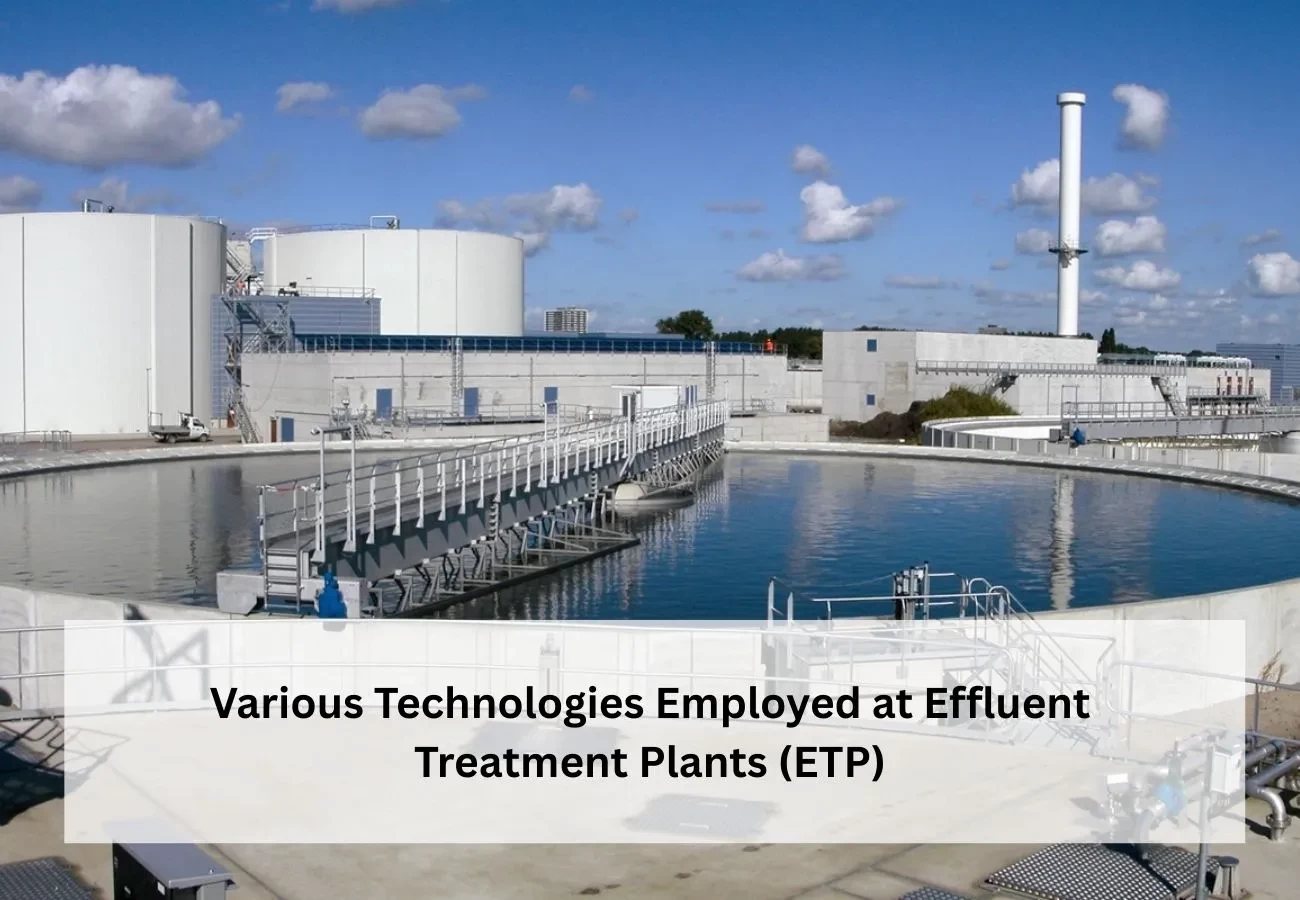

Various Technologies Employed at Effluent Treatment Plants (ETP)
How Can Effluent Treatment Plants Handle Variable Industrial Effluent Loads and Characteristics?
Industrial development brings the challenge of managing wastewater effectively. Industrial effluents can differ greatly in both volume and pollutant levels, which makes treatment a complex process. Effluent Treatment Plants (ETPs) are specially designed to handle such variable industrial effluent loads. The system treats wastewater, meets regulatory standards, and reduces environmental impact by using a combination of physical, chemical, and biological processes.
At Alantech, we provide customized ETP solutions that combine proven technologies with smart engineering, ensuring plants can manage varying effluent loads and characteristics reliably and effectively.
What Is an Effluent Treatment Plant (ETP) and Why Is It Essential for Different Industries?
An ETP is a combination of physical, chemical, and biological systems designed to remove contaminants from industrial wastewater. The composition of industrial effluents depends on the type of industry. Typical pollutants include variations in pH, COD, BOD, TSS, oil and grease, heavy metals, and toxic compounds.
Selecting the appropriate industrial effluent treatment plant technology is very important for achieving compliance with environmental regulations, ensuring operational efficiency, and promoting sustainable water management practices.
Technologies Used in ETPs
- Preliminary Treatment Technologies
Preliminary treatment removes large and coarse materials from wastewater, preparing it for the next processing. Common techniques are:
- Bar Screens and Trash Racks – Remove large solids.
- Grit Chambers – Separate sand and other heavy inorganic particles.
- Oil and Grease Traps – Capture floating oils and fats.
Importance: These processes protect critical equipment from any damage, reduce maintenance requirements, and improve system reliability.
- Primary Treatment Technologies
Primary treatment focuses on removing suspended solids and partially reducing organic load. Main processes are:
- Equalization Tanks -Maintain steady flow and pollutant levels, enabling the plant to handle varying effluent loads effectively.
- pH Correction Systems - Adjust acidic or alkaline wastewater, protecting downstream processes.
- Primary Clarifiers – Facilitate the settling of heavy suspended solids.
Alantech Advantage: Our equalization and neutralization systems are designed for stable performance, even under fluctuating industrial discharge conditions, making them ideal for a waste water treatment plant that must handle variable inflows.
- Chemical Treatment Technologies
Chemical processes work well against non-biodegradable pollutants and boost the overall efficiency of wastewater treatment:
- Coagulation and Flocculation cause fine particles to clump together, making them easier to remove.
- Chemical Precipitation removes heavy metals from industrial wastewater.
- Dissolved Air Flotation (DAF) eliminates oil, grease, and other low-density solids.
Applications: These chemical treatment processes are widely used in the chemical, refinery, textile, and food processing industries. Proper implementation ensures regulatory compliance and reduces the environmental footprint of the industrial effluent treatment plant.
- Biological Treatment Technologies
Biological treatment is the core of most ETPs, focusing on reducing organic load.
Aerobic Treatment Systems:
- Activated Sludge Process (ASP)
- Moving Bed Biofilm Reactor (MBBR)
- Sequential Batch Reactor (SBR)
These systems give flexibility and better performance, especially for wastewater with constantly varying organic levels.
Anaerobic Treatment Systems:
- UASB Reactors
- Anaerobic Digesters
Anaerobic systems are suited for high-strength effluents with elevated COD and can generate biogas as a valuable by-product.
Alantech Expertise: Our biological treatment systems are robust, energy-efficient, and capable of responding to varying effluent characteristics. Modern waste water treatment plants benefit from MBBR and SBR systems, which effectively treat a variety of industrial wastewater.
- Tertiary and Advanced Treatment Technologies
Tertiary treatment focuses on making treated water of the highest quality, good for reuse or safe discharge:
- Pressure Sand Filters (PSF)
- Activated Carbon Filters (ACF)
- Ultrafiltration (UF)
- Reverse Osmosis (RO)
- Advanced Oxidation Processes (AOPs)
These technologies support strict discharge standards and water recycling programs. Integration of reverse osmosis (RO) or ultrafiltration systems can also help get zero liquid discharge water treatment (ZLD) in industries with limited water resources.
- Sludge Treatment and Disposal Technologies
Wastewater treatment produces sludge that needs careful management to reduce environmental impact and operational costs. Techniques are:
- Sludge Thickeners
- Filter Press or Screw Press
- Centrifuges
- Drying Beds
Effective sludge handling is important and necessary for sustainable operations in any industrial plant.
- Automation and Smart Control Systems
Modern ETPs use automation to improve operational efficiency and provide real-time compliance monitoring.
- PLC and SCADA Systems
- Online Monitoring (pH, COD, TSS, Flow)
- Chemical Dosing Automation
Alantech Solutions: Our automated ETP systems promise consistent treatment performance with minimal manual intervention, supporting zero liquid discharge water treatment objectives and regulatory compliance.
Choosing the Right ETP Technology
Factors for selecting the most suitable ETP technology:
- Nature of the industry
- Effluent flow rate and variability
- Pollutant concentration
- Regulatory discharge standards
- Water reuse and ZLD goals
At Alantech, we conduct detailed effluent analysis and design customized ETP solutions capable of handling variable effluent loads and characteristics. This ensures long-term operational reliability, efficiency, and compliance for any waste water treatment plant.
Why Alantech for ETP Solutions?
- Industry-specific ETP designs for different effluent profiles
- Proven technologies integrated with modern automation
- Solutions that meet environmental regulations and ZLD readiness
- Focus on sustainability, water reuse, and energy efficiency
- Complete support for design, supply, installation, and commissioning.
Conclusion
Effluent Treatment Plants are no longer only for meeting rules. They now play an important role in sustainable industrial operations. By using physical, chemical, biological, and advanced treatment methods, industries can treat wastewater properly, reuse water, and support zero liquid discharge practices.
Alantech is a trusted partner in giving reliable, efficient, and future-ready ETP solutions, including industrial effluent treatment plants, waste water treatment plants, and zero liquid discharge water treatment systems capable of handling variable effluent loads and characteristics.
Frequently Asked Questions (FAQ)
Q1: Why do industries need ETPs?
A1: Industries generate wastewater with chemicals, oils, and solids that cannot be discharged directly. ETPs clean industrial water so it complies with regulations while reducing environmental impact.
Q2: How does an ETP handle variable effluent loads and characteristics?
A2: ETPs use equalization, pH correction, and flexible biological treatment to balance flow and pollutant levels, keeping performance stable during changes in wastewater quality.
Q3: What technologies are used in modern ETPs?
A3: Modern ETPs use physical, chemical, biological, and advanced treatment methods, along with automation, to improve efficiency and final water quality.
Q4: Can treated water from an ETP be reused?
A4: Yes. Treated water can be reused for cooling, washing, and process needs, reducing freshwater use and supporting water conservation.