
Harnessing Rainwater and Groundwater for Sustainable Water Management in a Shopping Center in Johannesburg
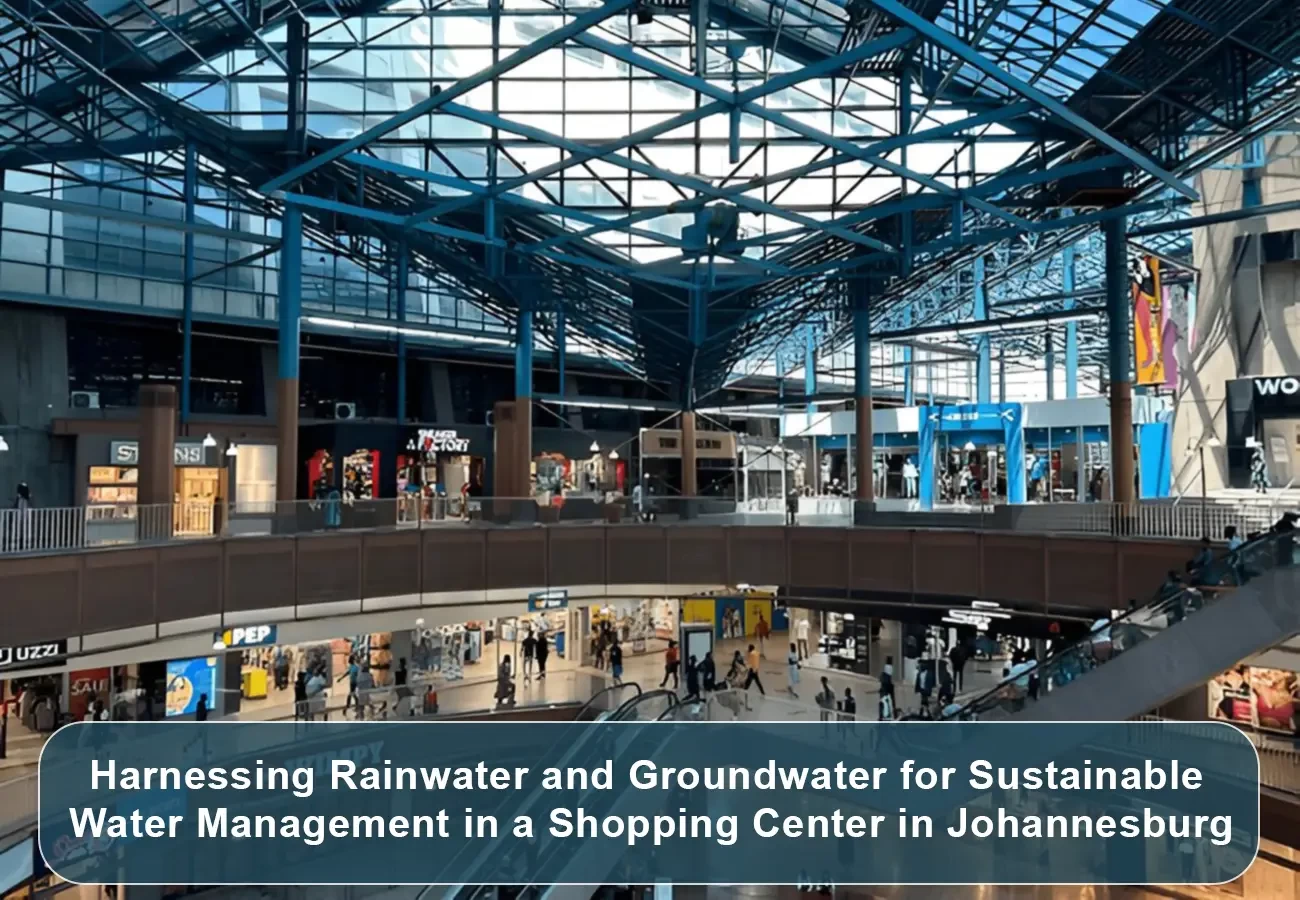
A large shopping mall in Johannesburg ran into serious safety and operational problems when heavy rains caused excess groundwater to flood the area. The rising water levels put the building’s structure in danger. Important systems like lifts, escalators, and electrical wiring were constantly at risk of being damaged. The flooding put visitors and staff in danger and interrupted store operations, making it clear that a strong and dependable water treatment solution was urgently needed.
Since water kept seeping in repeatedly, it was clear the mall needed a stable and efficient groundwater management plan to protect the building, keep people safe, and ensure operations ran without interruptions. At the same time, the project presented an opportunity to rethink how natural resources were being used and to incorporate advanced sustainability measures into the mall’s infrastructure.
The Provided Solution
Grundfos focused on two main goals: saving water efficiently and using natural groundwater resources responsibly. Both parties came to an agreement that the system should not just fix the flooding problem but also promote environmental responsibility and support global sustainability goals. The shared vision aligned directly with United Nations Sustainable Development Goal (SDG) 6: Clean Water and Sanitation, as well as broader climate action initiatives.
This alignment formed the basis for an outcome-driven, collaborative approach. Grundfos saw an opportunity to reuse the mall’s existing stormwater retention structures. It turned what was once just a passive flood-control setup into an active and efficient rainwater harvesting system. This change transformed an underused feature into a useful raw water treatment plant that could provide long-term benefits.
At the heart of the system was a 556,000-litre capacity concrete stormwater retention tank, offering 278,000 litres of live storage. This big, expandable reservoir became the base for efficient rainwater harvesting. To make it work at its best, Grundfos added advanced filtration units, high-flow pumps, and smart control systems. These technologies work in unison to maximize harvesting efficiency, improve water quality, and automate the supply of treated water for use across the facility.
This advanced water treatment solution was built to manage rainwater while working alongside the mall’s existing groundwater systems. As a result, it operated as both an industrial wastewater treatment and rainwater reuse setup. This greatly reduced reliance on municipal water and the mall’s environmental impact.
Long-Term Impact and Sustainability
By turning unused infrastructure into a working raw water treatment plant, Grundfos created a system that tackled both urgent risks and future water shortage challenges. The project combined rainwater harvesting, groundwater control, and smart water management into one fully integrated system.
The results have been substantial. The system now has the capacity to store up to 240,000 litres of rainwater at any time and delivers between five and six million litres annually. This accounts for approximately 15% of the mall’s total water needs, with primary applications including toilet flushing and cleaning of waste bin areas. The reduction in dependence on municipal water improves operational cost efficiency and ensures more responsible consumption of local resources.
Also, the integration of sewage treatment plant principles into the project design allows for flexibility in managing wastewater from the facility. Even though the primary focus is rainwater reuse, the infrastructure is compatible with future upgrades that could incorporate greywater recycling or on-site industrial wastewater treatment for even greater resource recovery.
Technology and Monitoring
Grundfos’ role extended beyond supplying cutting-edge pumping and filtration technology. The project also involved installing a smart monitoring system capable of tracking real-time water usage, detecting anomalies, and optimizing performance across the entire network. This data-driven approach gave facility managers the opportunity to make informed operational decisions, address issues, and ensure that the system remains efficient year-round.
The inclusion of these monitoring systems has had a direct impact on cost management. Operational expenses have been reduced due to optimized pump performance and better resource allocation. More importantly, the use of real-time data has improved the reliability of the water treatment solution, ensuring that both rainwater and managed groundwater can be stored, treated, and distributed effectively.
Ongoing Support and Reliability
Since sustainable water management is an ongoing process, Grundfos provided continuous maintenance and technical support. This helps keep the raw water treatment plant running at its best, even if water quality or supply conditions change over time.The company’s modular design philosophy means that additional components, such as expanded filtration capacity or integration with a sewage treatment plant, can be added as the mall’s needs evolve.
The project’s forward-looking nature makes it a great example for other commercial sites with similar problems. It can adapt to different environmental conditions and provide a reliable, long-term solution by combining industrial wastewater treatment features with rainwater harvesting systems.
Commitment to Global Goals
By following the United Nations Sustainable Development Goals, especially those focused on clean water, sustainable cities, and climate resilience, Grundfos and the Johannesburg shopping mall have shown how smart engineering can bring both environmental and business benefits. The project exemplifies how the adoption of a forward-thinking water treatment solution can transform a challenge into an opportunity.
In an era when urban centers are expanding rapidly and water is becoming an increasingly scarce resource, such integrated approaches, combining elements of a raw water treatment plant, industrial wastewater treatment, and sewage treatment plant, are essential. They reduce strain on municipal infrastructure, promote self-reliance, and contribute directly to climate action.
Conclusion
The partnership between the Johannesburg mall and Grundfos is more than a success story. It’s a powerful example of how commercial buildings can adopt sustainability without losing efficiency or safety. The mall turned an underused flood-control structure into a modern rainwater harvesting and groundwater management system, facing the risk of groundwater flooding and increasing utility costs.
Through a strategic blend of engineering expertise, smart monitoring, and sustainable planning, the project has delivered measurable environmental and economic returns. With a robust water treatment solution at its core, supported by raw water treatment plant infrastructure and adaptable industrial wastewater treatment features, the system sets a new benchmark for commercial water sustainability.