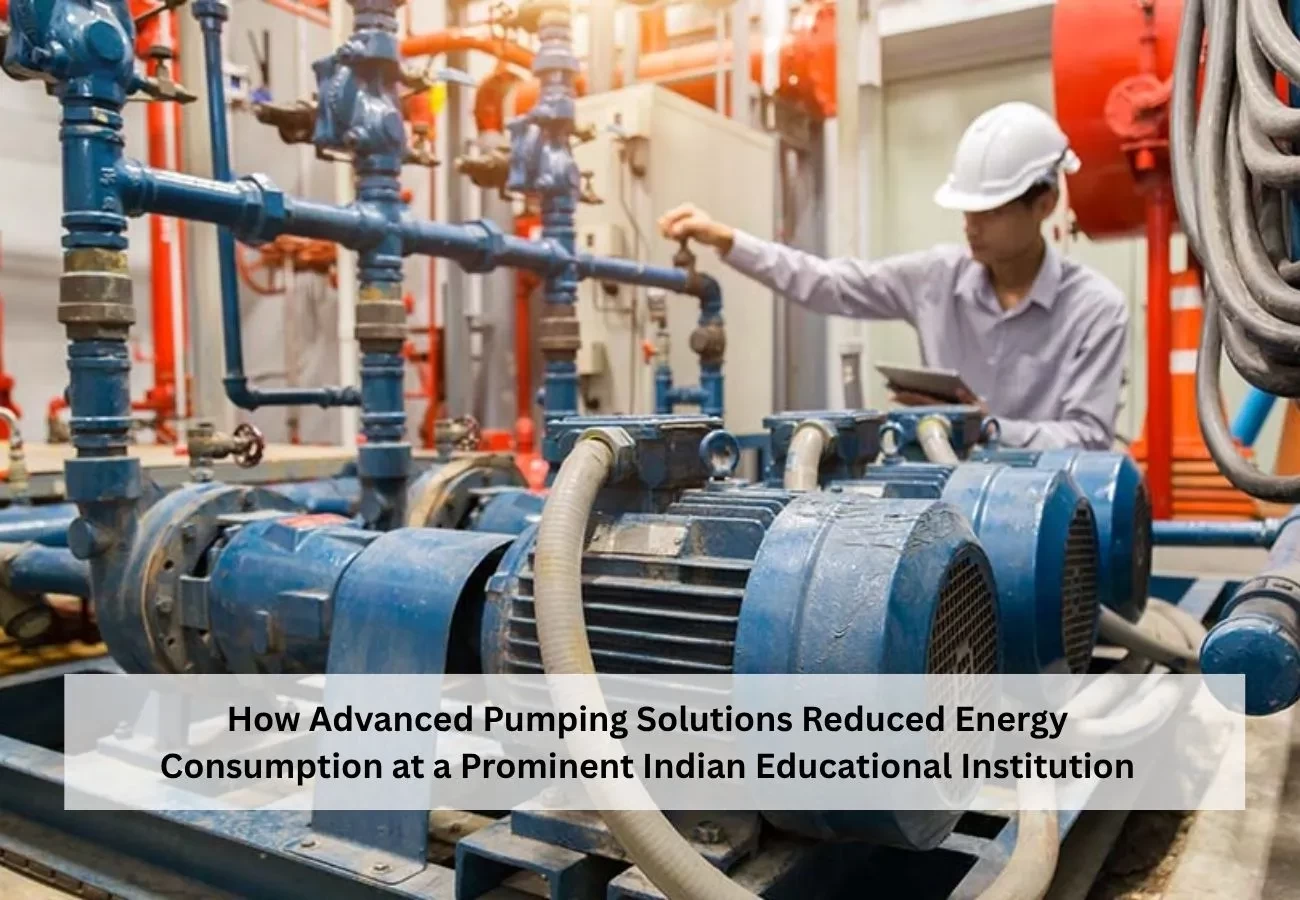

How Advanced Pumping Solutions Reduced Energy Consumption at a Prominent Indian Educational Institution
The Challenge
In large institutions, a substantial portion of operating costs are related to energy consumption. Efficient energy management has become crucial for cost control and sustainability in contemporary educational campuses that run large infrastructure systems.
Due to the high energy consumption of its current water supply system, a prestigious educational institution in India's National Capital Region had to deal with rising operating costs. The institution experienced frequent maintenance issues that impacted the dependability of its water distribution network in addition to growing electricity consumption.
Water is supplied to numerous overhead tanks via pipelines that traverse a variety of terrain across the campus's several acres of land. The pipelines span several kilometres across the campus due to this expansive horizontal layout.
Operational difficulties brought on by this intricate infrastructure included pressure swings, frequent pipeline bursts, and the possibility of water hammer from abrupt pressure surges. Due to these problems, a dependable, sustainable, and energy-efficient solution was desperately needed to guarantee a steady supply of water throughout the campus.
The project also required reliable systems commonly used in a modern water treatment plant India setup to maintain very efficient water movement across the campus infrastructure.
The Solution
An advanced booster pumping solution was introduced to address both energy efficiency and system reliability after a thorough analysis of the institution's operational challenges.
High-efficiency IE5 class motors with intelligent booster technology were used in the system to maximize performance while consuming the least amount of energy.
Soft pressure build-up, which guarantees that pipelines are gradually filled before full pressure is applied, was one of the solution's key components. This seamless pressurization procedure shields the system from water hammer damage and drastically lowers the chance of pipe bursts.
Proportional pressure control, which dynamically modifies system pressure in response to current water demand, is another crucial feature. This feature automatically makes up for friction losses in the campus's lengthy pipeline networks, which increase with flow, while keeping the system's pressure constant.
The system increases operational efficiency and can save up to 10% more energy by optimizing pressure based on demand.
Similar pressure management technologies are widely used in advanced RO water treatment plant and also reverse osmosis plant applications where stable flow control is very essential for operational efficiency.
The upgraded infrastructure also included durable water treatment plant components and also efficient transfer systems that are very commonly integrated into large-scale waste water treatment systems.
Energy-efficient pumping technologies are becoming increasingly important in most of the facilities managed by water treatment plant consultants as well as water treatment plant manufacturers focused on sustainability goals.
The Result
Performance and energy efficiency significantly improved after the intelligent booster pumping system was put into place.
With the same hydraulic performance, the upgraded solution reduced the connected electrical load per motor by 36% when compared to the previous conventional water supply system.
The institution was able to optimize its electrical infrastructure, including switchgear and backup generators, as a result of this improvement, which also decreased energy consumption. Consequently, the campus now enjoys reduced operating expenses, increased sustainability, and better system dependability.
Overall, the institution's long-standing operational issues were resolved and the upgraded water supply system effectively satisfied its technical requirements.
Frequently Asked Questions (FAQs)
Q1: How do these advanced pumping systems reduce energy consumption?
A1: Advanced pumping systems reduce energy consumption by using intelligent pressure control, high-efficiency motors, as well as automated flow management to reduce unnecessary power usage while maintaining steady water supply performance.
Q2: Why is pressure control very important in large water distribution systems?
A2: Proper pressure control is very important in large water distribution systems, which prevents pipeline bursts, reduces water hammer effects, and also improves the reliability of long-distance water transfer systems across large campuses or facilities.
Q3: Where are intelligent booster pumping systems commonly used?
A3: Intelligent booster pumping systems are commonly used in reverse osmosis plant, RO water treatment plant, commercial buildings, educational campuses, and also other large-scale water treatment solution applications requiring energy-efficient water distribution.