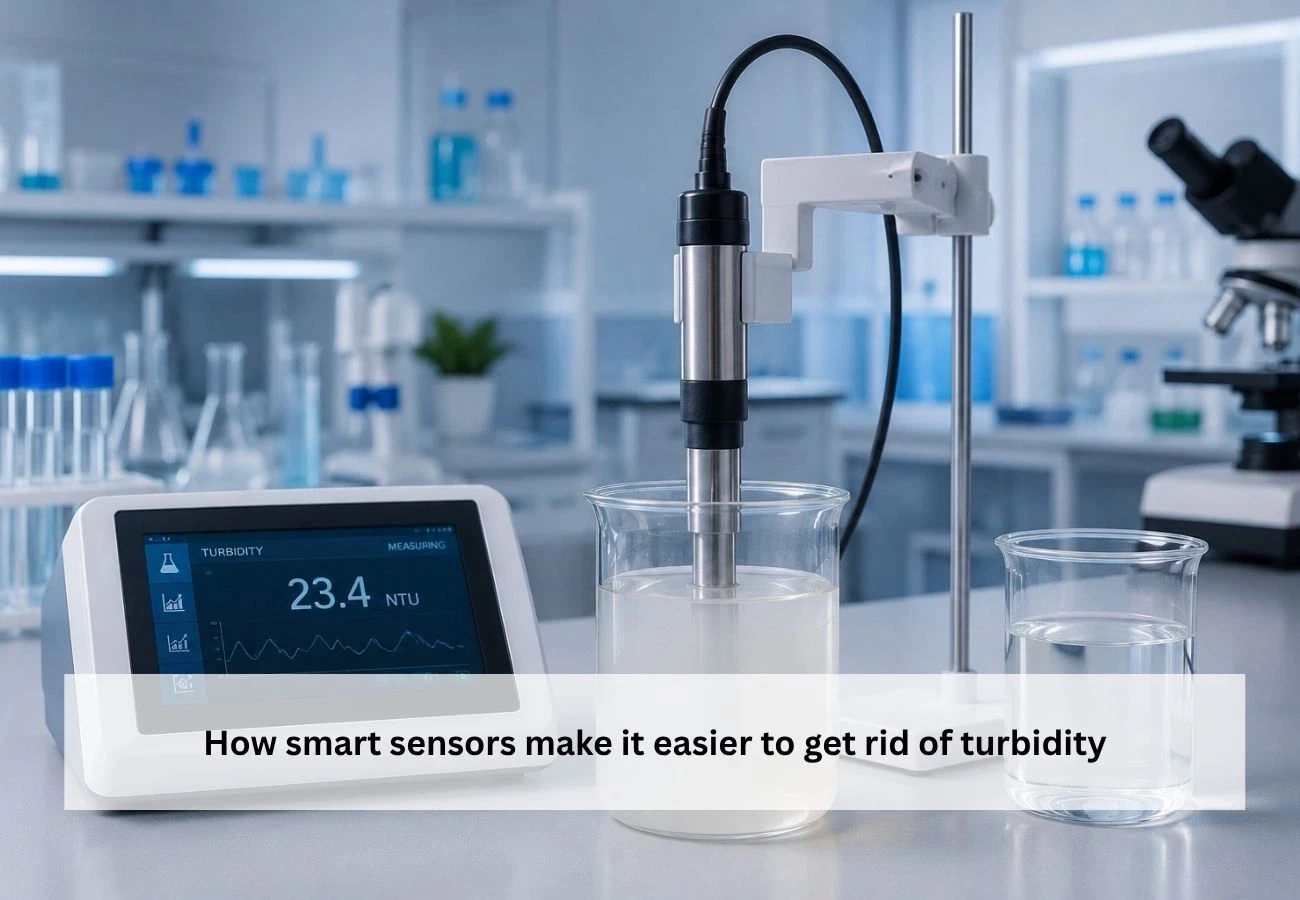

How smart sensors make it easier to get rid of turbidity
In the world of water and wastewater treatment today, turbidity control is no longer just about meeting discharge standards. It's also about being consistent, optimizing, and saving money. Traditional systems often depend on manual monitoring and the judgment of the operator, which can cause changes in water quality and higher operational costs.
Smart sensors and automated control systems are changing how turbidity is treated in this area, mainly in a water treatment plant India, waste water treatment plant, or industrial wastewater treatment facility.
What is turbidity and why is it important?
When water has suspended particles in it, like silt, clay, organic matter, and microorganisms, it looks cloudy. This is called turbidity. High turbidity not only makes the water less clear, but it can also:
- Lower the effectiveness of treatment
- Use more chemicals
- Change things like RO water treatment plant and filtration that happen later in the process
- Risk of not following discharge rules
The Shift to Smart Monitoring
Traditional turbidity control often involves periodic sampling and delayed adjustments. Smart sensors, on the other hand, provide real-time data, enabling immediate response and fine-tuning of the treatment process.
Key Features of Smart Turbidity Sensors:
- Continuous online monitoring
- High accuracy even at low turbidity levels
- Integration with PLC/SCADA systems
- Minimal manual intervention
How Smart Sensors Make Things Work Better
- Better chemical dosing
Smart sensors keep an eye on turbidity levels all the time and change the amount of coagulant and flocculant automatically. This stops chemicals from being used too much or too little, which saves money and makes things work better.
This level of control is particularly valuable in a reverse osmosis plant and ultrafiltration plant, where water quality directly affects membrane performance.
- Water quality that stays the same
The system keeps turbidity levels stable with real-time feedback, so the quality of the output stays the same even when the raw water changes.
This is especially important for facilities operating a high recovery RO system or a high purity water system.
- Less Dependence on Operations
Automation cuts down on the need for skilled workers to constantly monitor and make decisions, which cuts down on mistakes made by people.
- Finding Problems Early
You can see sudden changes in turbidity right away, so you can take action right away to fix the problem before it spreads to the whole system. This can help prevent operational issues in an effluent treatment plant or industrial effluent treatment plant.
- Making decisions based on data
Using historical data from sensors can help you figure out trends, make the system better, and plan when to do maintenance.
Smart Integration = Smarter Plants
Adding turbidity sensors to automated control systems makes the treatment plant more responsive, efficient, and dependable. This is especially useful in industries where the quality of the water directly affects the quality of the product and compliance.
Many modern water treatment plant manufacturers and water treatment plant consultants now recommend sensor-based monitoring as part of a complete water treatment solution.
How to Treat Turbidity in the Future
Smart monitoring is no longer a luxury; it's a need as industries move toward digitalization. Investing in systems that use sensors not only makes things work better, but it also helps the environment by cutting down on waste, energy use, and chemical use.
Are you ready to improve your turbidity treatment system?
We at Alantech are experts at creating smart water treatment systems that have advanced monitoring and automation. We can help you get consistent performance with smart technology, whether you're upgrading an old system or building a new one.
Call Alantech today to learn more about how they can help you with your plant's turbidity problems.
Frequently Asked Questions (FAQs)
Q1: How do smart sensors improve turbidity control in water treatment plants?
Smart sensors provide real-time turbidity data, allowing operators to make immediate adjustments, and this improves treatment efficiency and is widely used in a water treatment plant India and RO water treatment plant.
Q2: Can smart turbidity sensors reduce operating costs?
Yes. By automating chemical dosing and reducing manual monitoring, smart sensors help lower chemical consumption, labour requirements, and maintenance costs in facilities such as reverse osmosis plants and ultrafiltration plants.
Q3: Are smart sensors suitable for industrial wastewater treatment?
Absolutely. Smart sensors help maintain consistent water quality and regulatory compliance in industrial wastewater treatment, effluent treatment plants, and zero liquid discharge water treatment systems.