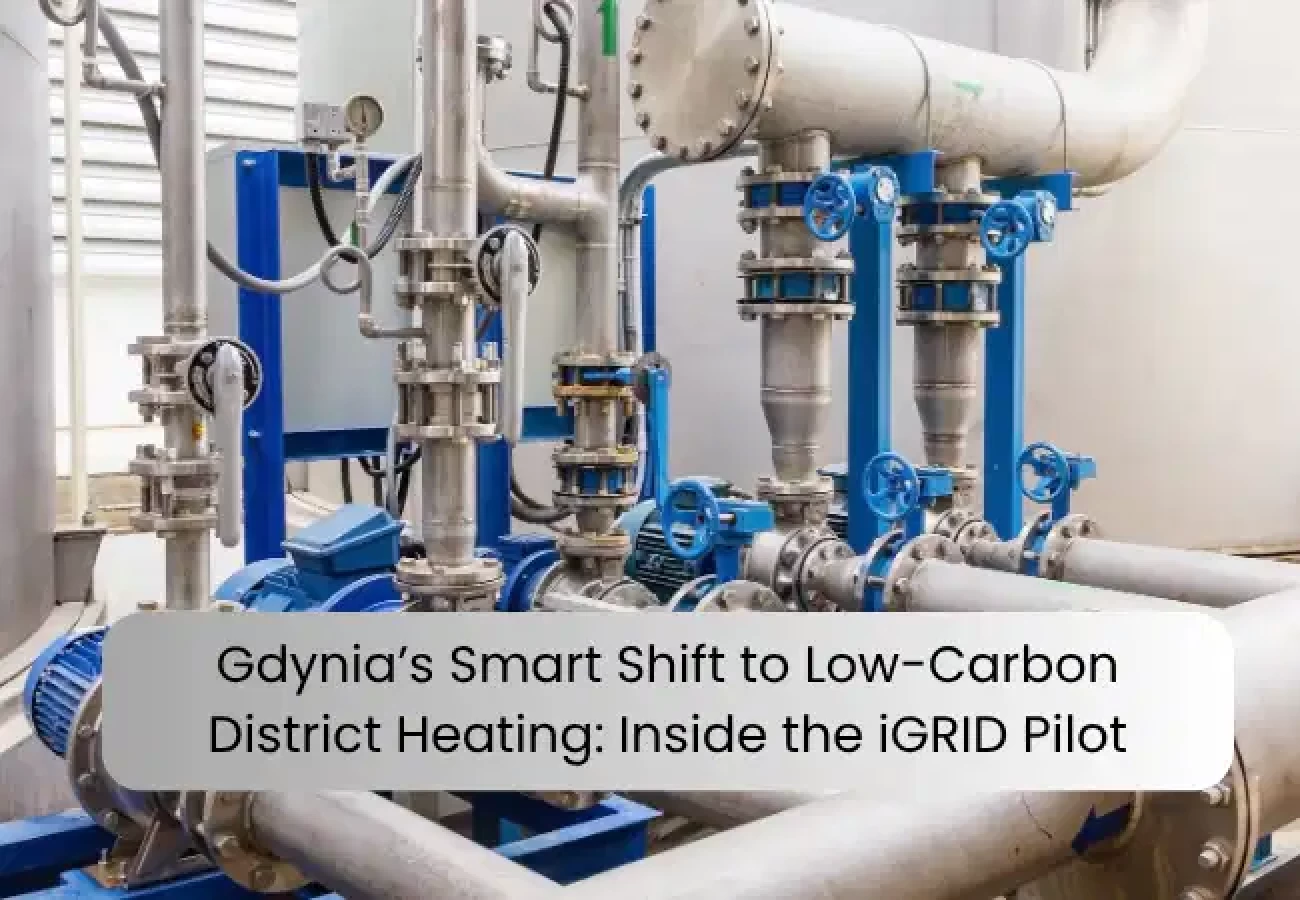

Gdynia's Smart Shift to Low-Carbon District Heating: Inside the iGRID Pilot
In northern Poland, the city of Gdynia is piloting a smart district-heating zone developed in partnership between OPEC Gdynia (the local heat utility) and Grundfos Poland. Installed in April 2023 in the Karwiny neighbourhood, the iGRID Temperature Zone uses real-time temperature control to reduce heat loss, lower network inflow temperature, and boost system capacity, all while maintaining comfort and supporting the city’s 2030 carbon-target roadmap.
The Situation
Gdynia, like many medium-sized European cities, aims to bring down its carbon footprint by 43% by 2030. At the same time, regional geopolitics have caused price-volatility and supply concerns for conventional energy sources. OPEC Gdynia faced a trio of challenges: reduce heat losses, limit leaks, and prepare the network for low-temperature energy sources like renewables, all without sacrificing indoor comfort for residents.
The Solution: iGRID’s Low-Temperature Mixing Zone
Rather than raise temperatures across the system to cover high-demand buildings, OPEC and Grundfos instituted a local “low-temperature zone” using the iGRID platform.
- Localized split: The network is divided into a smaller “temperature zone” with lower nominal supply temperature.
- Intelligent mixing: At the zone inlet, a closed bypass loop mixes return water with the main supply water to match actual demand.
- iGRID Temperature Optimiser (controller + algorithm): Adjusts pump speeds and valve mix dynamically, minute by minute, based on real-time data.
- Sensor network + SCADA integration: Temperatures, pressures, flow rates feed both iGRID and OPEC’s control system every minute.
The implementation relied heavily on the right hardware and controls: pumps, sensors, and variable speed drives, all linked via SCADA. As systems integrators, OPEC looked to trusted equipment vendors and chose a partner from a vetted list of Grundfos pumps suppliers, ensuring reliability, performance and integration ease.
The System
Installed in a district substation (chamber K-614 A), the solution consists of two skid-mounted units, each including:
- iGRID Temperature Optimiser controller (CU352 V5)
- Grundfos CRE pump with variable-speed inverter
- Multiple temperature and pressure sensors
- Flow meters and weather station network
By engaging certified Grundfos pumps suppliers, the project ensured that the pump-gear, motor, drive and control interface met the precise demands of a high-efficiency district heating pilot. Moreover, they employed Grundfos E-pumps in ancillary circuits to further enhance system responsiveness, the E-pumps’ built-in frequency converters and integrated control made them ideal for the dynamically-adjusting zone. As a result, the mixed zone could regulate both node pressure and temperature throughout the network segment, based on real-time demand data.
The Outcome
The results are compelling:
- Heat loss reduction: Achieved up to 30% lower losses by maintaining lower flow temperature and optimizing delta T.
- Flow into substation: Reduced by about 30%, improving network capacity with the same supply.
- Leak detection: Quicker identification and repair have raised overall efficiency.
- Estimated annual energy saving: Approx. 984 GJ in the pilot zone.
- Return on investment: Payback in approx. 3.5 years, supported by tradeable White Certificates on the Polish Power Exchange.
- Carbon-goals alignment: Helps Gdynia’s climate roadmap and readiness for integrating low-temperature or renewable heat sources.
From an equipment and supply-chain perspective, choosing the right partner among Grundfos pumps suppliers meant that installation, commissioning and integration were smoother. The employment of Grundfos E-pumps within a district-heating context underlines how pump technology innovations traditionally associated with building-services are now critical at the district network scale.
Why the Pump Choice Matters
District heating systems operate under large flow volumes, fluctuating loads and require robust control of temperature and pressure. Grundfos has documented its applications in district heating, showing that its pump technology supports low-temperature systems and helps make district energy one of the most popular heating systems in the world.
Using E-pumps specifically means the system benefits from variable-speed operation, integrated frequency converters and built-in sensors and controls. As outlined in the Grundfos E-pumps technical booklet, they are ideal for heating systems, mixing loops, and district heating/industrial plant applications. By sourcing from certified Grundfos pumps suppliers, the project ensured support, spare-parts availability and compatibility with SCADA and building-management systems.
Strategic Takeaways
- Localised temperature zones enable network ‘segmentation’ - here the pilot divided the larger district network into a “low-temperature segment” focused on optimizing return-flow mixing and demand matching.
- Dynamic pump control is essential - minute-by-minute adjustment of pump speed and mixing valve ensured that the system only delivered what was needed, when it was needed, aligning with the modular supply from renewables and making the most of the low-temperature scheme. Using advanced pump systems from well-established Grundfos pumps suppliers eased this complexity.
- Equipment synergy matters - the pairing of the iGRID controller, sensors, SCADA interface, skid units and pumps (including Grundfos E-pumps) resulted in a unified system of control and execution; rather than simply retrofitting old pumps, the project adopted modern, intelligent pumping and mixing units.
- Scalability and readiness for 4th generation district heating - by already operating at lower supply temperatures and optimized flow/return, the system is primed for integration of low-temperature renewables or surplus heat sources (such as waste heat or geothermal) in future expansions.
Looking Ahead
As data collection from the pilot progresses over its two-year timeframe, the template gives powerful lessons for other cities aiming to modernize heat systems with scalable, smart solutions. Many municipalities find themselves caught between rising energy costs, decarbonisation mandates, and aging heating infrastructure. The approach taken in Gdynia demonstrates that by working with specialised suppliers, including those experienced as Grundfos pumps suppliers, and using advanced pump technologies like Grundfos E-pumps, the leap from conventional district heating to a fourth-generation, low-temperature network is achievable with limited disruption and strong returns.
Conclusion
The Gdynia pilot project illustrates how localized, data-driven mixing zones can quickly drive significant efficiency, cost-savings and capacity improvements with minimal disruption and no compromise to user comfort. By lowering system temperatures and relying on precision control, OPEC Gdynia and Grundfos have taken a major step toward a future-ready, fourth-generation district heating network. The project had the hardware and support backbone it needed to succeed with the involvement of well-established Grundfos pumps suppliers and the incorporation of Grundfos E-pumps. As the pilot’s data collection matures, it gives a robust template for other cities looking to modernize heat systems with smart, scalable technology solutions.