
From Recipe to Production: Building a High-Performance Mayonnaise Sauce Plant
One of Saudi Arabia's top fast-food chains intended to build a facility to make various sauces for its restaurants. Before purchasing the equipment, the client wanted to make sure that the finished product fulfilled their requirements for the texture, viscosity, and flavour of their sauces.
Product trials were conducted at INOXPA's pilot plant at its headquarters in Banyoles, Spain, in order to validate the recipes. The client took an active part in these tests and verified that INOXPA's equipment could produce the required product quality.
Why INOXPA?
INOXPA, which has a lot of experience with food processing facilities, offered a comprehensive solution that was customized to meet the needs of the client. INOXPA offered a complete system that included plant engineering, the definition of the CIP (Cleaning-in-Place) system, and integration with other installation components, in contrast to other suppliers who only offered mayonnaise production equipment. Additionally, the system makes it possible to remotely monitor and record process parameters, making reports accessible from other devices.
The hygienic engineering standards used in this project are similar to those applied in a high purity water system and advanced water treatment plant India installations, where process control and product safety are equally important.
The INOXPA Solution
There were three primary modules in the project:
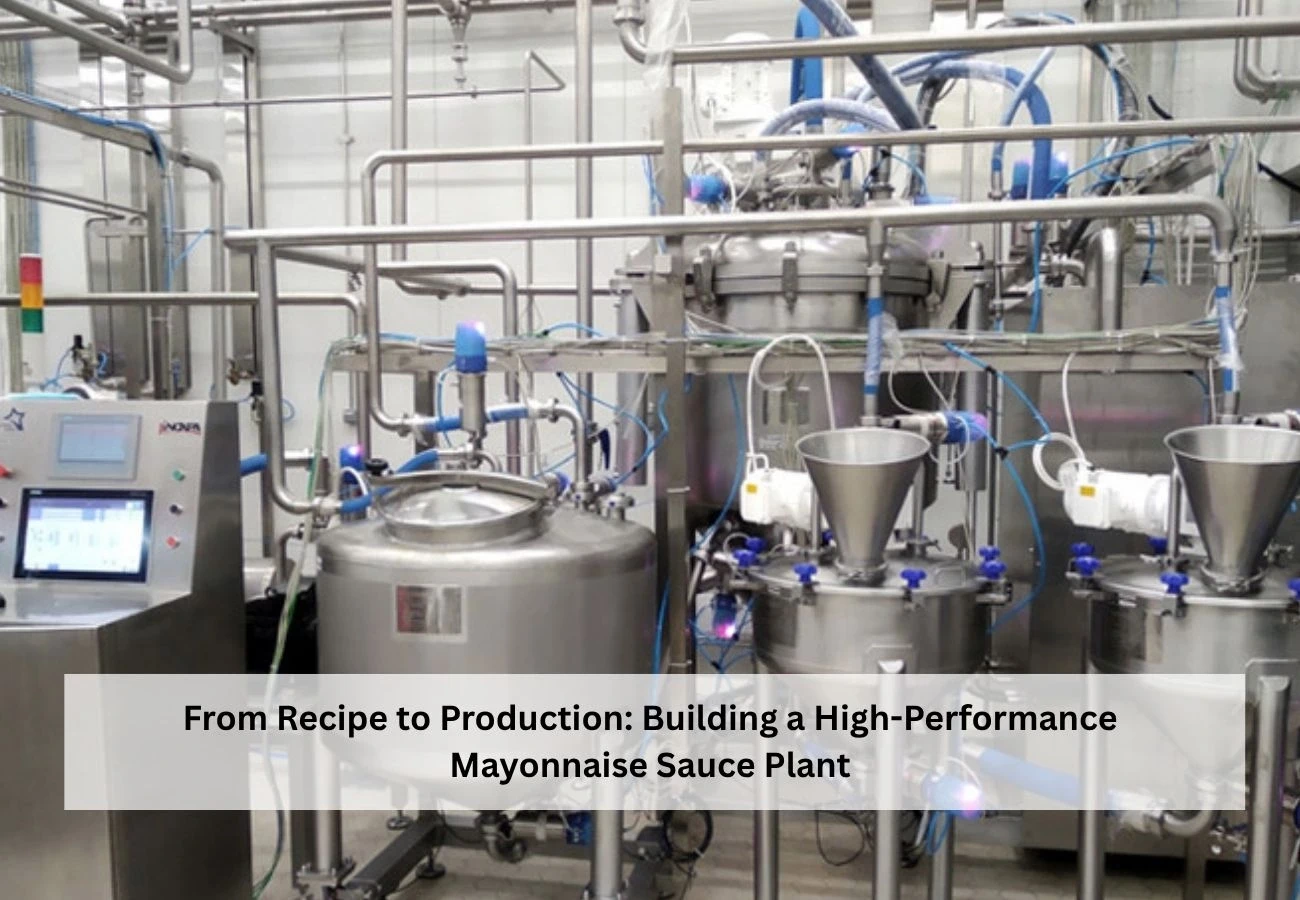
The sauce preparation system consists of a 500 L pressure/vacuum mixing tank with an in-line high shear mixer, bottom sawtooth propeller, and anchor agitator. The tank has a lobe pump for
discharge, load cells, valves, and heating/cooling jackets. Oil is added straight into the mixer
following vacuum release, and ingredient dosing is controlled by two 80 L hoppers for solids and one 400 L hopper for liquids.
CIP System: Pumps, heating systems, chemical dosing pumps, valves, plate heat exchangers, and equipment like conductivity sensors, flowmeters, and temperature probes are all part of the automated cleaning system. A Siemens PLC with remote access capability manages automation.
The automated CIP arrangement follows the same efficiency-focused approach used in a reverse osmosis plant and RO water treatment plant, where cleaning consistency is essential for operational reliability.
Pigging System: To recover product from pipelines and reduce losses during transfer to filling machines, a pigging system comprising SilPig stations, pig spheres, valves, and magnetic detectors was installed.
The recovered product can then be transferred efficiently to downstream packaging equipment such as a water filling machine, automatic bottle filling machine, or other food-grade filling systems used in modern production facilities
Principal Advantages
Reliable and consistent sauce production is made possible by the plant's complete adaptation to the needs of the client, which guarantees high hygiene standards, effective ingredient dosing, decreased product loss, and seamless communication between all production areas.
Frequently Asked Questions (FAQs)
Q1: What is the purpose of the pigging system in sauce production?
A1: The pigging system recovers product remaining inside pipelines after transfer. This reduces product waste, improves yield, and increases overall production efficiency.
Q2: How does the CIP system support food safety in mayonnaise production?
A2: The automated CIP system cleans tanks, pipelines, valves, and processing equipment without dismantling them. This helps maintain high hygiene standards, reduces contamination risks, and ensures consistent product quality.