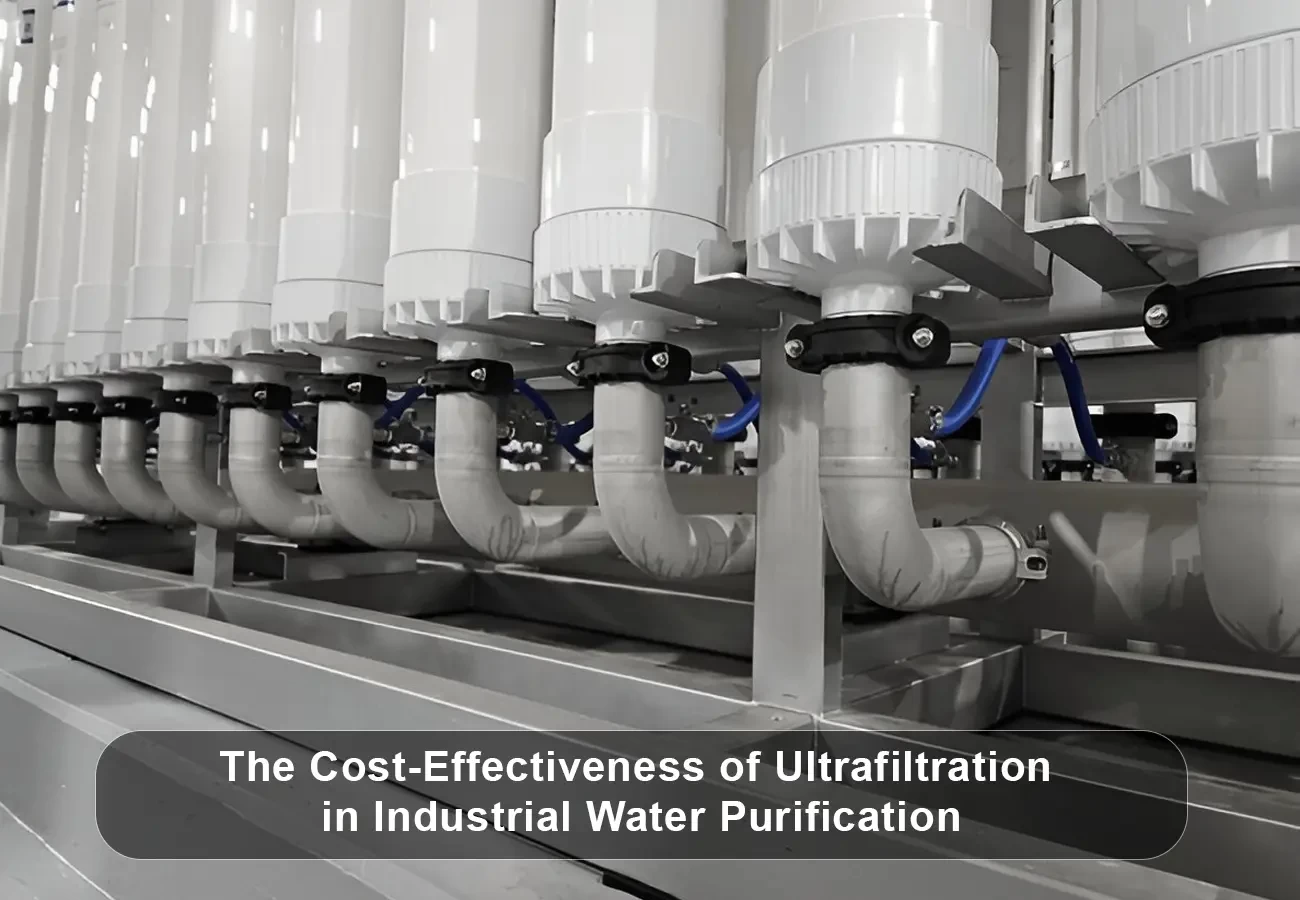

The Cost-Effectiveness of Ultrafiltration in Industrial Water Purification
Water plays an important role in industrial operations, especially in sectors like manufacturing, pharmaceuticals, energy production, and food processing, where it is important not only for effectiveness but also for safety and quality control. Ultrafiltration (UF) stands out as a highly promising approach for industrial wastewater treatment among the many water treatment solutions available.
An ultrafiltration plant provides a trustworthy and economical method for treating and reusing water. It balances high filtration performance with reduced operational costs and maintenance requirements. It not only ensures compliance with environmental regulations but also contributes to the circular economy by supporting water reuse strategies.
What is Ultrafiltration?
Ultrafiltration is a membrane-based water treatment method that depends on pressure to separate contaminants using semi-permeable membranes.
UF membranes generally feature pore sizes ranging from 0.01 to 0.1 microns. When water passes through them under moderate pressure, the membranes remove:
- Suspended solids
- Bacteria
- Viruses
- Colloidal particles
- Certain organic molecules
A well-designed ultra filtration system can operate either as a standalone unit or as a pretreatment step ahead of more advanced filtration methods such as reverse osmosis. In many industrial setups, it is a main part of integrated industrial wastewater treatment systems.
Why Is Ultrafiltration Cost-Effective?
- Low Chemical Dependency
Ultrafiltration significantly reduces or removes the need for such substances, while traditional methods such as coagulation, flocculation, and sedimentation depend heavily on chemical additives. The benefits include:
- Lower expenditure on chemical purchases
- Reduced safety risks for plant personnel
- Less chemical sludge generation and associated disposal costs
Over time, these factors translate into substantial savings for industries with large-scale water usage needs.
- High Water Recovery Rates
A high-performing ultrafiltration plant is able to achieve water recovery rates between 90–98%. This means a large percentage of the input water is purified and made available for reuse. This high recovery rate helps in reducing water procurement costs and improving operational sustainability. This, in turn, is really helpful for industries operating in water-stressed regions or with high water demands, like textiles, power generation, and food processing.
- Reduced Maintenance and Downtime
Modern ultra filtration systems are engineered with advanced membrane technologies that are:
- Resistant to fouling and clogging
- Built for long operational life
- Designed for easy cleaning with automated backwashing and CIP (clean-in-place) systems
Lower maintenance requirements lead to fewer unplanned shutdowns, reduced labor costs, and improved overall productivity. For industries with twenty-four seven production cycles, these benefits are really valuable.
- Energy Efficiency
It is an energy-efficient option for large-scale industrial use as ultrafiltration operates at much lower pressures than reverse osmosis. Lower pressure requirements mean:
- Smaller and more affordable pumps
- Lower electricity consumption
- Reduced carbon emissions
When considering their environmental impact and operational costs, UF systems are surely an eco-friendly water treatment process.
- Modular and Scalable Design
Adaptable design and flexible operations are two key advantages of an ultrafiltration plant. These systems can be:
- Easily scaled up as water demands increase
- Because of its modular configuration, the system can be easily customized or scaled, allowing multiple units to be integrated for larger capacity.
- Customized for different industrial processes without excessive upfront investment
Such flexibility is especially beneficial for industries experiencing high growth or aiming to manage capital investments more effectively.
- Improved Product Quality and Process Efficiency
Even minimal impurities in water can lead to product defects or compromised process integrity in sensitive industries such as pharmaceuticals, food & beverage, and microelectronics. UF systems provide high and consistent water quality, helping manufacturers maintain rigorous process control and avoid costly waste or rework.
Consistent water quality also supports smoother downstream operations when used as a pretreatment for processes like reverse osmosis or ion exchange, thereby extending the life of those systems and reducing operational bottlenecks.
Real-World Applications of Ultrafiltration in Industry
The versatility of ultrafiltration plants makes them suitable for a wide range of industrial wastewater treatment applications:
- Textile and dye industries: Removal of dyes, chemical residues, and particulates before water reuse or discharge
- Power plants: Pretreatment for boiler feed water to prevent scaling and improve efficiency
- Food and beverage industry: Production of ingredient water free from bacteria and suspended solids
- Chemical and petrochemical industry: Recover valuable process water and treat industrial effluents as part of a broader wastewater management strategy.
- Oil & gas industry: Treatment of produced water and wastewater to meet discharge standards or enable reuse
In each of these sectors, ultrafiltration helps improve environmental compliance while reducing operational costs.
Why Ultrafiltration Is a Smart Water Treatment Investment
As environmental regulations tighten and the cost of water continues to rise, investing in a water treatment solution that brings both technical performance and economic viability becomes a strategic imperative for industries.
Although the first installation of an ultra filtration system may need careful planning and budgeting, the long-term return on investment is most of the time substantial. Benefits such as reduced chemical consumption, energy efficiency, and improved water reuse capability contribute to significant cost savings over the system’s operational life.
Also, as UF contributes directly to water conservation and pollution reduction, industries using ultrafiltration are better positioned to meet environmental and social governance (ESG) goals.
Conclusion
Ultrafiltration represents a highly efficient and cost-effective solution for industries seeking trustworthy, sustainable water treatment solutions. Whether integrated into a larger industrial wastewater treatment facility or used independently, an ultrafiltration plant provides a low-maintenance, energy-efficient, and high-performance answer to complex water purification challenges.
From improving water reuse to reducing environmental impact and saving on operational costs, ultrafiltration systems are transforming the way industries manage and value water. With growing emphasis on water sustainability and stricter regulations, ultrafiltration has shifted from being an alternative to becoming an important part of modern industrial water treatment.