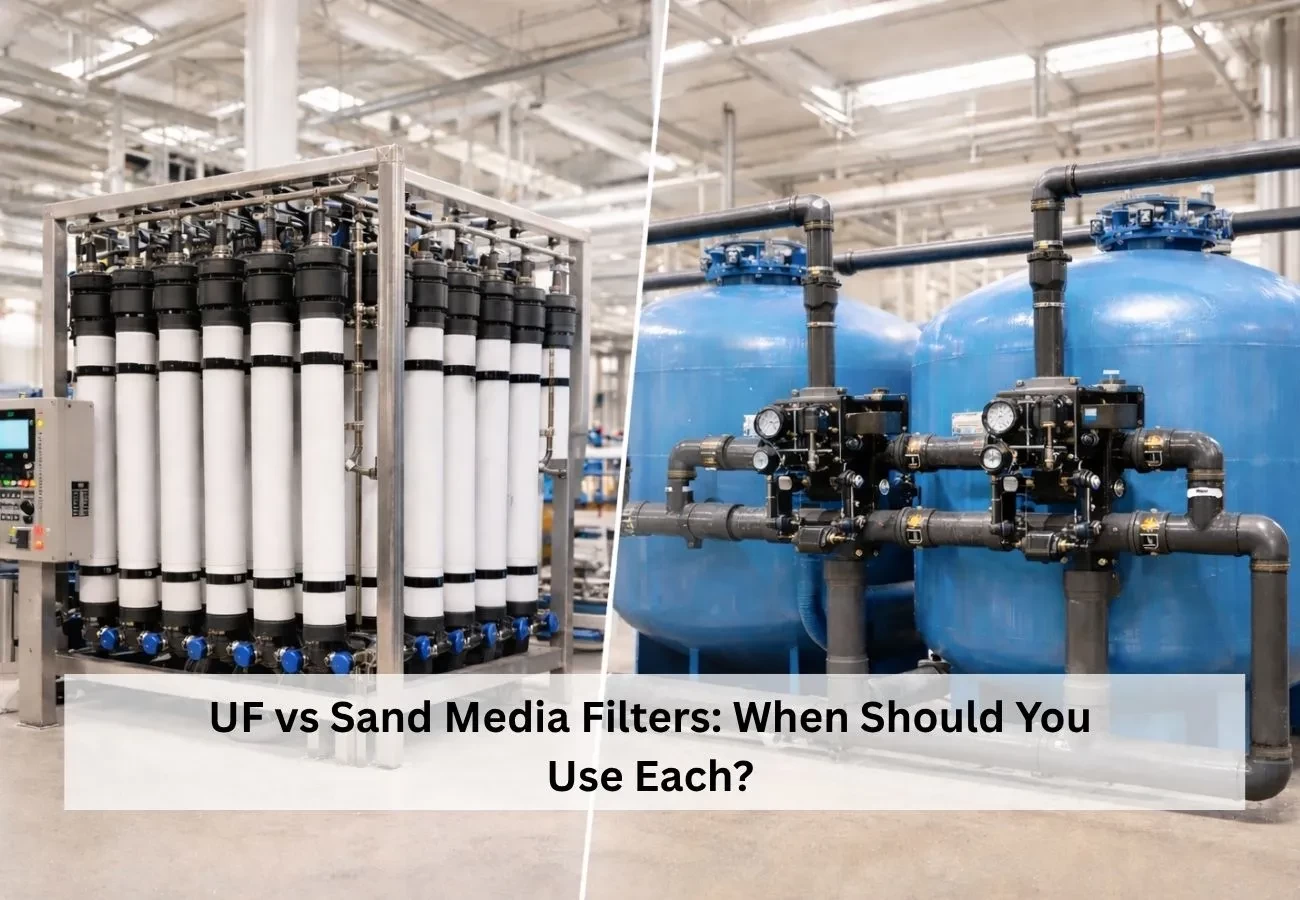

UF vs Sand Media Filters: When Should You Use Each?
The selection of pre-treatment is an important consideration in any reverse osmosis plant design. In the absence of pre-filtration for the RO unit, most companies will encounter membrane fouling, increased chemical usage, and continuous downtime of the system. It becomes imperative to select an appropriate pre-treatment process.
The two most common methods of pre-treatment include ultrafiltration plant units and conventional sand filters. Although these methods accomplish the task of removing the suspended solids, their effectiveness differs greatly. This knowledge can aid facility managers in designing their system effectively.
What is a Sand Media Filter?
A sand filter is referred to as a multimedia filter and utilizes sand or other granular materials to remove particulates from the water supply.
Key Features:
- Removes larger suspended solids
- Used as an initial step in filtering processes
- Needs periodic backwashing
- Has a comparatively large footprint
Limitations:
The sand media filters cannot be used in the removal of the following impurities:
- Bacteria and viruses
- Very fine colloidal particles
- Dissolved contaminants
Sometimes fine particulate matter may still remain even after filtration, and this results in high SDI values. This poses problems for any reverse osmosis system downstream, resulting in clogged membranes.
What is Ultrafiltration (UF)?
Ultrafiltration is a membrane filtration process characterized by pores sized between 0.01 and 0.1 microns. This process occurs when pressure forces water through a semi-permeable membrane that filters out extremely fine particles.
An appropriately designed ultrafiltration facility provides excellent quality filtered water, fit for further purification processes.
UF Removes:
- Suspended solids
- Microorganisms
- Viruses
- Colloidal particles
- Turbidity
Unlike regular filters, UF ensures that filtration is constant without restricting the flow of beneficial dissolved minerals.
Key Advantages of UF
- Very low SDI levels - required by advanced RO systems
- Removes pathogens and microorganisms
- Low pressure requirement
- Compact design compared to traditional filters
- Consistent quality output
Why UF is Preferred Before RO
The RO membrane system is very delicate and can be easily clogged by very small solids. This is when the usefulness of the ultrafiltration plant comes into play.
The UF membrane ensures high-quality feed water, and this will help:
- Reduce the need for frequent chemical cleaning
- Lower overall operational costs
- Improve RO recovery rates
- Extend membrane lifespan
Compared to sand filters, the UF membranes act as physical barriers for bacteria and viruses.
Footprint & Performance Comparison
| Parameter | Sand Media Filter | Ultrafiltration (UF) |
| Particle Removal | Moderate | Very High |
| Bacteria/Virus Removal | No | Yes |
| SDI Reduction | Moderate | Excellent |
| Footprint | Large | Compact |
| Filtration Consistency | Variable | Stable |
| Energy Requirement | Low | Low to Moderate |
Conclusion
Sand Media Filtration and UF systems both have significant roles to play in the field of water purification. Nevertheless, with growing efficiencies, reuse of water, and stringent quality standards, the trend seems to favor UF technology.
The capacity of UF membranes to provide low SDI, eliminate pathogens, and occupy minimal space make it the most appropriate technology for current applications. With proper integration, it will increase the efficiency and longevity of any reverse osmosis plant.
Alantech has developed high-end UF systems that cater to the needs of industries and municipalities.
FAQs
- Which is better for RO pre-treatment: UF or sand filter?
UF is better since it filters out very fine particles, bacteria, and viruses thus offering more protection to the RO membranes.
- Can sand filters be used along with UF systems?
Sand filters may be employed prior to UF as a pre-treatment method that filters coarse particles to reduce pressure on the membrane.
- Why is low SDI important in RO systems?
The SDI should be low to prevent fouling of the membrane and increase the effectiveness and longevity of the RO unit.
- Is UF suitable for all industries?
UF is widely used across industries, especially where high-quality water and consistent filtration are required.