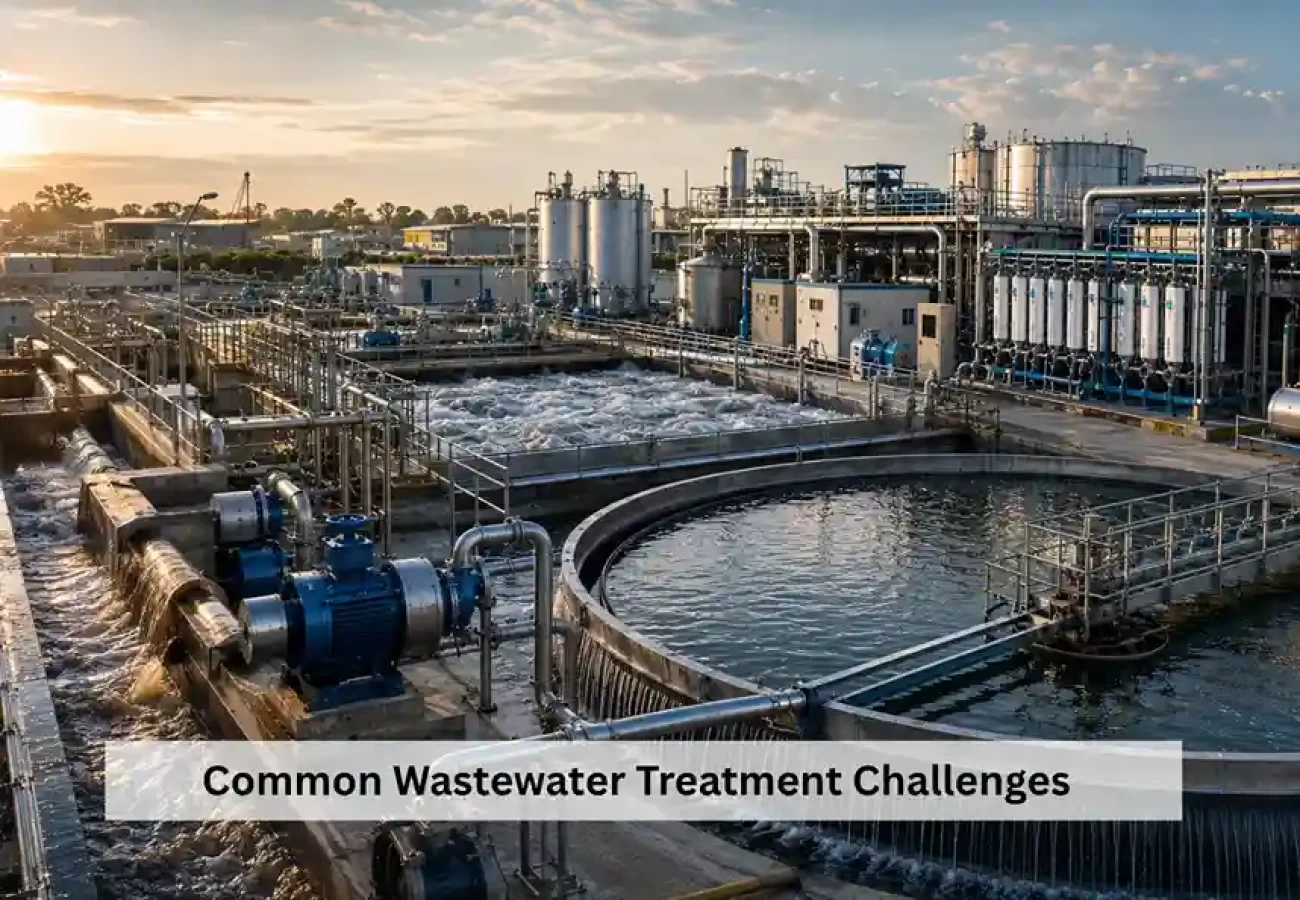

Common Wastewater Treatment Challenges
Most wastewater treatment challenges come down to one thing: the water changes faster than the water treatment system built to handle it. At Alantech, we have spent years designing and installing water treatment systems for factories, municipalities, and commercial sites. And the same handful of problems come up again and again. Some are technical. Some are simply about planning, or the lack of it.
Why Wastewater Treatment is Required?
Wastewater is not a fixed substance, its composition shifts depending on the season, the production schedule, the water source, and also sometimes even the weather. A system designed around one set of assumptions can fall short the moment those assumptions change, and that's where most of the trouble starts.
According to UN-Water's Sustainable Development Goal report, only 56% of the world's domestic wastewater was safely treated in 2024, a figure that has barely moved since 2020. Industrial wastewater fares worse in many regions, with global reporting showing treatment rates well below household levels in countries with limited monitoring infrastructure.
Fluctuating Water Quality & Load
One of the most common problems in wastewater treatment is variability in influent quality. Whether from a production change, a spill, or simply heavier usage during a particular season, a wastewater treatment system calibrated for a certain level of organic load, pH, or suspended solids can be thrown off by a sudden spike. When that happens, the wastewater system either overworks itself trying to compensate or lets untreated water pass through, neither of which is good.
Ageing Infrastructure
A lot of wastewater treatment plants, particularly older municipal ones, are running equipment that was installed decades ago. Pipes corrode, pumps lose efficiency, and control systems that once felt advanced now struggle to keep pace with modern demands. Replacing everything at once isn't always realistic, financially or operationally, so many sites end up patching problems as they appear rather than addressing the root cause.
Odour & Chemical Handling
Odour complaints are common near treatment sites, and they are not just a nuisance issue. Persistent odour often signals that something in the biological or chemical treatment process isn't working as it should. Left unaddressed, this can point to bigger inefficiencies further down the treatment line, not just an unpleasant smell for nearby residents.
Industrial Wastewater Treatment Challenges
Industrial wastewater treatment challenges look quite different from municipal ones, mainly because industrial effluent varies so much depending on the sector.
- Sector-Specific Contaminants
Textile factories, chemical plants, and pharmaceutical manufacturers frequently discharge effluent carrying compounds that ordinary biological treatment processes simply aren't built to handle. Heavy metals, dyes, and certain solvents need specialised treatment steps, and skipping these steps, or underestimating how much capacity they require, is a common cause of non-compliance.
- Space & Cost Constraints
Many factories don't have unlimited land to expand their treatment facilities, and retrofitting a compact system into an existing footprint brings its own set of complications. Cost is the other constraint that shapes almost every decision here. A water treatment system that costs too much to run day to day isn't really a solution, it's a liability waiting to surface.
- Regulatory Pressure
Environmental regulations are becoming stricter across most sectors, and rightly so given how much industrial discharge can affect local water bodies. But this also means facilities that were compliant five years ago might not meet today's standards, and staying ahead of these changes requires more than a one-time fix.
Also Read:What is an Industrial Water Treatment Systems and How They Work?
Wastewater Treatment Problems and Solutions
When it comes to wastewater treatment problems and solutions, a few approaches consistently make a difference across different types of facilities.
- Regular Monitoring and Maintenance
Scheduled checks on equipment condition, water quality, and system performance catch small issues before they become expensive ones. A pump or other equipment that is quietly losing efficiency is far cheaper to repair than a wastewater treatment plant that fails completely during peak load.
- Right-Sized, Modular Systems
Rather than building for today's needs alone, designing wastewater treatment systems with some flexibility built in helps plants adapt as production scales up or regulations tighten. Modular systems, such as sequential batch reactors or membrane bioreactors, allow for capacity adjustments without a full rebuild.
- Better Pre-Treatment Steps
Whether that is screening, equalisation tanks, or chemical dosing, reduces the strain on the main wastewater treatment process, adding proper pre-treatment stages is important. This is mainly relevant for industrial sites dealing with variable or contaminated influent.
- Working With Experienced Partners
A lot of the problems described above come from wastewater treatment systems that were designed without enough thought for how the site would actually operate over time. Working with a team that has handled a wide range of treatment challenges, across different industries and site conditions, will prevent a lot of these issues before they start.
At Alantech, we design and install advanced wastewater treatment plants built around exactly this kind of assessment. The dedicated team at Alantech work across sewage treatment, effluent treatment, and odour control, and we have installed systems in a wide range of industrial and municipal settings. If your current setup is struggling to keep up, or you are planning a new facility and want to get the design right from the start, get in touch with Alantech.
Frequently Asked Questions (FAQs)
Q1: What is the most common cause of wastewater treatment failure nowadays?
A1: In most cases, it comes down to a mismatch between what the system was designed for and what it's actually handling day to day, whether that's a sudden change in water quality or simply years of wear on ageing equipment.
Q2: How is industrial wastewater treatment different from municipal wastewater treatment in Kerala?
A2: Industrial wastewater usually contains sector-specific contaminants, such as dyes, solvents, or heavy metals, that need targeted treatment steps, while municipal systems in Kerala mainly deal with organic waste and sewage from households.
Q3: Can small or medium-sized facilities afford proper wastewater treatment systems?
A3: Yes, modular and right-sized systems make this more manageable, since facilities can start with what they need now and expand capacity later without rebuilding the entire setup from scratch.