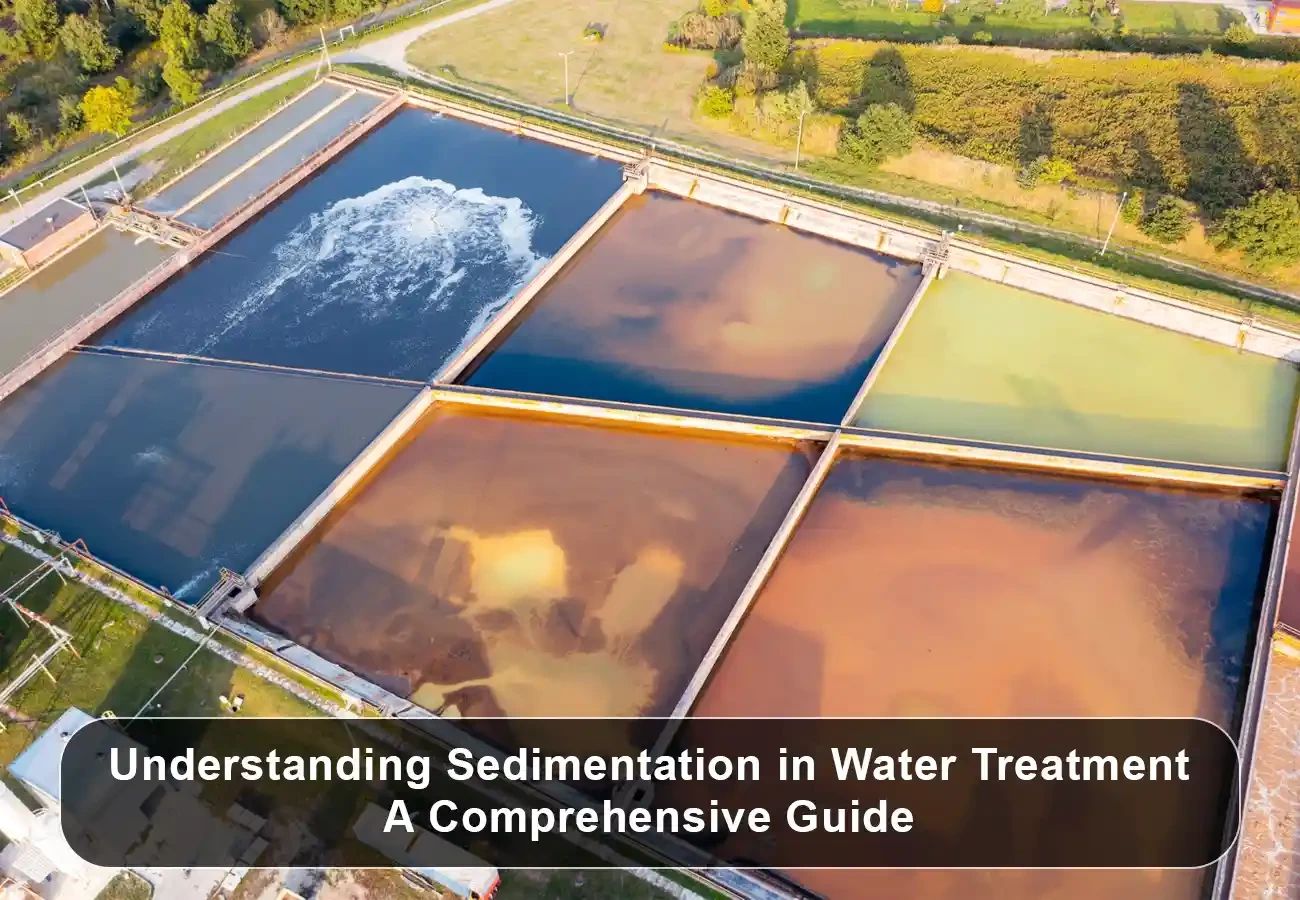

Understanding Sedimentation in Water Treatment A Comprehensive Guide
Sedimentation water treatment is the physical process of removing solid particles from water. This is done by allowing the solid particles to settle at the bottom of a tank under the influence of gravity. This method effectively separates heavy materials such as sand, silt, as well as mud from the liquid. This makes the water clearer and also prepares it for further purification steps. By letting nature do the heavy lifting, we can ensure that water moving through a system is easier to manage, clean, etc.
Sedimentation in Water Treatment
Almost every liquid contains suspended solids. If you leave a bucket of muddy water to sit for a few hours, you will notice that the dirt settles at the bottom while the water at the top becomes clearer. This happens because the solid particles are denser than the water surrounding them. In a professional setting, we use large tanks called basins or clarifiers to replicate this natural occurrence on a much larger scale.
At Alantech, we focus on the mechanics of how these particles move. When water enters a tank, its velocity is reduced, and this calm environment gives solids time to drop out of suspension. The speed at which a particle falls depends on its size, shape, and density. Large, heavy grains of sand will fall almost instantly, while smaller flakes of organic matter might take much longer to reach the bottom.
What are the Different Approaches to the Process?
There are two primary ways to approach sedimentation water treatment depending on what is in the water.
The first is plain sedimentation. This is used when the particles are large and heavy enough to sink on their own without help. It is a very cost-effective method because it requires no additives. The water simply flows slowly through a long tank, and the solids settle naturally.
The second method involves the use of chemicals. Sometimes, particles are so small or light that they stay suspended indefinitely. To fix this, we add coagulants. These chemicals cause the tiny particles to clump together into larger masses known as flocs. Because these flocs are heavier, they sink more rapidly than individual particles ever could. This is a common practice when dealing with river water that contains very fine clay or minerals.
Role of Sedimentation in a Modern Water Treatment Plant
In a standard water treatment plant, sedimentation acts as a middle step that protects the rest of the equipment. If we sent raw, muddy water directly to a filtration system, filters would clog within minutes. By using a settling basin first, we remove the majority of bulk waste. This ensures that sand filters or membrane systems can work for longer periods without cleaning or replacement.
The design of these tanks is based on careful calculation. We have to balance the water flow so that it stays in the tank itself long enough for particles to settle. But it is important to note that it is not for so long that the system becomes inefficient. We also have to consider how to remove the sludge that collects at the bottom of the tank and most modern systems use mechanical scrapers that slowly push this waste into a hopper for disposal. This allows the process to continue without stopping water flow.
Also Read: Filtering the Future: Membrane Types and Their Usage in Water Treatment
Managing Solids in a Wastewater Treatment Plant
When we look at a wastewater treatment plant, the sedimentation process is even more important. Here, the water contains a high concentration of organic matter. In these facilities, sedimentation usually happens twice. The first stage, known as primary treatment, removes large solids and grease.
The second stage happens after the biological treatment. During this phase, bacteria break down the dissolved waste. Once the bacteria have done their job, they will form clumps that must be settled out in a final clarifier. This ensures that the treated water released back into the environment is clear.
Factors That Influence Settling Efficiency
Several variables can affect how the sedimentation process works. Temperature is one such factor. Cold water is denser and more viscous than warm water, which means particles sink slower in the winter. We have to account for seasonal changes when designing or managing a system.
The tank shape also matters. Rectangular tanks are common because they are easy to build and manage. However, circular clarifiers are also popular because they allow for very efficient sludge collection from a central point. Regardless of the shape, the goal is to create a stable, quiet environment where gravity can work effectively.
Also Read: What Is Sludge and How It Is Treated: Process, Methods & Importance
Why This Treatment Method Remains a Standard Choice?
Despite many advances in technology, sedimentation remains a favourite choice because it is reliable and uses only very little energy. It does not require high-pressure pumps or complex electronics to function. As long as gravity exists, sedimentation will work. It is a predictable and stable part of the water cleaning cycle.
At Alantech, we understand that every water source is different. While some might have heavy sand, others have light organic debris. We adapt our designs to meet these specific needs, and this ensures that the water leaving the settling tank is ready for the next treatment phase as well. This attention to detail during the water treatment process helps keep operating costs low and also water quality high.
If you are looking for reliable water treatment solutions or need help with a specific project, we are here to help. Contact Alantech to learn more about our services and solutions.
Frequently Asked Questions (FAQ)
Q1: How long does sedimentation take?
A1: The time water spends in a settling tank can vary based on the design, but it ranges between two and four hours. This provides enough time for most suspended solids to settle to the basin floor without slowing down the entire facility's production rate.
Q2: What happens to the bottom material?
A2: The settled material is sludge, and it is collected by mechanical scrapers and pumped away. Depending on the type of facility, this sludge might be dried and disposed of in a landfill. It might also be used as a fertiliser if it is safe, or processed further to extract biogas for energy as well.
Q3: Can sedimentation remove bacteria from water?
A3: While sedimentation removes large particles and some microbes attached to those particles, it is not a complete disinfection step. It clears the water so that later treatments like chlorination or UV light can kill remaining bacteria more effectively.