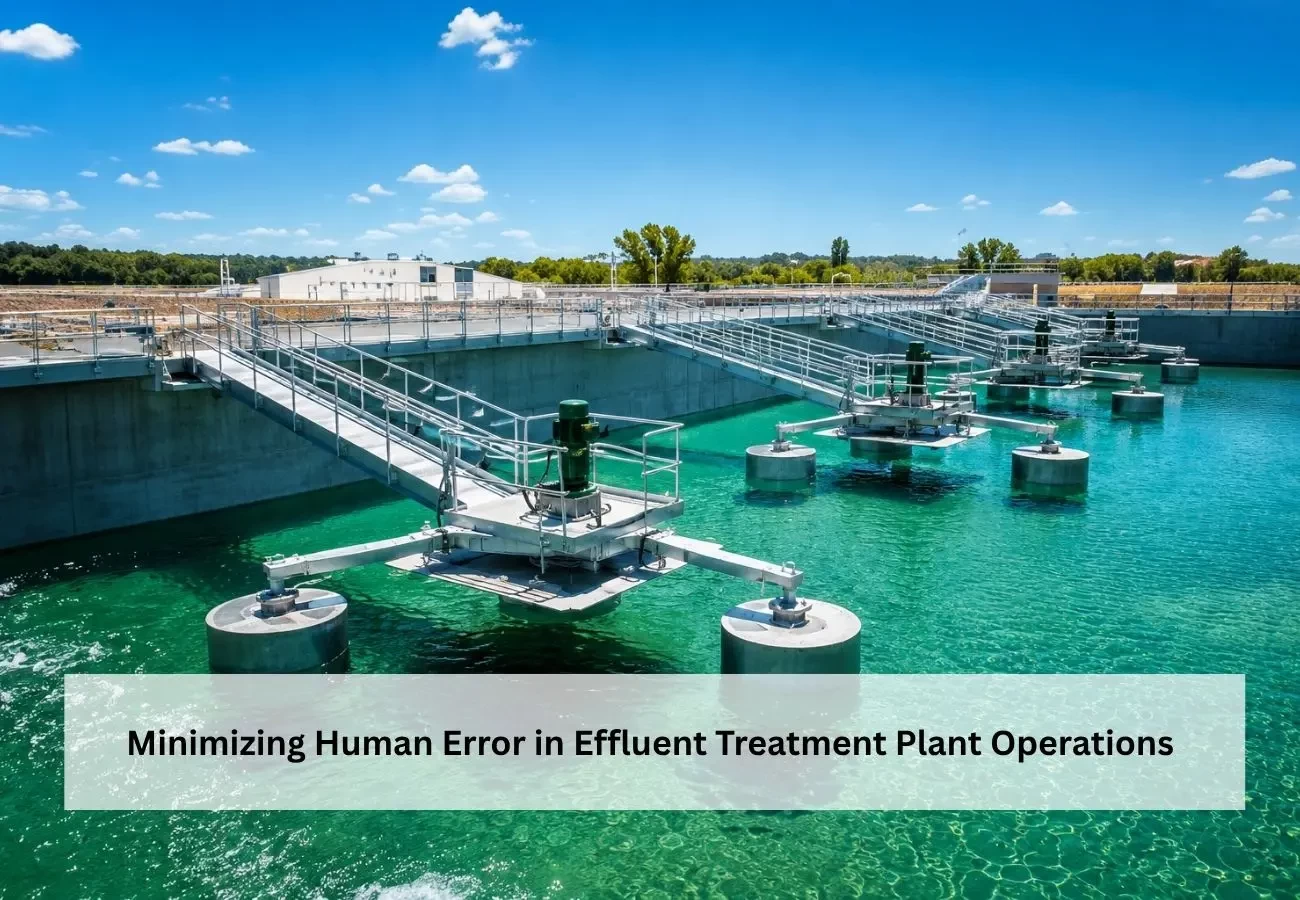

Minimizing Human Error in Effluent Treatment Plant Operations
Efluent Treatment Plants (ETPs) are very important for keeping industries going, but they often need a lot of skilled workers to work well. Even a small mistake by a person can cause compliance problems, higher operating costs, or system downtime when it comes to chemical dosing and keeping an eye on things like pH, turbidity, and flow rates. This is a common challenge in an effluent treatment plant, industrial effluent treatment plant, or industrial wastewater treatment facility.
So, how can businesses make sure that their machines work the same way every time without needing human help?
The Cost of Mistakes You Don't See
There are risks that come with doing ETP operations by hand:
- Not giving the right amount of chemicals can make treatment less effective.
- If you don't respond quickly to changes in parameters, the system can become unbalanced.
- Inconsistent monitoring could lead to not following discharge rules.
These problems not only make it harder for a business to run smoothly, but they can also hurt its reputation for being environmentally friendly. This is especially important for facilities handling industrial waste water treatment and operating large-scale waste water treatment systems.
Smart Automation: The Big Change
More and more, modern ETP systems are using automation to cut down on the need for people to be involved. PLC-based controls and SCADA systems let you watch and change important processes in real time. This makes sure:
- Giving the right amount of medicine every time
- Constantly keeping an eye on important factors
- Instant notifications for changes
Automation doesn't get rid of workers; it gives teams more time to supervise instead of doing the same tasks over and over again.
Sensors and monitoring in real time
Advanced sensors are very important for cutting down on human error. You can see pH, COD, BOD, and turbidity levels online in real time, which lets you take quick action to fix problems. Integrated dashboards make it easy to see and act on data, which cuts down on the need for manual sampling and guessing.
Training and Standardization
Standard operating procedures (SOPs) and regular training are just as important as technology. Clear protocols make sure that even less-experienced operators can run systems well, which makes operations more consistent.
Remote Access and Maintenance That Predicts
IoT-enabled systems let plant operators keep an eye on and control ETP operations from afar. Tools for predictive maintenance can find problems before they happen, so there are no suddenbreakdowns because of human error or delays in taking action.
Going Toward Operations Without Mistakes
It's not about replacing people to make ETP operations less error-prone; it's about giving them better systems to work with. Industries can become more efficient, always follow the rules, and lower their operational risks by using automation, real-time monitoring, and structured processes together.
Whether the facility is a conventional waste water treatment plant, sewage treatment plant, small sewage treatment plant, or an advanced system designed for zero liquid discharge water treatment, automation helps maintain consistent performance along with regulatory compliance.
Looking to simplify your ETP operations and reduce dependency on skilled manpower?
Get in touch with us today to explore intelligent, automation-driven solutions tailored for your plant.
Frequently Asked Questions
Q1: How does automation reduce human error in an effluent treatment plant?
A1: Automation reduces human error by automatically controlling dosing, monitoring water quality parameters, and also generating alerts when operating conditions move outside set limits.
Q2: Why is real-time monitoring important in industrial wastewater treatment?
A2: Real-time monitoring helps operators identify issues immediately instead of waiting for manual test results, and this allows faster corrective action and improves treatment efficiency.
Q3: Can automation be used in small sewage treatment plants?
A3: Yes. Automation can be implemented in both large and small sewage treatment plants, and it improves operational reliability, reduces manual workload, and also helps maintain consistent treatment performance.