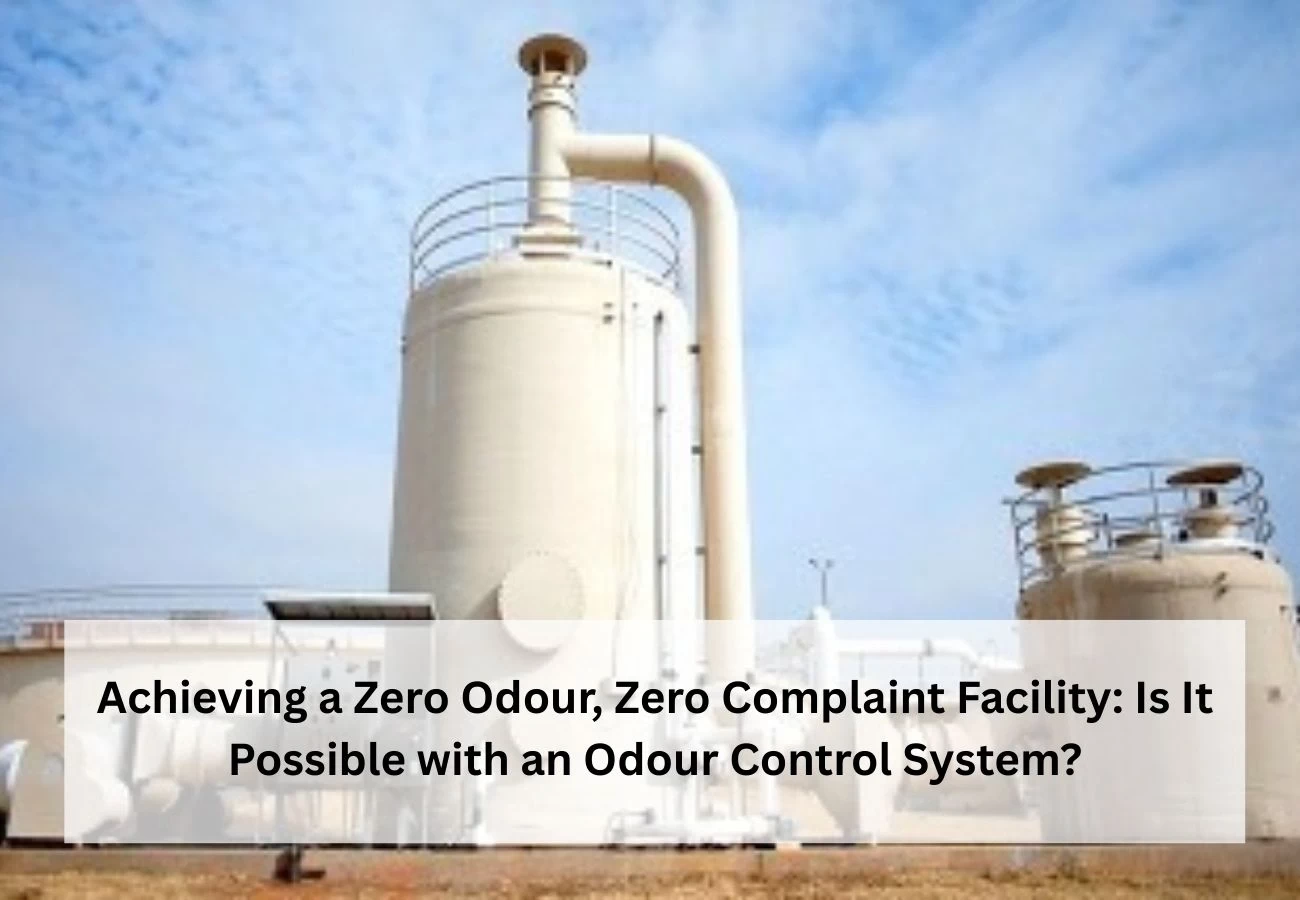

Achieving a Zero Odour, Zero Complaint Facility: Is It Possible with an Odour Control System?
Industrial facilities across sectors often face a persistent challenge that goes beyond production efficiency and output quality: odour emissions. Whether it is a wastewater treatment plant, a food processing unit, a chemical facility, or an effluent treatment plant, odour issues can quickly turn into serious operational and reputational concerns.
Uncontrolled odours do more than create discomfort. They can affect employee well-being, invite regulatory scrutiny, and trigger complaints from surrounding communities. For facility managers and plant operators, one question comes up again and again. Can a facility truly operate without odour issues or complaints? The answer is yes.
With a well designed odour control system and a proactive approach to operations, industries can greatly reduce odour concerns and, in many cases, eliminate complaints altogether. This article explores how odour control systems work and why they are especially important for industrial wastewater treatment and related processes.
Understanding the Source of Odours
Odours in industrial environments typically originate from gases released during biological, chemical, or mechanical processes. In facilities such as a wastewater treatment plant or an effluent treatment plant, odours are commonly caused by volatile organic compounds (VOCs), hydrogen sulphide, ammonia, and other sulphur-based gases.
These emissions often arise during:
- Anaerobic treatment processes
- Sludge handling and storage
- Chemical reactions and breakdown of organic matter
- Poorly ventilated tanks and reactors
When not managed, odour emissions can lead to:
- Complaints from employees and surrounding communities
- Health and safety risks for workers
- Regulatory non-compliance and possible penalties
- Long-term impact on the organisation’s reputation
Addressing odours at the source is essential, especially in industrial wastewater treatment systems where biological processes naturally generate odour-causing gases.
Why Odour Control Matters in Treatment Facilities
Even low-level odours, when persistent, can attract attention and complaints. Over time, this can strain relationships with local communities and regulatory bodies.
For a modern wastewater treatment plant, odour control is no longer optional. It is a critical part of responsible plant operation, environmental compliance, and sustainable industrial practice.
The Role of an Odour Control System
An odour control system is designed to capture, treat, and neutralise odorous gases before they are released into the environment. Rather than masking smells, these systems eliminate odour-causing compounds at their source.
Here is how an effective odour control system supports a zero-complaint operation.
- Capture and Containment of Odorous Air
- Capture and Containment of Odorous Air
Odour control starts by collecting foul air from critical zones within the facility. In a wastewater treatment plant, these usually include tanks, basins, sludge handling areas, and pumping stations. In an effluent treatment plant, chemical reactors and holding tanks are the main sources of odour.
With the sections and channeling the air into a treatment system, odour release is controlled at the source. This early containment prevents emissions from spreading into the surrounding environment and helps reduce noticeable odours effectively.
- Odour Treatment Technologies
- Odour Treatment Technologies
Different treatment technologies are used depending on the nature and concentration of odour-causing compounds. A well-designed system often combines multiple methods for maximum effectiveness.
- Activated Carbon Filtration
Activated carbon filters are widely used in industrial wastewater treatment facilities. They adsorb VOCs and hydrogen sulphide, making them suitable for treating low to moderate odour loads.
- Biofiltration Systems
Biofilters use naturally occurring microorganisms to break down odorous compounds. This method is especially effective in wastewater treatment plant applications where biological odours are dominant.
- Chemical Scrubbers
Chemical scrubbers neutralise odours by reacting with odour-causing gases using carefully selected reagents. These systems are commonly used in effluent treatment plant operations dealing with high concentrations of sulphur-based gases.
- Ozone or UV Oxidation
Advanced oxidation processes convert odorous molecules into harmless by-products. These systems are often used as part of a multi-stage odour control strategy.
- Continuous Monitoring and Automation
- Continuous Monitoring and Automation
Modern odour control systems monitor odour, airflow, and gas levels in real time. In industrial wastewater treatment facilities, automation helps keep emissions under control and below detectable levels, even when operations are at their busiest.
- Maintenance and Long-Term Performance
- Maintenance and Long-Term Performance
Even the most sophisticated odour control system needs regular maintenance. Filters should be replaced, scrubber media checked, and biofilters maintained to keep microbial activity going.
Scheduled maintenance is essential to prevent odour leaks that could result in complaints or regulatory action. Preventive maintenance also extends system life and improves cost efficiency.
Is Zero Odour Truly Achievable?
While the concept of “zero odour” may seem ambitious, many facilities have successfully achieved near-complete odour elimination. This is especially true for plants that integrate odour control into the overall design of their industrial wastewater treatment processes.
Facilities using comprehensive odour control systems often report:
- Complete elimination of community complaints
- Noticeable improvement in workplace conditions
- Strong compliance with environmental regulations
- Enhanced corporate reputation and sustainability performance
Business Benefits of Investing in Odour Control
Investing in odour control goes beyond regulatory compliance. It delivers clear business benefits by improving operational efficiency, supporting workforce well being, and strengthening overall brand perception.
- Protection of Brand and Reputation
Odour complaints can harm public trust. Eliminating odours protects the organisation’s image.
- Improved Employee Satisfaction
An odour free environment improves comfort and morale, leading to higher productivity and lower staff turnover.
- Operational Stability
Effective odour management reduces the risk of shutdowns, penalties, and unplanned corrective actions.
- Support for Sustainability Goals
Modern odour control systems support environmental responsibility and long term sustainability initiatives.
Unlike temporary fixes, advanced systems eliminate odours at the source and give measurable, long lasting results.
Conclusion
Achieving a zero odour, zero complaint facility is not just possible but essential for modern industrial operations. With a well planned odour control system, continuous monitoring, and regular maintenance, you can maintain clean, compliant, and community friendly operations.
Effective odour control is a long term investment in environmental responsibility, employee well being, and public trust. Facilities that prioritise advanced odour treatment solutions create safer, cleaner, and more sustainable workplaces. If odour challenges continue, consulting experienced odour control experts is the first step toward achieving zero odour, zero complaints, and lasting operational confidence.