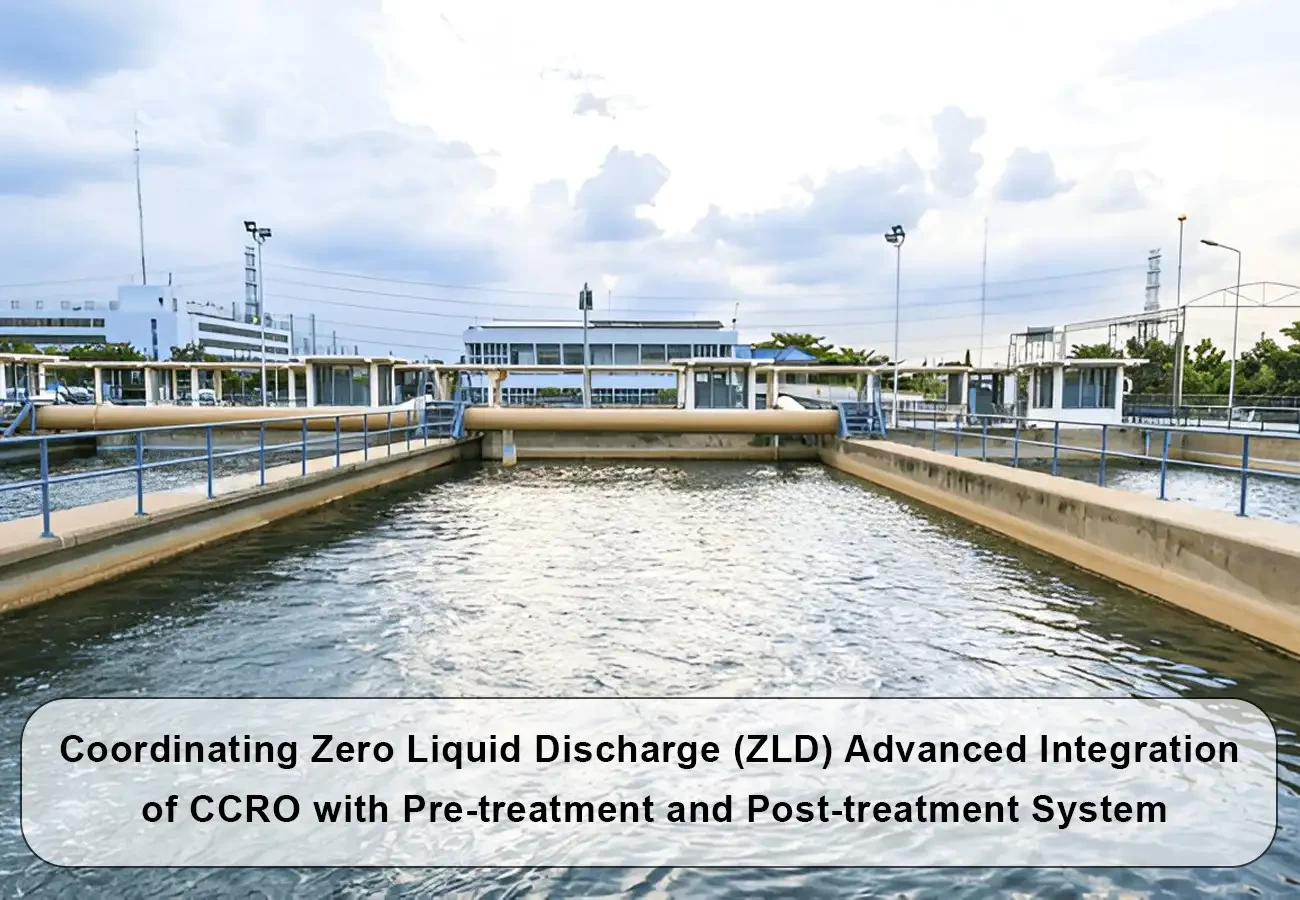

Coordinating Zero Liquid Discharge (ZLD) Advanced Integration of CCRO with Pre-treatment and Post-treatment System
Pre-treatment Strategies Designed for CCRO Compatibility
Pre-treatment needs to be properly designed to ensure consistent performance, reliability, and protection against fouling, especially for water going into Closed-Circuit Reverse Osmosis (CCRO) systems. Modern reverse osmosis plants increasingly rely on robust pre-treatment to achieve high efficiency and minimal downtime. Among these strategies, ultrafiltration plants play a key role.
Ultrafiltration (UF) proves especially effective ahead of CCRO, removing suspended solids, bacteria, and reducing SDI. This significantly extends membrane life in high recovery RO systems. For instance, a UF → CCRO pilot for reclaimed water demonstrated recoveries increasing from 90% to 95% while lowering fouling risk. Incorporating an ultrafiltration plant in this stage ensures that downstream CCRO membranes operate efficiently and with fewer maintenance interruptions.
In addition to UF, fine filtration, coagulation, and activated carbon are essential when feeding high-organics wastewater into CCRO loops. When sized correctly, these treatments control organic and colloidal fouling, protecting membranes and improving performance. Chemical adjustments such as pH balancing and anti-scale dosing further safeguard CCRO membranes from scaling by controlling LSI and inhibiting crystallization kinetics of calcium sulphates, carbonates, or silica compounds. These pre-treatment steps are critical in waste water treatment plants designed for maximum recovery and sustainable operations.
CCRO Operational Tactics & Integration Modes
High recovery RO systems perform better when using smart operational strategies to improve efficiency.
- Closed-Circuit Desalination (CCD): Feed recirculation sustains cross-flow shear, delaying concentrate discharge until thresholds are reached. This helps maintain membrane integrity and prolongs system life.
- Plug-Flow Desalination (PFD): Once salinity or concentration limits are reached, the system releases concentrate and introduces new feed, maintaining stable recovery targets.
Implementing these strategies ensures that a high recovery RO system achieves maximum water recovery while minimizing waste and energy consumption. Many modern reverse osmosis plants use CCD or PFD methods to boost efficiency and extend system life.
Post-Treatment: Stabilizing and Polishing Permeate
Water from CCRO with high recovery usually needs post-treatment to make it safe and suitable for use. Post-treatment processes stabilize permeate and make it suitable for reuse or discharge:
- Remineralization & pH correction: Adjusting pH and adding minerals prevents corrosivity or scale formation downstream. These measures ensure compliance with potable water standards, protect piping, and support downstream disinfection.
- Disinfection staging: UV or chlorine dioxide post-CCRO prevents biofilm formation. For example, Carlsberg’s system combines UV and chlorine dioxide after remineralization to ensure microbial safety.
- Blend control & buffer mixing: Careful mixing of CCRO permeate with other treated streams avoids unexpected scaling or LSI issues. Properly designed static mixers and blend ratios are essential, particularly in waste water treatment plants managing high-recovery systems.
Integrating ultrafiltration plants upstream and fine-tuned post-treatment downstream ensures the reliability and sustainability of high recovery RO systems.
Also Read: High Recovery Reverse Osmosis: The Future of Sustainable Water Treatment
Troubleshooting & Continuous Performance Monitoring
Monitoring and proactive maintenance are key for CCRO success in reverse osmosis plants:
- Membrane fouling metrics: Track differential pressure, recovery trends, yield, and conductivity. Sudden jumps may indicate fouling or scaling in pre-treatment or CCRO loops.
- CIP scheduling based on real data: Optimizing pH and anti-scale dosing can reduce cleaning frequency dramatically. For instance, a winery reduced cleaning from every few days to only 3-4 times per year by tuning chemical dosing strategies.
- Chemical dosing strategy: Properly calibrated dosing prevents overuse or underuse, protecting membranes and ensuring consistent water quality.
Such practices are essential for high recovery RO systems and waste water treatment plants that aim for zero-liquid discharge and minimal environmental impact.
Conclusion: Transforming CCRO into a Circular Water Pivot
Using CCRO as part of a complete treatment process, with careful pre-treatment, flexible CCRO operation, and accurate post-treatment polishing, allows for:
- Maximum water recovery with very little waste
- Lower fouling and reduced energy use
- Modular adaptation to varying feedwater chemistries
- Scalable architecture suitable for small village potable systems or large industrial reverse osmosis plants
By using ultrafiltration plants, carefully controlling chemical dosing, and ensuring precise post-treatment, CCRO can move from being just a desalination system to the central part of efficient, circular, next-generation waste water treatment plants.
In essence, purposeful integration of pre-treatment, CCRO operation, and post-treatment polishing is the key to turning any high recovery RO system into a sustainable, zero-waste water solution suitable for both industrial and municipal applications. This approach ensures that modern reverse osmosis plants achieve operational excellence, reduce waste, and deliver reliable water quality for diverse reuse and discharge needs.